
Fed Rate Cut on the Horizon: What Retail Investors Need to Know


 Aime Summary
The Federal Reserve is poised to deliver its third straight rate cut in December, a move that will have wide-ranging effects on markets and the broader economy. With nearly 90% of analysts pricing in the cut, the focus now shifts to how the Fed will frame the decision — and whether it signals a pause in further reductions. For investors, the decision will test the Fed's independence and could set the tone for 2026 policy.
The Fed is expected to reduce its benchmark interest rate by 25 basis points at its Dec. 9–10 meeting, bringing the federal funds rate down to a range of 3.5% to 3.75% according to market expectations. This follows similar cuts in the fall of 2024 and early 2025. The move is largely driven by a weakening labor market, with more than 1.17 million layoffs announced in 2025 through November. Private-sector job losses in November alone reached 32,000 according to recent data, highlighting the growing pressure for lower borrowing costs.
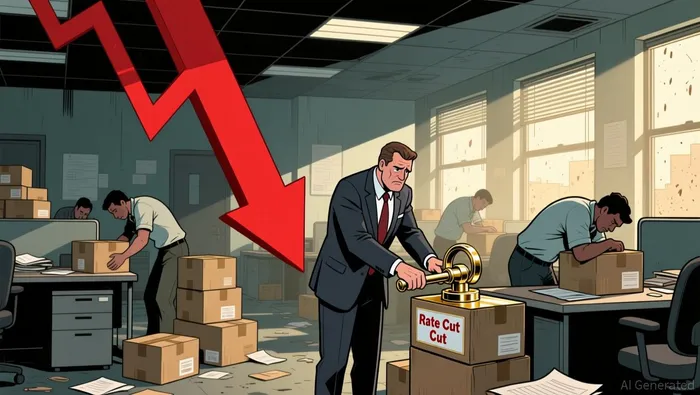
Still, the rate cut is not a slam dunk. While Chair Jerome Powell is expected to push through the cut, multiple officials could dissent — marking the most division in six years according to analysts. Some policymakers are wary of cutting too aggressively, especially as the Fed's preferred inflation measure, the PCE index, remains elevated at 2.8% according to recent data. The resulting "hawkish cut" — a reduction in rates but a cautious stance on future easing — will be closely watched by markets.
The labor market has been a key factor in the Fed's calculus. With weak job growth and falling inflation expectations, the case for a rate cut has strengthened. However, the Fed is operating with outdated data, as a government shutdown delayed the latest inflation figures. This uncertainty has led to a tug-of-war within the 19-member policy committee. Some, like New York Fed President John Williams, have signaled support for further rate reductions according to market reports. Others, such as Atlanta Fed President Raphael Bostic, have taken a more hawkish stance according to policy analysis.
The market is already factoring in the cut, but the way the Fed frames its decision could shake things up. A "hawkish" message could signal a pause in further easing, which might strengthen the U.S. dollar and weigh on commodities and growth stocks. A more dovish outlook — with the door open for additional cuts — could weaken the dollar and boost demand for gold, oil, and industrial metals according to market analysis.
The impact of the cut will also vary by asset class. Short-term variable-rate loans — such as credit cards and home equity lines of credit — could see lower rates. However, long-term fixed-rate borrowing costs, like those for mortgages, are unlikely to change much unless homeowners choose to refinance according to financial experts. Financial stocks may benefit from lower interest rates, while real estate and technology could face headwinds according to market observers.
For investors, the December meeting is more than a routine policy adjustment — it's a test of the Fed's independence. With political pressures mounting from President Trump and others according to recent reports, the Fed is under scrutiny for whether it will remain data-driven or respond to external voices. The outcome could shape the central bank's credibility and influence the policy path in 2026.
At the end of the day, the December decision will be a bellwether for the Fed's future direction. The policy statement and Powell's press conference on December 10 will offer clues on whether the Fed is done cutting for now or if more easing is on the way. Investors should keep an eye on the dissenting voices within the committee — a strong split could lead to more volatility in the near term.
Put differently, this is not just another rate cut — it's a moment that could define the Fed's approach to inflation, employment, and market expectations in the months ahead. As always, the devil will be in the details.

Delivering real-time insights and analysis on emerging financial trends and market movements.
Latest Articles
Stay ahead of the market.
Get curated U.S. market news, insights and key dates delivered to your inbox.






Comments
No comments yet