
Fed Rate Cut on the Horizon: What It Means for Markets and Investors


 Aime Summary
The Federal Reserve is on the brink of delivering a third consecutive quarter-point rate cut in a pivotal meeting that is drawing intense scrutiny from markets and investors. With the U.S. economy showing mixed signals—rising inflation and a weakening labor market—Fed policymakers find themselves at odds over the best path forward. This meeting, occurring just two days before the end of 2025, is more than just a routine policy update—it's a potential turning point that could shape the Fed's 2026 strategy and investor expectations for months to come. What makes this decision particularly noteworthy is the depth of division within the 19-member Federal Open Market Committee (FOMC), 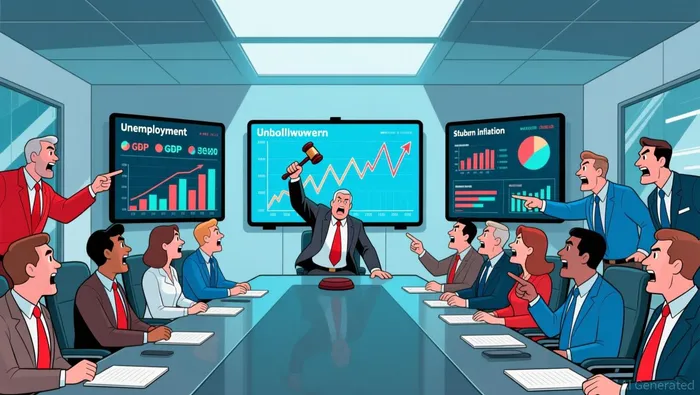 which could signal a broader uncertainty in the Fed's ability to unify around a single vision for the U.S. economy.
"## A Divided Committee, a Narrow Path to a Rate Cut"
"The FOMC is no stranger to policy debates, but the current level of disagreement is unusually pronounced. According to multiple reports, at least three members are expected to vote against the rate cut. That dissent reflects a growing concern among some Fed officials that the economy is still strong enough to handle a pause in rate reductions. On one side are the dovish members—primarily from the Board of Governors—who argue for more easing to support a slowing economy. On the other are the hawkish regional bank presidents, who are wary of overstimulating the economy and risking inflationary pressures. This divide is partly driven by conflicting economic indicators: while job creation has cooled and unemployment is rising, inflation remains stubbornly elevated. In this environment, even a modest rate cut is being viewed as a cautious, data-dependent move rather than a clear signal of further easing to come."
"## What Investors Should Pay Close Attention To"
"The market is watching for more than just the decision itself. Investors are keenly listening for changes in tone from Fed Chair during his press conference. One phrase of particular interest is whether Powell repeats or omits the widely followed phrase 'In a good place,' which has been used in the past to signal the Fed's comfort with the current policy stance. If that phrase is absent or replaced with something more neutral or cautious, it could hint at a potential pause in rate cuts ahead. Another key focus will be the updated Summary of Economic Projections, which will include the Fed's latest outlook on inflation, employment, and economic growth. That document will help investors gauge whether the Fed sees a strong enough case for further cuts in 2026 or whether it is leaning toward holding steady."
"## Market Reactions and Investor Sentiment"
"As the Fed meeting unfolds, stock market reactions have been mixed, with the S&P 500 and Nasdaq Composite fluctuating slightly. The Dow Jones Industrial Average has shown some resilience, . This relatively muted response may reflect the fact that markets have largely priced in the rate cut, . However, the real test for investors comes after the meeting, when the Fed's statement and Powell's comments are released. A hawkish surprise—like a vote to hold rates or more ambiguous language—could trigger volatility, especially in sectors that are sensitive to interest rate changes, such as real estate and consumer discretionary. On the flip side, a clear path to more easing could provide a lift to asset prices and market sentiment."
"## Looking Ahead: A 2026 Policy Path Clouded by Uncertainty"
"What happens in January will be critical. The Fed will then be relying on delayed data from the government shutdown, which could complicate the decision-making process. Without timely and reliable data, it will be harder for the Fed to make informed, real-time decisions. This situation raises the possibility of a more cautious approach in early 2026, with fewer rate cuts and more wait-and-see positioning. For investors, this means that the path forward is not as clear as it was in previous cycles, and that policy uncertainty will likely remain a headwind. It's also worth noting that the Fed has already stopped quantitative tightening, shifting its focus to liquidity management rather than aggressive balance sheet reductions. This subtle shift could be a sign of more flexible and adaptive policy-making in the months ahead."
"At the end of the day, today's Fed meeting is about more than just the rate cut itself. It's a snapshot of a central bank that is navigating a complex and uncertain economic landscape. For investors, the key takeaway is to stay focused on the language, the data, and the signals that emerge from this meeting. Even a small shift in tone or outlook can ripple through markets, influencing everything from bond yields to equity valuations. And as the Fed continues to grapple with the dual mandate of price stability and maximum employment, the coming months will be a test of its ability to balance those priorities in a way that supports both the economy and market stability."

Delivering real-time insights and analysis on emerging financial trends and market movements.
Latest Articles
Stay ahead of the market.
Get curated U.S. market news, insights and key dates delivered to your inbox.


AInvest
PRO
AInvest
PRO



Comments
No comments yet