
Fed's Rate Cut Dilemma: Dovish Push vs. Cautious Caution as Data Delays Loom


 Aime Summary
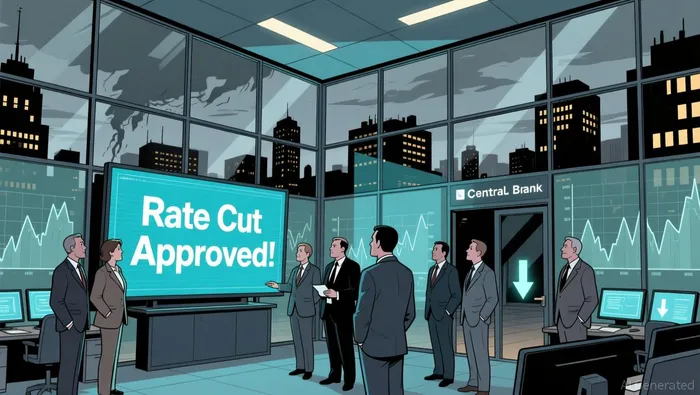
Federal Reserve Governor Christopher Waller reiterated his support for a 25-basis-point rate cut at the central bank's December meeting, citing a weakening labor market and subdued inflationary pressures. In a speech in London, Waller, a prominent contender for the next Fed chair, argued that the job market is "near stall speed" and that restrictive monetary policy is disproportionately harming lower- and middle-income households according to analysis. His stance aligns with broader concerns about the economic impact of high interest rates, though it contrasts with recent signals from other Fed officials who have grown more cautious about further cuts.
The Fed's decision hinges on a patchwork of delayed data, including the September employment report, which will be released on Thursday after being postponed due to a 43-day government shutdown. Waller emphasized that alternative data sources reinforce his view that the labor market is deteriorating. However, markets have priced in a 42.9% chance of a December cut as of November 17, down sharply from 93.7% in October, reflecting growing skepticism about the need for additional easing. Analysts note that recent comments from Fed hawks have cooled expectations, with Deutsche Bank describing the debate as "far from assured" according to market analysis.
 White House economic adviser Kevin Hassett added nuance to the discussion, acknowledging "mixed signals" in the job market but highlighting "really positive signals in the output markets." He suggested that advancements in AI could reduce firms' reliance on hiring, potentially prolonging a period of subdued labor demand according to his comments. This perspective underscores the Fed's challenge in balancing weak employment data with broader economic resilience.
The uncertainty is compounded by the absence of key economic indicators. The delayed September jobs report and other data releases will shape the Fed's final decision in its December 9–10 meeting. Waller, however, remains unmoved, stating that "months of weakening" in the labor market make it "unlikely" new data will alter his position. His comments highlight a divide within the Fed, where dovish officials like Waller see room for further cuts to stimulate growth, while others remain wary of inflation risks, which currently stand at 3% annually.
The broader financial landscape also reflects this tension. The New Zealand Dollar (NZD) gained traction after U.S. President Donald Trump removed tariffs on $1.25 billion of New Zealand exports, though expectations of a Reserve Bank of New Zealand rate cut this month limited its upside according to economic analysis. Meanwhile, the CME FedWatch tool showed a 46% probability of a December rate cut as of November 17, down from 67% a week earlier, as traders recalibrated their bets in response to shifting official rhetoric.
As the Fed navigates this complex environment, the coming weeks will test its ability to reconcile divergent signals. With Waller's dovish stance and Hassett's cautious optimism, the path forward remains uncertain, but one thing is clear: the labor market's fragility and the delayed data will dominate the central bank's deliberations.

Stay ahead of the market.
Get curated U.S. market news, insights and key dates delivered to your inbox.






Comments
No comments yet