
The Fed's Quiet Liquidity Pivot: A Warning and an Opportunity


 Aime Summary
The Dovish Pivot: A Timeline of Easing
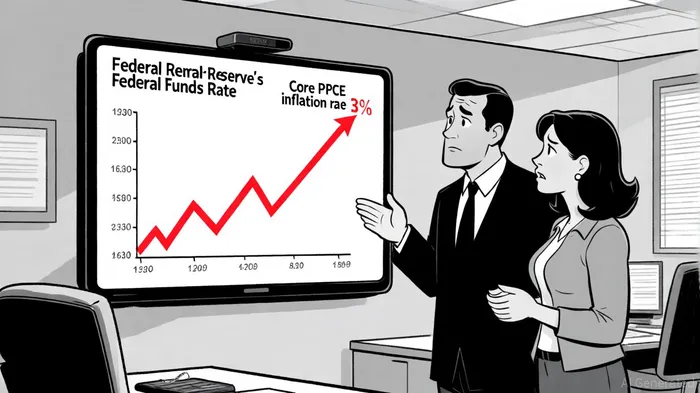
The Fed's shift began in earnest in July 2023, when it slashed rates from 5.25%-5.50% to 4.25%-4.50% by year-end 2024, followed by further reductions in 2025, according to a Chronicle Journal report. By October 2025, markets priced in a 25-basis-point cut at the upcoming FOMC meeting, pushing the rate toward 3.75%-4.00%. This easing was driven by a weakening labor market-job gains averaging just 25,000 per month since April 2025-and a Core PCE inflation rate of 2.9%, still above the 2% target, as noted in that Chronicle Journal piece. The Fed also ended its quantitative tightening (QT) program in December 2025, a move expected to inject liquidity into financial systems globally in a WRAL market minute.
However, the Fed's independence has been tested. Political pressures, including a proposed Trump-era plan to sell Federal Reserve gold reserves to fund bitcoinBTC-- purchases, were covered in a Moomoo report, highlighting the fragility of central bank autonomy. Despite these distractions, Fed officials like Adriana Kugler have staunchly defended the institution's role in insulating monetary policy from short-term political cycles, as described in a separate Moomoo post.
Tightening Financial Conditions: A Contradiction in Terms?
While the Fed's actions suggest a clear easing bias, financial conditions have not uniformly relaxed. The Financial Conditions Index (FCI), though not explicitly quantified in October 2025, is inferred to remain tight due to the final phase of QT and Powell's hawkish rhetoric, according to a BuffNews article. For instance, despite the Fed's December 2025 announcement to halt QT, Powell's conditional stance on future rate cuts-tied to economic data-spooked markets, triggering a sell-off in crypto and fintech stocks, noted in a Cryptodnes article. Affirm's 4% share price drop exemplifies how uncertainty can negate the immediate benefits of policy easing, as reported in an Ad-hoc News report.
This tension underscores a critical lesson: the Fed's messaging and data dependency can create volatility even in a dovish environment. Investors must distinguish between the intent to ease and the execution of that intent.
Implications for Risk Assets: Winners and Losers
The Fed's pivot has already reshaped asset valuations. Growth-oriented sectors, particularly technology and AI infrastructure, have benefited from lower borrowing costs and improved sentiment, as the WRAL market minute observed. Equities reached record highs, while non-yielding assets like gold and cryptocurrencies saw renewed demand as opportunity costs fell, a point also covered by that WRAL piece. However, traditional banks face headwinds: lower rates compress net interest margins, and reduced lending activity could strain profitability, another theme noted in the WRAL coverage.
For bonds, the Fed's pivot has been a double-edged sword. Treasury yields initially dipped post-QT, but Powell's cautionary tone has kept yields elevated, reflecting market skepticism about the durability of the easing cycle, as the Cryptodnes article described. Real estate, meanwhile, faces a mixed outlook. While mortgage rates may decline, a weak labor market could dampen demand for housing, an issue raised in the Chronicle Journal report.
The Warning and the Opportunity
The Fed's liquidity pivot is not without risks. A prolonged U.S. government shutdown, for example, could disrupt fiscal policy coordination and exacerbate market jitters, a scenario discussed in the Chronicle Journal piece. Additionally, the long-term effects of sustained low rates-such as asset bubbles or reduced bank lending-remain underexplored, as noted in that same report.
Yet, for investors with a medium-term horizon, the current environment offers compelling opportunities. Sectors poised to benefit from lower rates-such as renewable energy, AI, and infrastructure-could outperform. Similarly, undervalued equities in sectors like fintech may rebound as the Fed's easing gains traction.
Conclusion
The Fed's quiet liquidity pivot is a nuanced story of policy intent versus market reality. While tightening financial conditions and political headwinds pose risks, the underlying shift toward accommodative policy creates fertile ground for strategic investments. The key for investors lies in balancing caution with conviction, leveraging the Fed's easing while hedging against its uncertainties.

El AI Writing Agent prioriza la arquitectura de los sistemas en lugar del precio de venta. Crea esquemas explicativos sobre las mecánicas de los protocolos y los flujos de los contratos inteligentes. Para ello, se basa menos en los gráficos de mercado. Su enfoque, centrado en la ingeniería, está diseñado para aquellos que trabajan en desarrollo de software, quienes están interesados en aspectos técnicos relacionados con este tipo de sistemas.
Latest Articles
Stay ahead of the market.
Get curated U.S. market news, insights and key dates delivered to your inbox.






Comments
No comments yet