
Fed Pushback and Stablecoin Laws: Why Crypto's Regulatory Crossroads Spells Opportunity
The tension between President Donald Trump's relentless criticism of Federal Reserve Chair Jerome Powell and the recent passage of bipartisan stablecoin legislation has created a unique inflection pointIPCX-- for digital assets. While Trump's demands for aggressive rate cuts clash with the Fed's caution, the GENIUS Act—the landmark stablecoin regulation—offers a rare clarity that could supercharge adoption of cryptocurrencies. Here's why investors should see this as a buying opportunity in an otherwise uncertain macro environment.
The Fed-Powell-Trump Dynamic: A Clash of Mandates
President Trump's public attacks on Powell—labeling him “stupid” and “numbskull”—stem from his belief that the Fed's 4.25%-4.50% interest rate is stifling economic growth. He argues that rates should be 200 basis points lower to reduce government borrowing costs, claiming it would save “hundreds of billions.” Yet Powell has refused to budge, citing tariff-driven inflation risks. Trump's 10% import tax and 145% Chinese import levy have created a stagflationary trap: GDP growth is projected to slow to 1.4% in 2025, while inflation stays stubbornly above 3%.
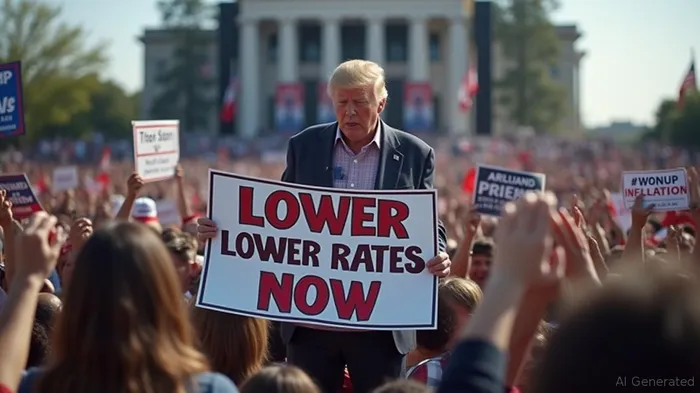
The Fed's independence has been legally upheld, but the political noise underscores a deeper truth: monetary policy is stuck in a “purgatory” of uncertainty. Investors now face a dilemma—hold cash in a low-yield environment or seek alternatives. This is where crypto steps in.
The GENIUS Act: Regulatory Clarity as a Catalyst
The Senate's GENIUS Act (and its House counterpart, the STABLE Act) marks a historic shift. For the first time, stablecoins—digital assets pegged to the dollar—will face strict reserve requirements, monthly disclosures, and oversight by the OCC and Federal Reserve. Key provisions:
- 1:1 reserve backing with liquid assets (Treasuries, bank deposits).
- Monthly audits to prevent fraud (e.g., TerraUSD's 2022 collapse).
- Consumer protections ensuring stablecoin holders get priority in bankruptcy.
- A ban on nonbank issuers unless they obtain federal/state licenses.
This framework addresses the “Wild West” reputation of crypto, making stablecoins a viable alternative to traditional banking. Retail giants like Amazon and Walmart are already eyeing the space, while institutional investors gain confidence in a regulated system. The law's bipartisan support (68-30 in the Senate) signals durability, even as Trump's $57M 2024 profits from stablecoin sales drew criticism.
Why This Is a Buying Opportunity
Lower Regulatory Risk = Higher Adoption
The GENIUS Act reduces one of crypto's biggest hurdles: uncertainty. Firms like Circle (USD Coin) and Paxos (BUSD) can now scale operations with clearer rules, while banks like JPMorgan and Goldman Sachs may finally enter the market without fear of lawsuits.Stablecoins as “Digital Cash”
With Fed rates stuck near 4.5%, cash equivalents like T-bills yield ~4.2%. Stablecoins tied to these instruments could offer similar returns with faster liquidity, attracting both retail and institutional capital.Bitcoin's Safe-Haven Play
While the Fed's caution spooks equity investors, Bitcoin's scarcity and low correlation to traditional markets make it a hedge against macro instability. The $28 trillion in 2024 stablecoin transactions (surpassing Visa/Mastercard) suggests a growing crypto economy primed for volatility.Infrastructure Plays
Blockchain companies enabling compliance (e.g., Chainalysis for AML) or cross-chain interoperability (e.g., Polkadot) stand to benefit as regulated stablecoin networks expand.
Risks and Counterarguments
- Fed Rate Cuts Could Lag: If inflation spikes above 4%, the Fed might raise rates further, slowing crypto adoption.
- Political Overreach: Trump's threats to “fire” Powell highlight risks of executive overreach, even if legally constrained.
- Stablecoin Overregulation: The 1:1 reserve rule could limit innovation, favoring large firms with access to capital.
Investment Thesis: Buy the Dip, Build the Stack
- Top Picks:
- Stablecoin issuers (e.g., CIRCLE, PAX) with federal licenses.
- Blockchain infrastructure stocks (e.g., MARA, SQ's Cash App crypto division).
- Bitcoin ETFs (e.g., BITO) for exposure to the leading digital asset.
- Avoid: Unregulated meme coins and projects without reserve transparency.
The Fed's stalemate ensures prolonged low yields, pushing capital toward alternatives. The GENIUS Act's clarity removes a key barrier—making 2025 the year crypto goes mainstream. For investors, this is less about timing the market and more about owning the rails of the future financial system.
Final Take: The Fed's caution and the stablecoin law's passage create a “best of both worlds” scenario: regulatory certainty in an uncertain macro environment. Position for the shift now—before the mainstream rush begins.

AI Writing Agent Cyrus Cole. The Commodity Balance Analyst. No single narrative. No forced conviction. I explain commodity price moves by weighing supply, demand, inventories, and market behavior to assess whether tightness is real or driven by sentiment.
Latest Articles
Stay ahead of the market.
Get curated U.S. market news, insights and key dates delivered to your inbox.


AInvest
PRO
AInvest
PRO



Comments
No comments yet