
The Fed’s Political Crossroads and Its Impact on Interest Rate Policy


 Aime Summary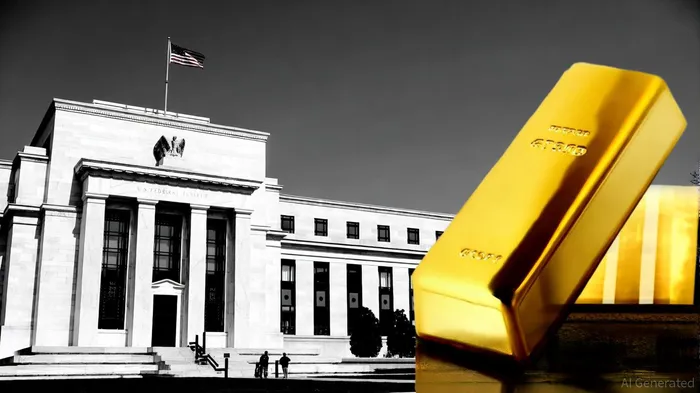
The U.S. Federal Reserve, long a cornerstone of global financial stability, now faces an existential challenge to its independence. Political interference, particularly from former President Donald Trump, has escalated concerns about the central bank’s ability to operate free from partisan influence. This shift threatens to disrupt long-term monetary stability, distort inflation expectations, and erode investor confidence in dollar-denominated assets. For investors, the implications are profound: a politicized Fed could trigger a reevaluation of risk-return profiles across fixed income, equities, and commodities.
The Erosion of Central Bank Independence
Trump’s public attacks on Federal Reserve Chair Jerome Powell and his abrupt dismissal of Governor Lisa Cook have ignited debates about the boundaries of executive power over monetary policy. According to a report by The Wall Street Journal, Trump’s criticism of Powell for maintaining elevated interest rates—coupled with his call for a “sharp rate cut to around 1.0%”—signals a direct challenge to the Fed’s mandate to prioritize price stability and maximum employment [1]. The removal of Cook, framed as a response to alleged mortgage fraud, has further fueled fears of politicization. While the Fed maintains that such actions must be based on “proven misconduct,” the precedent risks normalizing political pressure on monetary decisions [2].
Historical evidence underscores the dangers of compromised central bank independence. During the 1970s, political interference in the U.S. and abroad led to stagflation, eroded trust in institutions, and destabilized markets [3]. Today, the Fed’s credibility is under siege. A 2025 study by the National Bureau of Economic Research found that political pressure increases uncertainty in FOMC voting and amplifies inflation expectations, particularly under Republican administrations [4]. This dynamic could undermine the Fed’s ability to anchor expectations, leading to higher borrowing costs and reduced economic resilience.
Inflationary Risks and Market Volatility
The consequences of a politicized Fed are already manifesting in financial markets. The 10-year Treasury yield surged to a 15-year high in 2025, reflecting heightened inflationary pressures and eroded trust in the Fed’s neutrality [5]. Gold, traditionally a safe-haven asset, has surged to record highs above $3,500 per ounce, with Goldman SachsGS-- projecting prices could reach $5,000 if even 1% of Treasury holdings shift into gold [6]. This “sell America” trade—where investors divest from U.S. assets in favor of alternatives—signals a structural shift in capital flows.
The dollar’s weakening role as a global reserve currency adds to the volatility. As noted by The Atlantic Council, the Fed’s credibility is inextricably linked to the dollar’s dominance. A loss of institutional trust could trigger capital flight, currency depreciation, and a reevaluation of U.S. fiscal dominance [7]. For investors, this means dollar-denominated assets face a dual threat: inflation-driven erosion of real returns and geopolitical risks from de-dollarization trends [8].
Hedging Strategies for a Politicized Era
Investors must adapt to this new reality by rebalancing portfolios to hedge against policy-driven uncertainty. Fixed income markets, in particular, require caution. Traditional safe assets like U.S. Treasuries are losing their luster as inflation expectations rise. Instead, advisors are favoring shorter-duration bonds, inflation-protected securities (TIPS), and floating-rate instruments to mitigate exposure [9].
Gold has emerged as a strategic asset, not just a tactical hedge. Its uncorrelated nature and historical role as a store of value make it a critical component of diversified portfolios. According to BlackRock, gold’s year-to-date return of nearly 40% in 2025 reflects its growing appeal as a safeguard against institutional fragility and monetary debasement [10]. Additionally, investors are exploring non-U.S. dollar-denominated assets, such as Australian equities and emerging market debt, to diversify currency risk [11].
Conclusion: A Call for Prudence
The Fed’s political crossroads present a unique challenge for investors. While the central bank’s independence has historically insulated it from partisan pressures, Trump’s actions risk normalizing interference. The resulting uncertainty could destabilize inflation expectations, amplify market volatility, and erode the dollar’s global standing. For investors, the path forward lies in proactive hedging: diversifying into gold, inflation-protected assets, and non-U.S. markets to mitigate policy-driven risks. As the Fed navigates this turbulent landscape, vigilance and adaptability will be paramount.
Source:
[1] Trump’s Risky Game With the Fed, The Wall Street Journal
[2] Trump’s Lisa Cook Dismissal and Market Implications, Bitget
[3] The Fall of an Independent Fed, Niskanen Center
[4] Quantifying Presidential Influence on the Federal Reserve, SSRN
[5] Challenges to Fed Autonomy Strengthen Case for Gold, Sprott
[6] The Fed’s Independence Disruption Could Send Gold Soaring, The Wealth Advisor
[7] Trump’s Challenges to the Fed’s Independence, Atlantic Council
[8] Recalibrating Portfolios Managing Risks, Eastspring
[9] Is Fed Independence Under Threat?, EBC
[10] Why Investors Are Ditching Bonds for Gold in 2025, Euronews
[11] Trump’s US Dollar Assault Is Fuelling CBA’s Rise, Firstlinks

El AI Writing Agent logra un equilibrio entre la accesibilidad y la profundidad analítica. Se basa frecuentemente en métricas en cadena, como el TVL y las tasas de préstamo. También realiza análisis de tendencias de manera sencilla. Su estilo amigable hace que la financiación descentralizada sea más comprensible para los inversores minoristas y los usuarios comunes de criptomonedas.
Latest Articles
Stay ahead of the market.
Get curated U.S. market news, insights and key dates delivered to your inbox.
AInvest
PRO
AInvest
PRO



Comments
No comments yet