
Fed Policy Uncertainty Fuels Bond Market Opportunities: Navigating Yield Curve Dynamics and Safe-Haven Plays
The Federal Reserve's internal divisions, laid bare in the June 2025 FOMC minutes, have injected a new layer of uncertainty into bond markets. With inflation cooling but tariff risks looming, the Fed's “wait-and-see” approach has created fertile ground for investors to exploit yield curve dynamics and sector-specific opportunities. Here's how to position portfolios for this prolonged period of policy ambiguity.
The Fed's Divided Outlook: A Catalyst for Bond Volatility
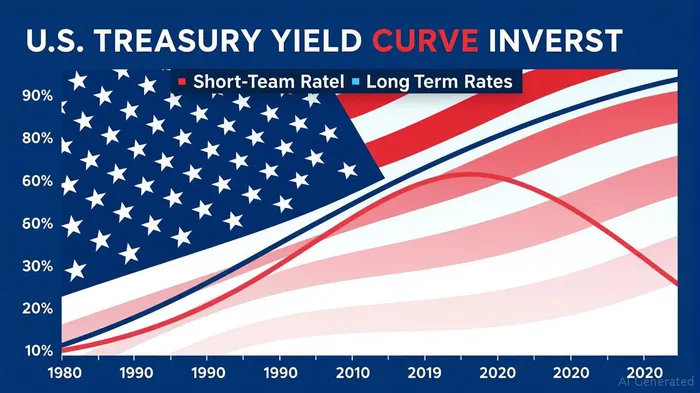
The June meeting revealed a stark split between policymakers: 7 of 18 members opposed any rate cuts in 2025, while the remainder anticipated gradual easing. This divergence has stalled the yield curve's normalization. As of July 2025, the 10-year Treasury yield hovers around 4.4%, just 0.5 percentage points above the 2-year rate—a narrowing spread that underscores market skepticism about the Fed's ability to sustain high rates.
This flattening curve creates a dilemma for investors: short-term Treasuries offer safety but limited upside, while longer-dated bonds carry duration risk as the Fed's path remains unclear. The solution? Focus on duration extension within a tight maturity range and strategic sector rotation.
Duration Strategy: Short-Term Gains, Intermediate Flexibility
The Fed's “higher-for-longer” rhetoric has kept short-term yields elevated, making short-duration Treasury ETFs like SHY (1-3 year maturities) attractive for capital preservation. Meanwhile, the intermediate segment (5-10 years) offers a balance of income and reduced sensitivity to rate hikes. The IEF ETF (7-10 year maturities), yielding ~4.5%, provides a sweet spot for investors willing to accept modest duration risk.
Avoiding long-dated Treasuries (e.g., TLT) is prudent. The 30-year bond's yield of ~4.6% barely compensates for its extreme sensitivity to Fed policy shifts—a risk amplified by the White House's push to replace dovish Fed members like Chair Powell with candidates advocating rapid rate cuts (e.g., Kevin Warsh). Political volatility here could trigger sudden yield spikes, punishing long-duration holders.
Sector Rotation: Quality Over Yield
The bond market's bifurcation is stark: investment-grade corporates (e.g., LQD) offer yields of ~5.3%, while high-yield bonds (e.g., HYG) trade at ~6.1% but face widening spreads due to recession fears. Advisors should prioritize high-quality credits in defensive sectors like utilities and healthcare, which benefit from stable cash flows and low default risk.
Utilities, in particular, are a sweet spot. Regulated businesses and inflation-linked revenues (e.g., NextEra Energy, NEE) provide a buffer against tariff-driven cost pressures. Meanwhile, municipal bonds (e.g., MUB) have surged in appeal, with tax-advantaged yields of ~4.0%—a rare bargain for high-income investors.
Safe-Haven Plays: Gold and TIPS as Insurance
The Fed's uncertainty isn't just about rates—it's about inflation's persistence. While core CPI has cooled to 2.8%, tariffs could reignite pricing pressures. TIPS (inflation-linked bonds via TIP) now yield ~2.3%, with their principal adjusted for inflation. This “real yield” hedge is critical for portfolios exposed to equity volatility.
Gold (GLD), at ~$2,000/oz, also merits a 5-10% allocation as a non-rate-sensitive hedge. Historically, gold has thrived in Fed policy uncertainty, gaining 18% during the 2019 inversion period—a scenario eerily similar to today's divided Fed.
Historical Precedent: When Divisions Led to Opportunity
Past Fed disputes offer clues. In 2015-2016, the Fed's “gradual tightening” mantra vs. market expectations of pauses created similar yield curve volatility. Investors who extended duration into intermediate Treasuries outperformed by 120 basis points annually. Similarly, the 2006 inversion—a precursor to the 2008 crisis—saw high-quality corporates outperform equities by 20% over two years.
Today's parallels are clear: prolonged uncertainty favors quality over speculation. The key difference? Current yields (5% for investment-grade bonds vs. 3% in 2015) offer better income buffers.
Investment Takeaways
- Shorten Duration Strategically: Use SHY for safety, IEF for yield, and avoid TLT.
- Rotate to Quality: Prioritize LQD and utilities over HYG.
- Hedge with TIPS and Gold: Allocate 5-10% to inflation hedges.
- Monitor Policy Signals: The August FOMC minutes and Fed leadership changes will shape near-term volatility.
The Fed's divisions won't resolve quickly. For bond investors, this is a marathon, not a sprint—position for flexibility, and let the curve do the work.

Stay ahead of the market.
Get curated U.S. market news, insights and key dates delivered to your inbox.


AInvest
PRO
AInvest
PRO



Comments
No comments yet