
Fed Policy Stance and Bank Capital Rules Signal Prudent Adjustments Amid Inflationary Pressures
 Aime Summary
The inflationary backdrop remains a critical concern. The consumer price index (CPI) rose 3% year-over-year in September 2024, while the personal consumption expenditures (PCE) price index—the Fed’s preferred gauge—stood at 2.7% growth . Bostic warned that elevated inflation expectations could necessitate "some pain, in the form of higher unemployment," to realign them with long-term targets . This highlights the central bank’s dilemma: maintaining price stability while avoiding measures that could destabilize an already fragile labor market .
Meanwhile, the Fed is preparing to address market liquidity challenges through unconventional means. While no detailed policy outline was provided, officials have signaled a potential shift toward bond purchases to manage liquidity, particularly as the government shutdown delays critical economic data . Such measures could provide a counterbalance to the restrictive monetary environment, though Bostic cautioned against "pumping fresh blood into the inflation beast" through accommodative policies .
In a parallel development, U.S. regulators have finalized a plan to relax capital requirements for major banks, signaling a shift in financial stability priorities. The proposed changes to the enhanced Supplementary Leverage Ratio (SLR) will reduce capital buffers for global systemically important banks (GSIBs) like JPMorgan ChaseJPM--, Bank of AmericaBAC--, and Goldman SachsGS-- by up to 27% for their depository subsidiaries . This adjustment replaces a fixed 2% buffer with one tied to half of each bank’s GSIB surcharge, effectively freeing $213 billion in capital for reinvestment .
The relaxation of capital rules aims to enhance banks’ operational flexibility, particularly in Treasury trading and lending activities . Regulators argue that lower capital requirements will support market stability during stress periods while maintaining adequate safeguards. For instance, banks will retain sufficient capital to absorb losses, ensuring they can fulfill critical roles in the financial system . However, the move also raises questions about the trade-off between profitability and risk management, as reduced buffers could incentivize riskier lending or asset allocation .
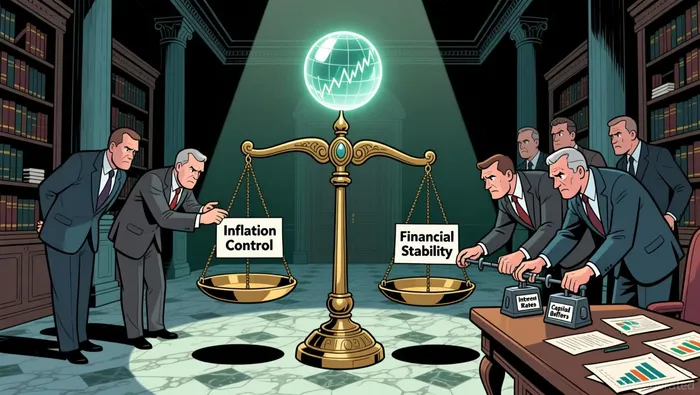
The interplay between these policy adjustments reflects broader macroeconomic tensions. The Fed’s reluctance to accelerate rate cuts despite inflation easing suggests a focus on preventing a relapse into higher inflation expectations . Simultaneously, the relaxation of bank capital rules indicates a willingness to bolster private-sector resilience, potentially offsetting the drag from tighter monetary policy. Together, these measures signal a dual-track approach: maintaining price stability through rate caution while supporting credit availability through regulatory flexibility .
The government shutdown’s role in delaying key economic data, including the PCE price index, adds complexity to the Fed’s decision-making process . Without timely data, policymakers risk operating with incomplete information, potentially delaying adjustments to monetary policy. This highlights the fragility of the current framework, where timely data is critical for both inflation monitoring and market liquidity management .
For markets, the combined effect of these policies could be mixed. The Fed’s rate-holding stance may limit near-term volatility in bond yields, while the relaxed capital rules could expand credit availability, supporting economic growth . However, the lack of clarity around liquidity management tools, such as bond purchases, introduces uncertainty . Investors will need to monitor the Fed’s balance sheet adjustments and the pace of inflation data releases to gauge the trajectory of monetary policy .

Senior Research Analyst at Ainvest, formerly with Tiger Brokers for two years. Over 10 years of U.S. stock trading experience and 8 years in Futures and Forex. Graduate of University of South Wales.
Latest Articles
Stay ahead of the market.
Get curated U.S. market news, insights and key dates delivered to your inbox.
AInvest
PRO
AInvest
PRO



Comments
No comments yet