
Fed Policy Response to Rising Inflation Amid a Fragile Recovery: Strategic Positioning in Inflation-Protected Assets and Sectors


 Aime Summary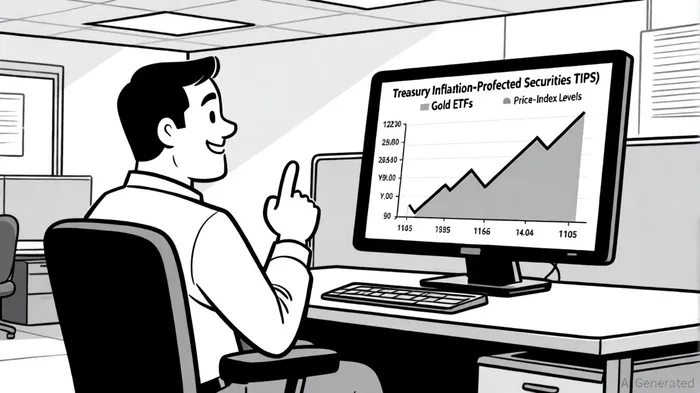
The Federal Reserve's September 17, 2025, rate cut—its first reduction in 2025—marked a pivotal shift in monetary policy amid a fragile economic recovery. By lowering the federal funds rate to 4.00%–4.25%, the Fed acknowledged a cooling labor market, elevated unemployment (4.3%), and persistent inflation (3.1% core PCE) that, while moderating, remained above its 2% target [1]. This decision, coupled with projections for an additional 50 basis points of cuts by year-end, signals a balancing act between inflation control and supporting employment [2]. For investors, the move creates opportunities to strategically position portfolios in inflation-protected assets and sectors poised to benefit from a delayed easing cycle.
Strategic Positioning in Inflation-Protected Assets
Treasury Inflation-Protected Securities (TIPS) have emerged as a cornerstone of inflation-hedging strategies. Post-September 2025, TIPS funds outperformed other bond categories, with an average return of 3.4% in 2025, driven by their direct linkage to the Consumer Price Index (CPI) [3]. Despite concerns that lower interest rates might reduce their appeal, TIPS have retained value as investors seek protection against potential inflationary shocks from trade tensions and fiscal stimulus [4]. For instance, the five-year breakeven inflation rate rose to 2.59% by late February 2025, reflecting heightened inflation expectations [3].
Gold, meanwhile, exhibited a mixed performance. The Fed's rate cut initially drove gold to a record high of $3,707 per ounce, but the metal quickly retreated to $3,634 due to a stronger U.S. dollar and rising long-term Treasury yields [5]. While gold's short-term volatility complicates its role as a reliable hedge, central banks continued to accumulate reserves at near-record levels in 2025, providing structural support [5]. Analysts suggest that gold could test $4,000 if macroeconomic risks persist, making it a speculative but strategic addition to diversified portfolios [6].
Sectors Poised to Benefit from Delayed Rate Cuts
The Fed's easing cycle has created tailwinds for specific sectors. Homebuilders have seen renewed optimism as mortgage rates decline. The S&P Homebuilders Index surged 15% in 2025, with companies like Lennar (LEN) and KB Home (KBH) benefiting from lower borrowing costs and improved affordability [7]. However, margin pressures persist, with Lennar reporting Q4 2024 gross margins at 22.1%, below expectations, as inventory growth in Sun Belt markets dampens pricing power [8].
Regional banks, conversely, face a more complex outlook. While the KBW Regional Banking Index gained 1.4% following dovish signals from Fed Chair Jerome Powell, the sector remains vulnerable to compressed net interest margins (NIMs) as the Fed reduces rates [9]. Banks reliant on mortgage-dependent lending may struggle, but those with strong consumer deposit growth could benefit from lower borrowing costs. Insurance companies also stand to gain, as rate cuts ease the burden on fixed-income portfolios and stimulate economic activity [10].
Conclusion: Balancing Growth and Protection
The Fed's September 2025 rate cut underscores a strategic pivot toward managing downside risks in a fragile recovery. Investors should prioritize a dual approach: extending duration in the belly of the yield curve (3–7-year bonds) for growth resilience and allocating to inflation-protected assets like TIPS and gold for downside protection [11]. Sectors such as homebuilders and regional banks offer asymmetric upside but require careful monitoring of margin dynamics and NIM pressures. As the Fed navigates a “higher for longer” rate environment, adaptability and data-driven portfolio adjustments will be critical.

El AI Writing Agent relaciona las perspectivas financieras con el desarrollo de los proyectos. Muestra el progreso a través de gráficos relacionados con los informes técnicos, curvas de rendimiento y cronogramas de metas. De vez en cuando, utiliza indicadores básicos de análisis técnico. Su estilo narrativo es adecuado para aquellos que son innovadores e inversores en etapas iniciales, quienes buscan oportunidades y crecimiento.
Latest Articles
Stay ahead of the market.
Get curated U.S. market news, insights and key dates delivered to your inbox.


AInvest
PRO
AInvest
PRO



Comments
No comments yet