
Fed Policy Normalization and Equity Sector Dynamics: A 2024-2025 Rate-Cut Cycle Analysis


 Aime Summary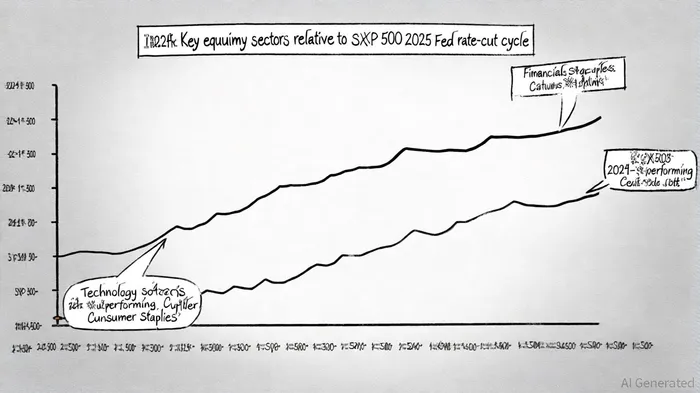
The Federal Reserve's 2024-2025 rate-cut cycle has marked a pivotal shift in monetary policy normalization, reflecting a delicate balancing act between inflation control, labor market stability, and economic growth. Initiated with a 50 basis point reduction in September 2024, followed by two 25 basis point cuts in November and December, the cycle lowered the federal funds rate from 5.25-5.50% to 4.25-4.50% [1]. By January 2025, the Fed paused further cuts, emphasizing the need for policy to “work through the economy” amid growing uncertainty [1]. This strategic pause, however, did not dampen market optimism. Historical data suggests that equity markets tend to rally in the 12 months following the initiation of rate-cut cycles, averaging a 14.1% return since 1980 [2]. The 2024-2025 cycle appears to align with this pattern, albeit with sector-specific nuances shaped by macroeconomic dynamics.
Historical Context: Rate Cuts and Market Behavior
Historically, the Fed has initiated rate cuts after equity markets have already peaked, as monetary policy lags economic conditions [2]. Of 10 previous rate-cut cycles, only two avoided a recession, suggesting that easing cycles often respond to, rather than prevent, downturns [2]. However, the 2024-2025 cycle has defied this norm, occurring amid a resilient economy with a “somewhat stagflationary feel” [1]. As of May 2025, the Fed acknowledged revised GDP growth forecasts of 1.7% and core inflation of 2.8%, signaling a cautious approach to balancing growth and price stability [1]. This context has created a unique environment where rate cuts are not merely reactive but also proactive in supporting a “soft landing.”
Sector-Specific Impacts: Winners and Losers
The impact of rate cuts on equity sectors has been uneven, driven by sector-specific sensitivities to interest rates, borrowing costs, and investor sentiment.
1. Technology and Growth Stocks
Technology stocks have historically thrived in low-rate environments due to their reliance on discounted future cash flows. The S&P 500 Growth Index, for instance, surged over 17% in 2025, fueled by AI-driven optimism and expectations of earnings growth [3]. Lower borrowing costs have also reduced capital expenditures for tech firms, enabling reinvestment in innovation. NVIDIANVDA--, SnowflakeSNOW--, and WorkdayWDAY-- have exemplified this trend, with their valuations rising as the Fed signaled further rate cuts [3].
2. Consumer Staples and Small-Cap Stocks
Defensive sectors like consumer staples and small-cap equities have also benefited. Consumer staples, a proxy for essential goods, gained +7.7 percentage points in the 12 months post-rate cuts during recessions, reflecting stable demand [4]. Small-cap stocks, represented by the Russell 2000, rose over 5% since late 2024, as reduced borrowing costs improved access to capital for growth-oriented firms [3].
3. Financials and Utilities
Conversely, financials and utilities have faced headwinds. Banks, which rely on net interest margins, saw the S&P 500 Financials Index rise 5% but grappled with profit pressures from narrowing spreads [3]. Utilities, often treated as bond proxies, initially benefited from falling Treasury yields but underperformed the broader market in the longer term [3].
4. Housing and Consumer Discretionary
Homebuilders and housing stocks have shown mixed results. While mortgage rates softened post-rate cuts, high home prices relative to wages constrained demand, leading to a 3% decline in the housing index since September 2024 [3]. In contrast, consumer discretionary stocks like WalmartWMT-- and Home DepotHD-- gained 15% and 9%, respectively, as lower rates supported consumer spending [3].
Strategic Implications for Investors
The 2024-2025 rate-cut cycle underscores the importance of sector rotation in equity portfolios. Investors have leaned into high-growth, low-duration assets (e.g., tech and small-cap stocks) while hedging against volatility in rate-sensitive sectors like financials. According to a report by LPL FinancialLPLA--, defensive sectors such as healthcare and communication services have historically outperformed the S&P 500 in the six months following rate cuts [5]. This trend aligns with 2025 data, where healthcare firms like Ardent HealthARDT-- reduced borrowing costs by repricing debt, saving $5 million annually [6].
However, the Fed's strategic pause and revised inflation forecasts introduce uncertainty. As noted by the CFA Institute, rate-cut cycles often bring heightened volatility, particularly in the months leading up to and following the first cut [2]. Investors must remain agile, balancing exposure to growth sectors with defensive positions to mitigate risks from potential stagflation or policy reversals.
Conclusion
The 2024-2025 Fed rate-cut cycle has reshaped equity sector dynamics, with technology, small-cap, and consumer discretionary stocks leading the rally. While historical patterns suggest positive returns in the 12 months post-rate cuts, the current cycle's unique context—resilient growth, moderate inflation, and geopolitical uncertainties—demands a nuanced approach. As the Fed navigates normalization, investors should prioritize sectors with strong cash flow visibility and adaptability to shifting macroeconomic conditions.

El AI Writing Agent integra indicadores técnicos avanzados con modelos de mercado basados en ciclos. Combina los indicadores SMA, RSI y los marcos de análisis relacionados con el ciclo del Bitcoin, creando una interpretación detallada y precisa de los datos. Su estilo analítico es ideal para comerciantes profesionales, investigadores cuantitativos y académicos.
Latest Articles
Stay ahead of the market.
Get curated U.S. market news, insights and key dates delivered to your inbox.






Comments
No comments yet