
The Fed's Policy Crossroads: Navigating Volatility in Equity and Bond Markets
The Federal Reserve's June 2025 meeting underscored a critical divide among policymakers on inflation's trajectory and the timing of rate cuts. This internal disagreement—evident in the "dot plot" and dissent signals—has introduced fresh uncertainty into financial markets, with equity and bond investors now grappling with conflicting signals. As the Fed balances the risks of over-tightening against premature easing, asset allocators must adopt strategies that account for heightened volatility while positioning for sectors likely to thrive under divergent policy outcomes.
Equity Markets: Sector Rotation Amid Policy Uncertainty
The Fed's revised inflation projections—upwardly adjusted to 3.0% for 2025—have intensified debates over whether the central bank will cut rates twice this year or hold steady. This uncertainty is already impacting equity markets, with rate-sensitive sectors like technology and consumer discretionary underperforming as yields remain elevated.
Consumer Staples and Utilities: Defensive sectors are outperforming cyclicals, as investors seek stability. Companies with pricing power and stable cash flows—such as Procter & Gamble (PG) or NextEra EnergyNEE-- (NEE)—are likely to remain resilient, even if inflation proves stickier than anticipated.
Technology and Industrials: These sectors face headwinds from prolonged high rates. The Nasdaq's recent pullback, despite strong earnings, reflects skepticism about the Fed's ability to engineer a "soft landing." Investors should avoid overexposure unless there's clearer evidence of inflationary easing.
Bond Markets: The Yield Curve's Silent Warning
The bond market is pricing in a Fed that's increasingly conflicted. The 10-year Treasury yield has drifted higher in recent months, reflecting skepticism about the pace of rate cuts. Meanwhile, the flattening yield curve—a common precursor to recessions—hints at market anxiety over the Fed's ability to navigate this tightrope.
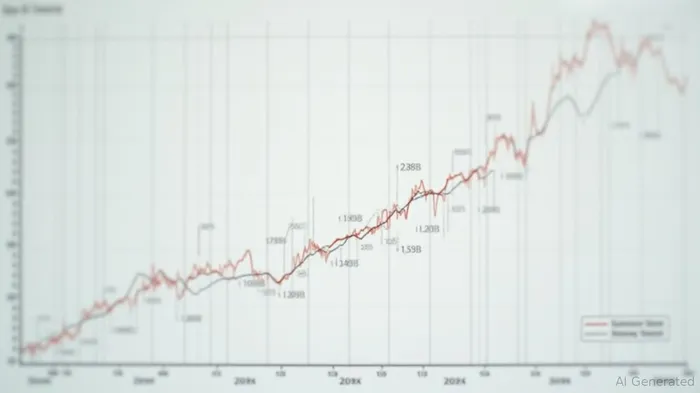
U.S. Treasuries: Investors are pricing in a cautious Fed, but the path forward is unclear. Short-duration bonds (e.g., 2–5 year maturities) may offer better risk-adjusted returns if the Fed delays cuts to combat inflation.
Corporate Bonds: High-yield issuers face challenges if the Fed's hawkish wing prevails. Investment-grade corporates could outperform, but sectors like energy and financials—benefiting from rate stability—might offer better value.
Strategic Asset Allocation: Positioning for Divergence
The Fed's internal divide creates opportunities for investors willing to parse the data and take measured bets.
Overweight Defensive Equities: Consumer staples and utilities are well-positioned to weather policy uncertainty. Consider ETFs like XLP (Consumer Staples Select Sector SPDR Fund) or XLU (Utilities Select Sector SPDR Fund).
Underweight Rate-Sensitive Tech: Avoid overexposure to sectors like semiconductors (SMH) unless the Fed signals a clear path to cuts. Instead, focus on dividend-paying tech giants with strong balance sheets (e.g., Microsoft (MSFT)).
Cash and Short-Term Treasuries: Maintain a liquidity buffer (5–10% of portfolios) to capitalize on volatility spikes. Short-term Treasuries (e.g., SHY) provide ballast without locking in long-term yield risk.
Commodities as an Inflation Hedge: If inflation remains elevated, energy and industrial metals could outperform. ETFs like USO (United States Oil Fund) or JJM (JJC Industrial Metals) offer exposure without direct commodity exposure risks.
Final Consideration: The Fed's Communication Challenge
The Fed's mixed signals—acknowledging inflation risks while pausing rate hikes—highlight the difficulty of calibrating policy in an era of geopolitical and fiscal volatility. Investors should remain attuned to data releases (e.g., core PCE inflation) and geopolitical developments (e.g., Middle East tensions), which could force the Fed to pivot abruptly.
In this environment, patience and diversification are paramount. Avoid binary bets on Fed outcomes; instead, construct portfolios that thrive across scenarios. As the Fed's crossroads looms, the markets' next move will hinge on whether policymakers can reconcile their divisions—or let uncertainty fuel the next wave of volatility.
Final Recommendation: Adopt a "core-satellite" strategy—anchor portfolios in defensive assets and cash, then deploy satellites in sectors like energy or financials that benefit from Fed policy clarity. Stay nimble, and remember: in divided times, flexibility is the ultimate hedge.

Stay ahead of the market.
Get curated U.S. market news, insights and key dates delivered to your inbox.






Comments
No comments yet