
Fed's Policy Compass Spins: Caution vs. Urgency in High-Stakes December Gamble


 Aime Summary
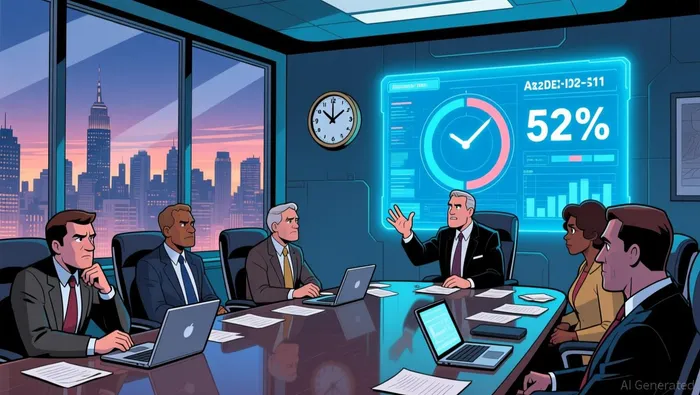
The Federal Reserve's December rate cut decision has become a high-stakes gamble, with market odds hovering near 50% and internal divisions among policymakers intensifying. Financial markets, as reflected in CME's FedWatch tool, now price a 52% chance of a 25-basis-point reduction in borrowing costs at the central bank's Dec. 10 meeting, down sharply from 95% a month ago. The uncertainty underscores a fractured policy landscape, as officials grapple with inflation stubbornly above 3%, a government shutdown delaying critical economic data, and diverging views on the path forward.
The Fed's hesitation is rooted in a growing chorus of hawks. Boston Fed President Susan Collins, a key architect of the October rate cut, has reversed course, stating she would oppose further easing without "notable labor market deterioration" according to her statement. San Francisco Fed President Mary Daly, once a vocal advocate for rate cuts, now calls the December decision "premature," while Minneapolis Fed President Neel Kashkari has openly dissented from recent easing, warning that inflation remains "too high" and that rate cuts could undermine the Fed's 2% target. These cautionary signals have pushed market expectations into flux, with short-term interest rate futures reflecting a 60% chance of no cut, according to Reuters.
 Complicating the debate is the absence of timely data. The government shutdown has delayed key inflation and labor market reports, leaving policymakers reliant on incomplete information. Collins explicitly cited this "limited information" as a reason to pause, while Fed Chair Jerome Powell acknowledged the need to proceed cautiously until the data "fog" clears. This vacuum has amplified the influence of private-sector indicators and anecdotal evidence, with officials like Apollo Global chief economist Torsten Slok noting that 55% of Consumer Price Index components are still rising faster than 3%.
The stakes extend beyond monetary policy. A delayed rate cut could cap gains in risk assets, particularly cryptocurrencies. BitcoinBTC--, trading near $103,000, has shown limited momentumMMT-- as investors weigh the Fed's next move according to Coindesk. Similarly, sectors sensitive to borrowing costs-such as real estate and growth stocks-face headwinds, while banks and financial institutions may benefit from a prolonged high-rate environment according to market analysis.
With the December meeting approaching, the Fed's path remains perilous. As Evercore ISI's Krishna Guha observed, Collins' public dissent raises concerns about Powell's ability to unify the Federal Open Market Committee, which has already seen multiple split votes this year according to Reuters reporting. The outcome will hinge on incoming data, but for now, the Fed's policy compass spins wildly between caution and urgency.

Comprender rápidamente la historia y el contexto de varias monedas conocidas
Latest Articles
Stay ahead of the market.
Get curated U.S. market news, insights and key dates delivered to your inbox.




Comments
No comments yet