
AInvest Newsletter
Daily stocks & crypto headlines, free to your inbox
 Aime Summary
The Federal Reserve's September 2025 decision to cut the federal funds rate by 25 basis points marked a pivotal shift in monetary policy-a move Chair Jerome Powell framed as "risk management" amid a cooling labor market and stubborn inflation, according to the
. This easing, the first since December 2024, signals a broader recalibration of the Fed's approach to balancing inflation control with economic stability. Yet the path forward remains fraught with internal divisions, market uncertainty, and structural challenges. For investors, the implications are clear: strategic asset allocation must now account for a Fed navigating a delicate tightrope between tightening and easing.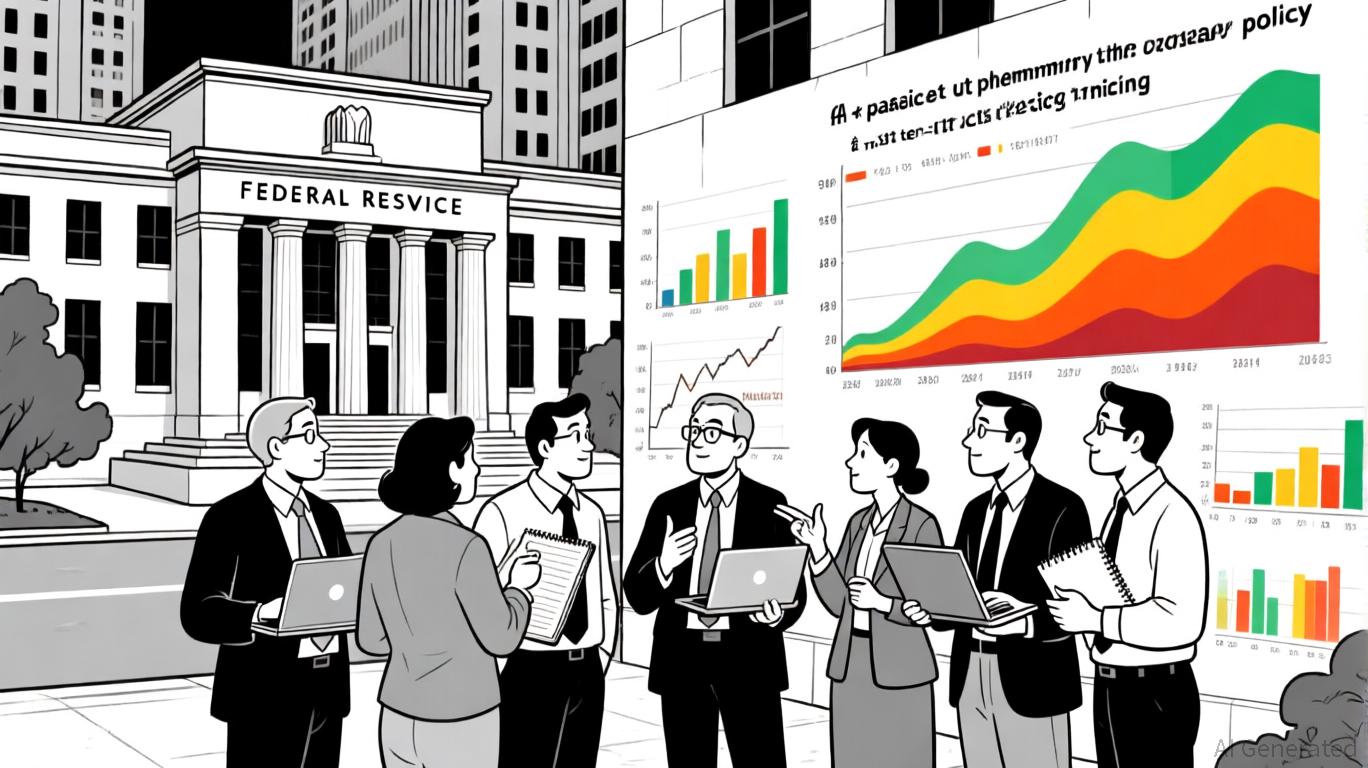
The September FOMC meeting minutes revealed stark disagreements among policymakers. While officials like Stephen Miran and Philip Jefferson advocated for more aggressive rate cuts to address slowing job growth and rising unemployment, hawks such as Lorie Logan warned against normalizing inflation at 3% and pushed for a "higher for longer" stance, according to
. Compounding this tension was the October 2025 government shutdown, which delayed critical economic data, creating what analysts call a "data blackout." This lack of clarity has left markets in limbo, with asset prices oscillating between optimism over easing and caution about inflation's persistence.Historical patterns suggest that Fed easing cycles often favor risk assets, but the current context is far from textbook. During past easing episodes (e.g., 2010s), U.S. large-cap stocks and growth sectors thrived as lower discount rates boosted valuations, as a
shows. However, the Fed's 2025 pivot occurs amid elevated inflation (core PCE at 2.9%) and a labor market teetering between resilience and fragility, according to the FOMC statement. This hybrid environment demands a nuanced approach to asset allocation.Equities: Sector Rotation Over Broad Exposure
Strategic asset allocation models from LPL Research and T. Rowe Price emphasize reducing exposure to large-cap growth stocks, which have underperformed amid higher rates, while favoring value equities and emerging markets. Sectors like real estate and infrastructure are also gaining traction as lower borrowing costs enhance cash flow and project viability, though investors must remain cautious: the Fed's internal fractures and data gaps could trigger volatility if inflation proves stickier than anticipated.
Fixed Income: The Belly of the Curve as a Safe Haven
Alternatives: Diversification in a Polarized Market
Commodities, gold, and
Given the Fed's fractured outlook and the data blackout, investors should adopt a multi-strategy approach:
- Hedge Against Divergent Outcomes: Allocate to assets that perform well in both easing and tightening scenarios (e.g., global macro funds, managed futures).
- Rebalance for Yield: Shift from cash to income-generating alternatives like high-yield corporate bonds or dividend-paying equities.
- Monitor Structural Shifts: Tariff-driven inflation and supply-chain adjustments may prolong inflation above 2%, a risk highlighted by dissenting Fed officials like Miran and noted by LPL Research.
The Fed's 2025 pivot is less a clean easing cycle and more a stopgap measure in a complex macroeconomic landscape. For risk assets, this means opportunities in sector-specific rotations and alternative allocations, but also heightened risks from policy missteps and data-driven volatility. As the Fed grapples with its dual mandate, investors must remain agile-prioritizing flexibility over rigid forecasts.

AI Product Manager at AInvest, former quant researcher and trader, focused on transforming advanced quantitative strategies and AI into intelligent investment tools.

Dec.03 2025

Dec.01 2025

Nov.27 2025

Nov.27 2025

Nov.27 2025
Daily stocks & crypto headlines, free to your inbox






Comments
No comments yet