
The Fed's Pivot and Tech's Turbulent Week: Powell, Earnings, and a Hollywood Shake-Up
 Aime Summary
As December deepens, the financial world braces for a confluence of pivotal events that could redefine market trajectories into 2026.
From the Federal Reserve's anticipated rate cut amid internal rifts to high-stakes earnings from tech giants OracleORCL-- and BroadcomAVGO--, the week ahead pulses with uncertainty. Add OpenAI's hurried counterpunch to Google's AI dominance and the regulatory minefield surrounding Netflix's blockbuster bid for Warner Bros.WBD--, and investors face a landscape ripe for volatility.
Jerome Powell's leadership hangs in the balance, while corporate maneuvers in tech and media test the limits of innovation and consolidation.
Central Banks Brace for the Fed's Lead
The Federal Reserve's December meeting looms as the week's centerpiece, with Chair Jerome Powell poised to deliver a quarter-point rate cut despite mounting dissent within the ranks. Just weeks ago, market odds dipped below 50% for this move, fueled by hawkish commentary and sparse data amid a government shutdown. But sentiment has swung decisively, now exceeding 90% probability, bolstered by signals from New York Fed President John Williams and a tick up in unemployment.
Powell's push comes against a backdrop of division: five voting members expressed reservations after October's cut, citing persistent inflation. With the latest data stuck in September's rearview, economists anticipate a pause post-December, resuming with reductions in March and September 2026. Yet, drama simmers—President Trump's imminent nomination of a successor, with Kevin Hassett as frontrunner, stirs fears of politicized policy that could ignite inflation anew. As one analysis quips, Powell's hawkish leanings might soon be moot, rendering him a lame duck by February.
The European Central Bank, fresh off holding at 2% in October, is likely to stay pat through 2026's energy-driven undershoot, per Deutsche Bank. Meanwhile, the Bank of Japan eyes a potential hike, with government non-interference signaling bolder moves—though 10-year JGB yields at 2007 highs warn of bond market turbulence.
Even the Bank of Canada holds steady at 2.25%, deeming it "about right" despite mixed growth signals: robust third-quarter GDP masked by import dips and military spending, while core inflation lingers elevated. Decisions from Australia, Brazil, and others, plus euro-area finance chiefs electing a new chair, round out a week where the Fed's sneeze could trigger global colds.
Earnings Under the Microscope: Oracle and Broadcom
Tech earnings inject adrenaline, starting with Oracle's fiscal Q2 results on December 10. Shares, up 30% year-to-date despite a post-September pullback, reflect booming cloud demand—but debt-fueled AI ambitions loom large. The $300 billion OpenAI partnership draws scrutiny: will the AI upstart deliver on its backlog commitments?
Expectations peg EPS at $1.64, up from $1.47, with sales climbing 15% to $16.19 billion. Oracle's track record is spotty—beating earnings in half of the last eight quarters but missing sales in six. Technically, the stock hovers at 220, eyeing a breakout above to target 258; a dip below 185 could signal deeper lows.
Broadcom follows on December 11, riding AI infrastructure waves. Q4 forecasts: EPS of $1.87 (up 31.7%) on $17.5 billion revenue (up 24.5%). Citi and Goldman Sachs predict beats, crediting Google's Gemini 3 success—Broadcom's TPUs outshone Nvidia's Blackwell in training. Guidance around $18.4 billion and 76% margins will be pivotal.
After Q3's beat ($1.69 EPS on $15.95 billion), shares hit 403 highs before settling at 372 support. An RSI above 50 supports bulls aiming for 450-500; a break below 330 risks a trend reversal. With AI concerns easing, these reports could propel tech's rebound.
OpenAI's 'Code Red' Counterstrike
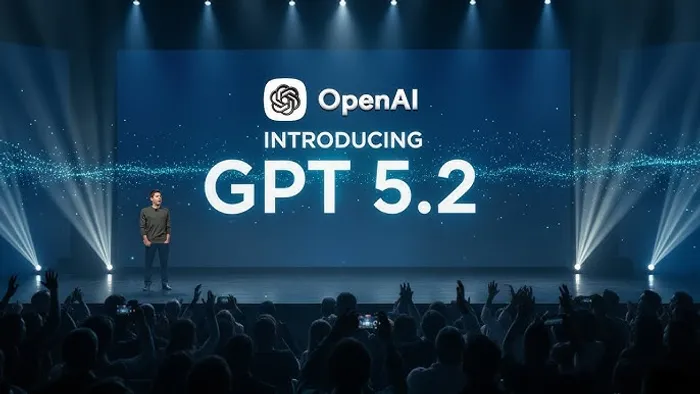
In the AI arena, OpenAI accelerates its response to Google's Gemini 3, which vaulted to leaderboard tops and impressed rivals like Sam Altman and Elon Musk. Altman's "code red" directive has fast-tracked GPT-5.2, slated for release as early as December 9—originally eyed for later in the month.
Internal evaluations position GPT-5.2 ahead of Gemini 3, aiming to reclaim ground lost in last month's showdown. This isn't just a model upgrade; it's the vanguard of broader ChatGPT enhancements focusing on speed, reliability, and customizability. Development hiccups or rival leaks could delay, but the urgency underscores a heating arms race, with implications for tech valuations and innovation paces.
The Netflix-Warner Bros. Saga Unfolds
Finally, Netflix's $72 billion grab for Warner Bros. and HBO Max—trumping bids from Paramount Skydance and Comcast—ignites media consolidation debates. Uniting 300 million NetflixNFLX-- subscribers with HBO's 128 million catapults the streamer to 56% of global mobile app users, per Sensor Tower, cementing dominance.
Yet, regulatory hurdles loom large. The deal, eyed for closure in 12-18 months post-spin-off of Warner's cable assets like CNN, faces "heavy skepticism" from the Trump administration. Lawmakers like Elizabeth Warren decry an "anti-monopoly nightmare," fearing higher prices, fewer choices, and job risks. Netflix touts pro-consumer benefits, pledging a $5.8 billion breakup fee if blocked.
Analysts at Deutsche Bank and William Blair see paths to approval, hinging on market definitions: narrow streaming views raise flags, but broadening to include cable, broadcast, and YouTube dilutes concerns. Paramount's hostile overtures and Trump's ties to bidder Larry Ellison add political intrigue, echoing past mergers mired in favoritism probes.
This acquisition amplifies Netflix's power, blending franchises like Harry Potter and Game of Thrones with Stranger Things, while absorbing TNT Sports abroad. Prices could rise with dominance or fall via bundling; HBO's brand likely endures. For Hollywood, it's a stark pivot to "all-streaming," sidelining cinema's legacy amid AI threats and production slumps—drawing ire from figures like James Cameron.
As these threads converge, the week promises clarity on rates, tech resilience, AI frontiers, and media empires. Investors, buckle up: Powell's cut may soothe, but dissent, earnings surprises, and deal dramas could jolt markets anew.

Rodder Shi is a market analyst covering U.S. stocks and prediction markets. He holds a Master’s degree in Financial Engineering from UCLA and dual degrees from UC San Diego, with research experience at CICC and Rayliant. An IAQF quantitative research award winner, he has over six years of equity and options investing experience focused on data-driven and risk-aware market analysis.
Latest Articles
Stay ahead of the market.
Get curated U.S. market news, insights and key dates delivered to your inbox.
AInvest
PRO
AInvest
PRO



Comments
No comments yet