
The Fed's Pause: A Strategic Window for Real Estate and MBS Investors
 Aime Summary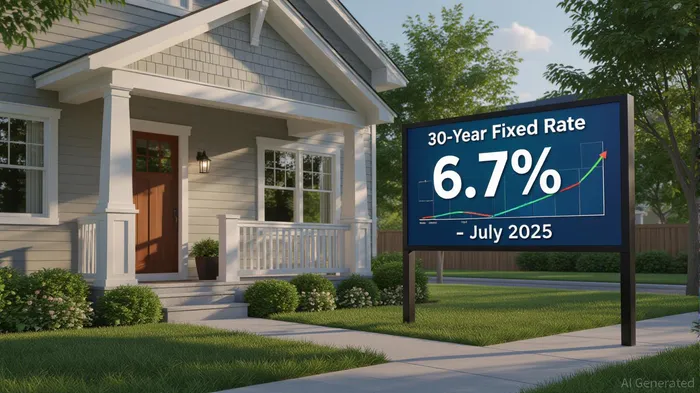
The Federal Reserve's decision to hold rates steady in July 2025 has created a unique inflection pointIPCX-- for investors. With the federal funds rate locked at 4.25%-4.50% and no immediate rate cuts on the horizon, the housing market and mortgage-backed securities (MBS) sector are navigating a delicate balancing act. This pause—driven by the Fed's dual mandate of taming inflation while preserving a strong labor market—has sparked a recalibration of expectations for homebuyers, refinancers, and institutional investors alike.
The Fed's Tightrope: Inflation, Jobs, and Tariffs
Chair Jerome Powell's insistence on “waiting for more data” has kept the Fed's foot off the gas, even as dissenters like Governors Michelle Bowman and Christopher Waller push for a rate cut to counteract the inflationary drag of Trump's tariffs. The result? A market in limbo. While the unemployment rate remains near historic lows, wage growth has moderated, and consumer spending is showing signs of fatigue. The Fed's cautious stance is understandable: cutting rates too soon could reignite inflation, but delaying action risks stoking a recession.
For now, the Fed's inaction has stabilized mortgage rates near 6.7%, a level that's neither a drag on the economy nor a catalyst for a housing boom. This stability has created a “Goldilocks” scenario for the MBS sector. Agency MBS trading volumes hit $349.6 billion in June 2025, up 18.9% year-over-year, as investors bet on the sector's resilience. Non-agency MBS, though riskier, also saw a 15.7% increase in trading activity, signaling cautious optimism.
Bond Market Reactions: A Flattening Yield Curve and MBS Valuations
The 10-year Treasury yield, a key benchmark for mortgage rates, has hovered around 4.34% in July 2025, reflecting a flattening yield curve. This dynamic has kept mortgage rates anchored, limiting refinancing activity but supporting MBS valuations. The spread between the 10-year Treasury and 30-year mortgage rates has narrowed to 2.38%, a margin that lenders are maintaining despite the Fed's pause.
Investors in MBS ETFs have taken note. While refinancing volumes dipped slightly in July, the RALI index still shows a 24.9% year-over-year increase in refinancing applications. This suggests that homeowners are still seeking better terms, even in a high-rate environment. For MBS holders, this means a steady stream of prepayments and a manageable risk of early redemption.
Regional Divergence: Where to Play in the Housing Market
The U.S. housing market is anything but monolithic. Inventory levels have surged in the South and West, with Las Vegas, Washington, DC, and Raleigh leading the charge. These regions now exceed pre-pandemic inventory levels by 25% or more, creating buyer-friendly conditions. Conversely, the Northeast and Midwest remain tighter, with inventory up only 15.5%-18.1% year-over-year.
Price trends reflect this divergence. The South and West have seen median list prices dip 0.6%-0.8% year-over-year, while the Northeast and Midwest held steady or rose slightly. For real estate investors, this means opportunities in value-driven markets like Phoenix, Atlanta, and Denver, where price cuts are common and inventory is abundant.
Strategic Entry Points: Real Estate and MBS in a Stabilized Rate Environment
As mortgage rates stabilize near 6.7%, the case for strategic entry into real estate and MBS investments grows stronger. Here's why:
MBS as a Yield Play: With the Fed unlikely to cut rates before September, MBS offers a compelling yield. Agency MBS spreads are currently 150-160 basis points over Treasuries, a premium that reflects both risk and potential for capital appreciation if rates decline. Non-agency MBS, particularly in the prime and non-QM segments, offer even higher spreads, making them attractive for risk-tolerant investors.
Real Estate in Undervalued Markets: The South and West are prime targets for real estate investors. With inventory levels at post-pandemic highs and prices stabilizing, these regions offer a buffer against further rate hikes. Look for markets like Phoenix and Raleigh, where demand is outpacing supply and price declines are moderating.
Refinancing as a Tailwind: While refinancing activity remains subdued, the 6.7% rate environment is still a 100-basis-point improvement over the 7.15% peak earlier in 2025. This creates a window for homeowners to lock in savings, which could boost MBS prepayment speeds and support valuations.
Risks and Watchpoints
No investment is without risk. The Fed's September meeting will be pivotal—if inflation persists or the labor market weakens, rate cuts could come sooner than expected, triggering a sell-off in MBS. Additionally, Trump's tariffs remain a wildcard, with the potential to reignite inflation and disrupt housing demand. Investors should also monitor regional housing markets for signs of overcorrection, particularly in high-inventory areas.
Conclusion: Patience and Positioning
The Fed's pause has created a rare alignment of conditions: stable rates, manageable inflation, and a housing market in transition. For investors, this is a time to be patient but proactive. Positioning in MBS and undervalued real estate markets now could yield outsized returns as the Fed eventually pivots to rate cuts in late 2025 or 2026. As always, diversification and a long-term perspective are key.

Delivering real-time insights and analysis on emerging financial trends and market movements.
Latest Articles
Stay ahead of the market.
Get curated U.S. market news, insights and key dates delivered to your inbox.


AInvest
PRO
AInvest
PRO



Comments
No comments yet