
Fed Officials Diverge on December Rate Cut Amid Labor Market Concerns and Inflation Risks
 Aime Summary
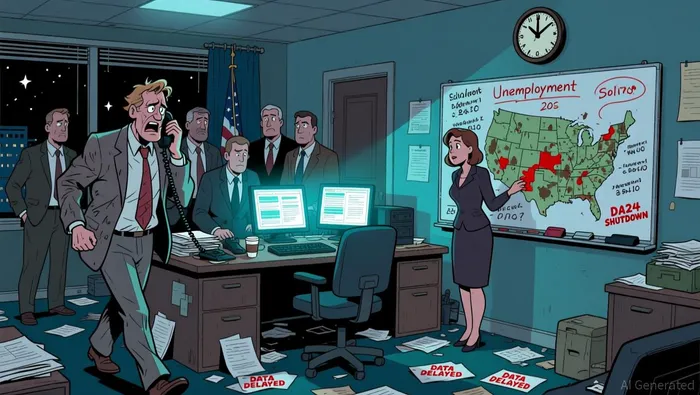
Waller’s position is grounded in evidence of a deteriorating labor market. He cites surveys of businesses and consumers, along with anecdotal feedback from large employers, to argue that job creation has slowed significantly. The delayed release of critical employment data—a consequence of a 43-day government shutdown—has not altered his assessment, as he anticipates the pending reports will confirm his conclusions . Meanwhile, he notes that inflation has remained subdued, attributing this to weak wage growth and high interest rates, which have constrained consumer spending .
Jefferson, however, emphasizes the need for prudence. He acknowledges increased downside risks to employment but highlights that inflation risks have “likely declined somewhat recently.” While supporting the October rate cut, which brought the federal funds rate to 3.75%-4.00%, he cautions that the policy stance is still “somewhat restrictive” and should be adjusted incrementally as the central bank nears the neutral rate . Jefferson also downplays concerns about inflationary pressures from tariffs, stating that such measures are more likely to cause a one-time price shift rather than sustained inflation .
The divergence in views is reflected in market expectations. Federal funds futures initially priced in near-certainty for a December cut, but this has since fallen to around 40%, indicating investor uncertainty over the Fed’s direction . This shift underscores the challenges posed by incomplete data, with key employment and inflation reports delayed. Both Waller and Jefferson have acknowledged the difficulty of making decisions without timely official statistics, with Jefferson stating he takes a “meeting-by-meeting approach” to policy .
The labor market’s trajectory remains a focal point. Jefferson notes that unemployment is expected to rise slightly from 4.3% in August, reflecting a “gradual cooling” in both labor demand and supply . Waller, meanwhile, emphasizes that the risk of further employment declines is “skewed to the downside,” reinforcing his argument for additional stimulus . The use of alternative data—such as private-sector indicators—has become critical in this environment, as the government shutdown has disrupted traditional data collection .
Broader implications of the Fed’s policy uncertainty extend to global markets. The U.S. dollar’s strength, partly driven by expectations of tighter U.S. monetary policy, has already impacted emerging economies. If the Fed delays further cuts, it could exacerbate capital outflows and financial instability in regions reliant on U.S. liquidity. Conversely, a rate reduction might ease pressure on global markets but could reignite inflation concerns if economic growth rebounds unexpectedly.
The upcoming December meeting, scheduled for Dec. 9-10, will be pivotal. Policymakers will weigh the delayed September employment report—set for release on Thursday—alongside limited additional data . The outcome will hinge on how officials interpret the available information, with Waller’s push for action clashing with Jefferson’s emphasis on restraint. This internal debate highlights the Fed’s balancing act between supporting a fragile labor market and maintaining inflation control, a challenge that will shape monetary policy for months to come .

Crypto market researcher and content strategist with 3 years of experience in digital asset analysis and market commentary. Skilled at transforming complex blockchain data and trading signals into clear, actionable insights for investors. Experienced in covering Bitcoin, Ethereum, and emerging ecosystems including DeFi, Layer2, and AI-related projects. Passionate about bridging professional market research with accessible storytelling to empower readers and investors in the fast-evolving crypto landscape.
Latest Articles
Stay ahead of the market.
Get curated U.S. market news, insights and key dates delivered to your inbox.


AInvest
PRO
AInvest
PRO



Comments
No comments yet