
Fed Officials Concerned: Tariffs' Impact on Inflation Puts Rate Cuts on Hold
Federal Reserve officials have expressed worry about the potential impact of President Donald Trump's proposed tariffs on inflation, leading them to put rate cuts on hold. The minutes from the Fed's January 28-29 meeting, released on Wednesday, revealed that officials are concerned about the rising risks of inflation due to factors such as tariffs and strong consumer spending. This article explores the potential impacts of tariffs on inflation, the Fed's response, and the implications for market expectations and investor behavior.
Tariffs and Inflation: A Worrisome Combination
The proposed tariffs on Canada, Mexico, and China have the potential to increase the cost of imported goods and services, which can then be passed on to consumers in the form of higher prices. According to the minutes of the Federal Reserve's January 28-29 meeting, business contacts in various districts indicated that firms would attempt to pass on higher input costs arising from potential tariffs to consumers (AP News, 2025). This is because tariffs effectively increase the border prices of imported goods, which can lead to higher prices for consumers.
For example, the Boston Fed's research estimates that an additional 25 percent tariff on goods from Canada and Mexico, combined with an additional 10 percent tariff on goods from China, could add as much as 0.8 percentage point to core (excluding food and energy) inflation (Boston Fed, 2025). This is a first-round effect on prices, and it does not take into account how consumers and competitors might adjust to the import price increases that tariffs induce.
Moreover, the impact of tariffs on consumer prices can be significant, even for goods that are not directly imported. Many domestically produced goods contain imported components, and when these components become more expensive, the final consumer good will likely also become more expensive. For instance, the Boston Fed's research shows that spending on indirect imports within the light truck category amounts to $20 billion, over and above the $56 billion spent directly on imported light trucks (Boston Fed, 2025). This demonstrates that even when consumers buy American-made products, they are not immune from fluctuations in import prices.

Industries Most Exposed and Consumer Impacts
Based on the information provided, the industries most exposed to tariff-induced price increases are those that rely heavily on imported components or goods. For instance, the automotive industry is particularly vulnerable. According to the Boston Fed's research (Number 8), an additional 25% tariff on goods from Canada and Mexico, combined with a 10% tariff on goods from China, could add as much as 0.8 percentage point to core (excluding food and energy) inflation. This is because many domestically produced goods, like light trucks, contain imported components. In the case of light trucks, about 40% of the cost of materials is spent on imported engines, which in turn contain imported parts. This means that even when consumers buy American-made trucks, they are still exposed to fluctuations in import prices.
The impact of tariffs on consumers is twofold. First, there is a direct impact on the goods that are subject to tariffs. For example, if a consumer buys a car that has imported components, they will likely pay more for that car due to the increased cost of those components. Second, there is an indirect impact through markups at every stage of production. Retailers and producers often charge a large markup on top of costs, and when these costs increase due to tariffs, the final consumer good will likely also become more expensive. This means that even goods that are not directly subject to tariffs may still see price increases due to the increased cost of imported components.
Business Responses and Inflation Expectations
Businesses respond to tariff-induced cost increases in several ways, which can influence inflation expectations and wage growth. According to the minutes of the Federal Reserve's January 28-29 meeting, businesses are expected to pass on higher input costs arising from potential tariffs to consumers, which can lead to increased prices (FOMC minutes, January 28-29, 2025). This is supported by the Boston Fed's research, which shows that an additional 25 percent tariff on goods from Canada and Mexico, combined with an additional 10 percent tariff on goods from China, could add as much as 0.8 percentage point to core inflation (Boston Fed, "The Impact of Tariffs on Inflation," February 6, 2025).
When businesses raise prices, consumers may demand higher wages to compensate for the increased cost of living. This can lead to a wage-price spiral, where higher wages lead to further price increases, and so on. However, the extent to which tariffs influence wage growth depends on various factors, such as the overall state of the economy, labor market conditions, and the specific industries affected by the tariffs.
In the context of the current situation, Federal Reserve officials have expressed concern about the potential for policy changes, including tariffs, to keep inflation above the Fed's target. They have indicated that they would want to see further progress on inflation before making additional adjustments to the target range for the federal funds rate (FOMC minutes, January 28-29, 2025). This suggests that the Fed is monitoring the situation closely and is prepared to take action if necessary to maintain price stability.
Fed's Decision-Making Process and Market Expectations
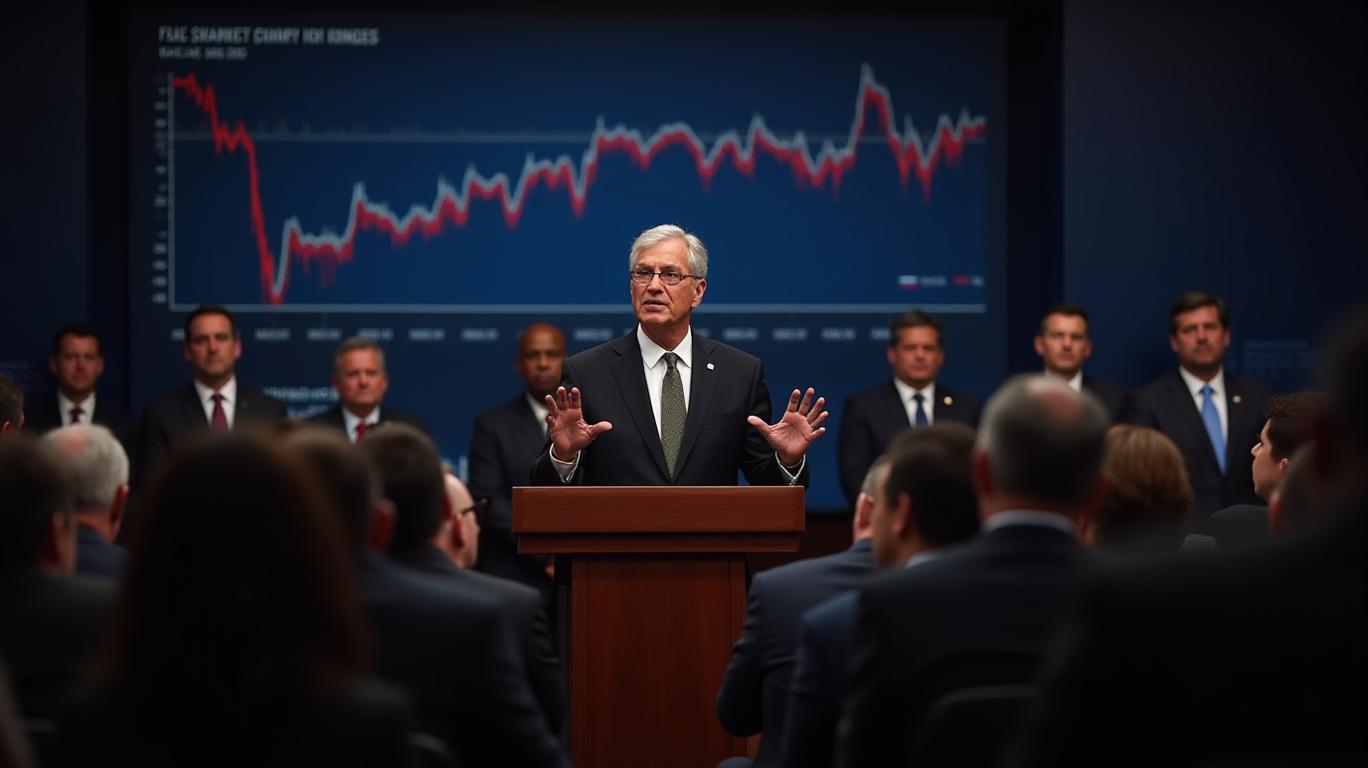
The potential impacts of tariffs on inflation significantly influence the Federal Reserve's decision-making process regarding interest rate adjustments. Here's how:
Conclusion
The potential impacts of tariffs on inflation are a significant factor in the Fed's decision-making process regarding interest rate adjustments. The Fed is taking a cautious approach, waiting to see how inflation develops before making further adjustments to its key interest rate. As the situation unfolds, investors and market participants should closely monitor the Fed's communications and economic data to assess the potential impacts of tariffs on inflation and the broader economy.

Stay ahead of the market.
Get curated U.S. market news, insights and key dates delivered to your inbox.
AInvest
PRO
AInvest
PRO



Comments
No comments yet