
U.S. Fed Maintains Caution on Rate Cuts as Trump Tariffs Escalate, ECB Slashes Rates 8x in 2024
 Aime Summary
The U.S. Federal Reserve (Fed) faces mounting challenges in navigating its rate policy amid rising inflation and escalating trade tensions under President Donald Trump’s administration. Despite persistent inflation remaining slightly above its 2% target, the Fed has maintained a cautious stance, refraining from rate cuts in 2025. This decision contrasts with the European Central Bank’s (ECB) aggressive rate-cutting strategy, which has seen eight reductions since June 2024. The Fed’s reluctance has been attributed to uncertainties surrounding Trump’s 20% tariffs on EU goods and potential escalations to 50%, which have disrupted global supply chains and raised import costs [1]. Cryptocurrency markets, anticipating rate cuts to boost speculative activity, have seen their optimism tempered by the Fed’s prolonged wait-and-see approach [1].
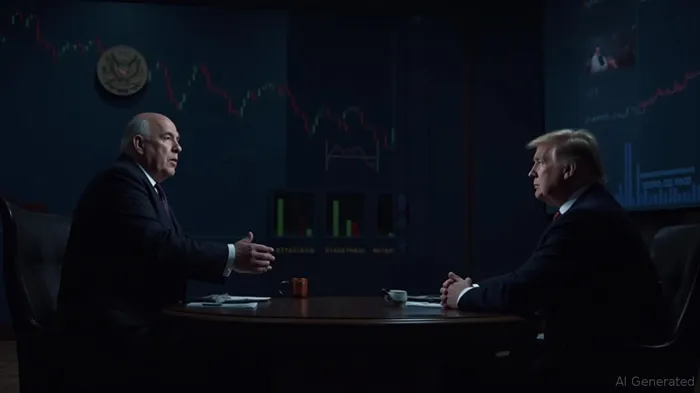
Trump’s public criticism of Fed Chair Jerome Powell has intensified, with demands for lower borrowing costs to stimulate growth. However, the Fed argues that the full economic impact of tariffs must be assessed before policy adjustments. These tensions have extended to the Fed’s autonomy, as Trump and allies have escalated efforts to influence monetary policy, including a recent visit to the Fed’s headquarters [5]. Analysts warn that politicized rate decisions could undermine long-term economic stability, with some predicting a potential recession in autumn 2025 if trade disputes escalate [7].
The ECB’s own rate-cutting trajectory remains uncertain, as it mirrors the Fed’s caution. ECB President Christine Lagarde has emphasized that resolving trade tensions would reduce consumer and business uncertainty, potentially enabling further September cuts [8]. However, the Fed’s slower pace is justified by elevated U.S. inflation and the divergent economic trajectories of the U.S. and eurozone. While first-quarter eurozone growth reached 0.6%, partly driven by pre-tariff supply chain adjustments, U.S. inflation remains stubbornly high. A stronger euro and falling global oil prices have helped temper European inflation, but similar effects have been muted in the U.S. [8].
Regulatory concerns further complicate the Fed’s strategy. Banks have raised alarms about stricter capital requirements, arguing they constrain lending and economic activity—a debate highlighted at recent Fed banking conferences [10]. These constraints, combined with Trump’s tariff threats, create a volatile environment for both monetary and fiscal policy.
The Fed’s next moves will hinge on trade negotiations and inflation trends. For now, the central bank appears committed to prioritizing data over political pressure, with September stability as the primary scenario [8]. Yet, with Trump’s tariffs casting a long shadow and economic forecasts diverging, the path forward remains uncertain.
Sources:
[1] [Fed Faces Challenges and Questions in Rate Decisions as Inflation Rises](https://en.coin-turk.com/fed-faces-challenges-and-questions-in-rate-decisions-as-inflation-rises/)
[5] [Trump and White House take their Powell battle to Fed HQ](https://finance.yahoo.com/news/trump-and-white-house-take-their-powell-battle-to-fed-hq-080037039.html)
[7] [Recession Risk In Autumn 2025 Rising With Tariff Uncertainty](https://www.forbes.com/sites/billconerly/2025/07/24/recession-risk-in-autumn-2025-rising-with-tariff-uncertainty/)
[8] [Like the Fed, European Central Bank holds off on rate cuts ...](https://www.newsday.com/business/ecb-european-central-bank-eurozone-lagarde-c89976)
[10] [Fed Banking Conference Discusses Capital Rules, Avoids ...](https://www.morningstarMORN--.com/news/dow-jones/202507233670/fed-banking-conference-discusses-capital-rules-avoids-powell-drama)

Stay ahead of the market.
Get curated U.S. market news, insights and key dates delivered to your inbox.


AInvest
PRO
AInvest
PRO



Comments
No comments yet