
Fed Maintains 4.25%-4.5% Rate Range Amid Divergent Economic Signals
 Aime Summary
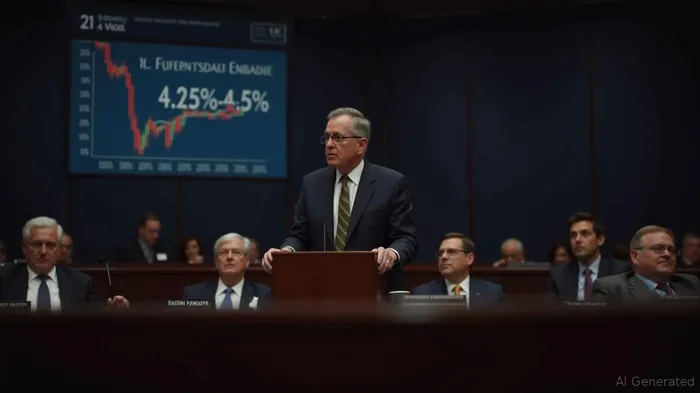
The Federal Reserve is navigating a complex economic landscape marked by inflation concerns, uncertain trade policy impacts, and a labor market that appears stable on the surface but reveals underlying weaknesses. The central bank has chosen to hold its benchmark interest rate in the 4.25%-4.5% range for the fifth consecutive meeting, despite two dissenting votes from FOMC members who supported a 25-basis-point cut [2]. This decision reflects the Fed’s cautious approach amid conflicting signals from economic data, including slowing consumer spending and the lingering effects of higher tariffs.
Recent reports indicate that inflation remains above the Fed’s 2% target, and while Q2 GDP growth reached 3%, it failed to offset the contraction in Q1, resulting in an average of 1.2% for the first half of the year [2]. Federal Reserve Chair Jerome Powell emphasized that the central bank is closely monitoring the inflationary effects of tariffs, noting that companies have not yet fully passed these costs onto consumers, though early signs suggest a potential for price persistence [2]. The Fed’s decision to delay rate cuts has drawn criticism from the Trump administration, which has called for aggressive reductions in borrowing costs. However, the central bank has maintained its independence and stated that policy decisions will remain data-driven [2].
The labor market, while appearing stable with low unemployment, is masking a contraction in labor demand. Fed Governor Christopher Waller highlighted this issue, pointing out that “unemployment stability can’t mask shrinking labor demand” [2]. Analysts argue that the unemployment rate does not fully capture the labor market’s condition, as wage growth expectations have declined, and several industries are struggling to generate new jobs [2]. This dynamic complicates the Fed’s ability to assess the full scope of the economy’s health and could influence future policy decisions.
Consumer behavior is also showing signs of adjustment, with a three-month decline in spending on leisure activities, the first such downturn since 2008. Lower-income groups, in particular, are reducing discretionary spending as essential costs rise, leading to tighter credit usage and reduced demand for luxury goods. Additionally, the housing market is experiencing hesitation due to high mortgage rates, with declining home investments and rising stock levels reflecting buyer reluctance [2].
The Fed’s cautious stance has also influenced financial markets, with the probability of a rate cut in September dropping to 47.3%, down from 63.3% before the latest FOMC meeting. The likelihood of the central bank maintaining rates has risen to 51.8%, signaling continued monetary tightness in the near term [2]. Analysts suggest that if rate cuts occur, a weaker labor market may be a necessary condition, given the risks posed by prolonged trade tensions [3]. The next FOMC meeting, scheduled for September 16–17, will provide an updated assessment of inflation and labor data, offering further insight into the Fed’s path forward [2].
Source: [1] Federal Reserve interest rate decision July 2025 (https://www.foxbusiness.com/economy/federal-reserve-interest-rate-decision-july-2025)
[2] Federal Reserve leaves interest rates unchanged, overriding two dissenting votes (https://www.utilitydive.com/news/fed-holds-main-rate-steady-overriding-two-dissenting-votes/756430/)
[3] Path to the Fed rate cuts Trump wants may involve higher unemployment (https://www.reuters.com/business/path-fed-rate-cuts-trump-wants-may-involve-higher-unemployment-2025-07-31/)

Stay ahead of the market.
Get curated U.S. market news, insights and key dates delivered to your inbox.






Comments
No comments yet