
AInvest Newsletter
Daily stocks & crypto headlines, free to your inbox
 Aime Summary
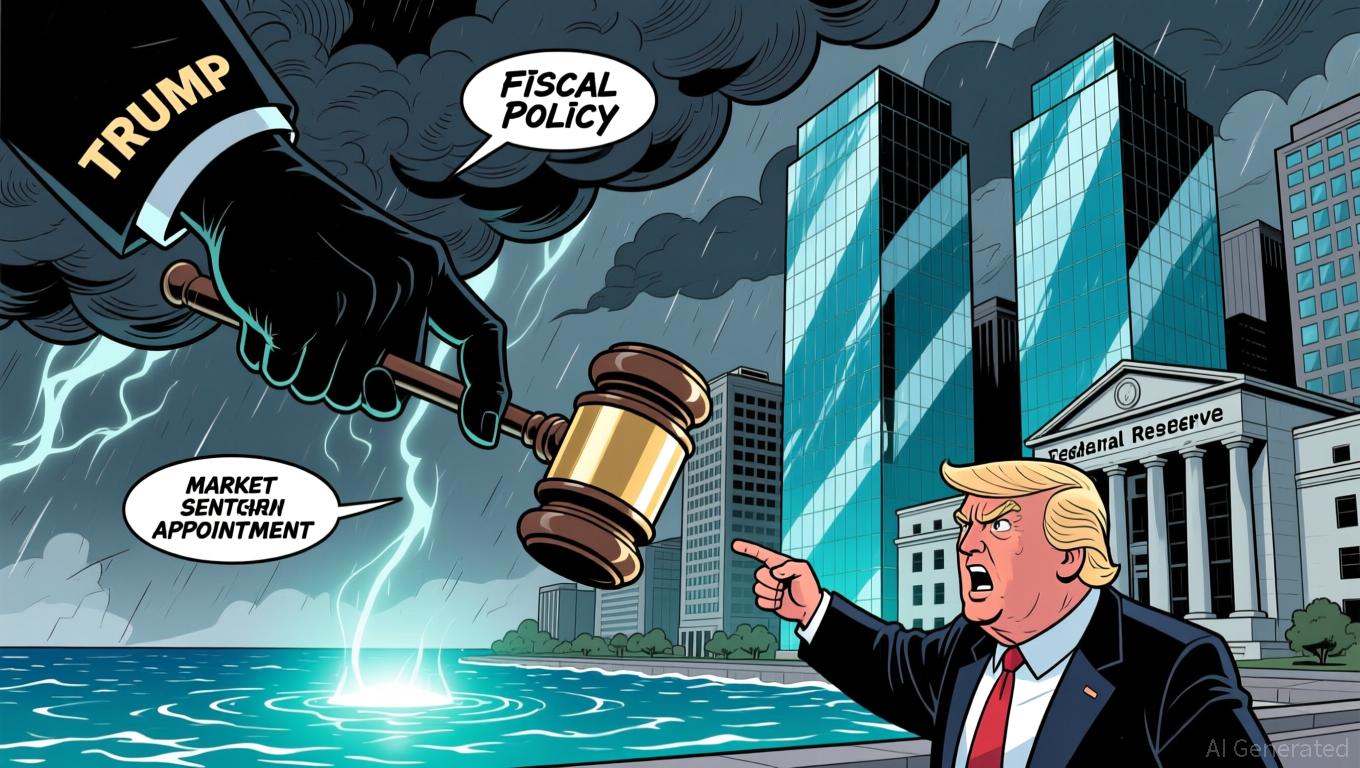
Political pressures on the Federal Reserve have intensified as President Donald Trump publicly threatened to replace Powell before his term expires in May 2026. During remarks at the U.S. Saudi Investment Forum, Trump stated he “would love to fire” Powell and demanded faster interest rate cuts from Treasury Secretary Scott Bessent, warning, “if you don’t get it fixed fast, I’m gonna fire your ass” . The administration has narrowed the list of potential successors to five candidates, including current Fed Governor Christopher Waller and former official Kevin Warsh, with National Economic Council Director Kevin Hassett emerging as the market’s most likely pick . Analysts note that while Trump’s timeline for a decision remains fluid, the prospect of a successor being named by year-end has already begun influencing investor sentiment, with markets favoring candidates like Hassett and Waller for their perceived policy alignment .
Parallel to these leadership uncertainties, the Federal Reserve faces mounting challenges in balancing inflation control with a softening labor market. Cleveland Fed President Loretta Mester has emphasized that inflation remains an “ongoing concern,” despite recent declines in employment data . This stance reflects broader Fed skepticism about the economy’s resilience, as evidenced by recent policy meeting minutes showing internal divisions over the appropriate path for interest rates . The juxtaposition of slowing job growth and stubborn price pressures complicates the central bank’s ability to signal a clear direction, leaving markets in a state of cautious anticipation.
Meanwhile, the Trump administration’s proposed fiscal stimulus—dubbed the “One Big Beautiful Bill”—is projected to boost GDP growth by 0.32 percentage points in 2026 through tax cuts on overtime and tipped income, according to analysis by former Fed researcher John Roberts . However, this growth is partially offset by the Federal Reserve’s reluctance to lower interest rates in response to faster-than-expected economic expansion. Roberts’ modeling suggests that the Fed’s benchmark rate would end 2026 0.25 percentage points higher than otherwise projected, dampening the stimulus’ GDP impact by roughly half . The interplay between fiscal and monetary policy underscores the complexity of navigating an economy where aggressive spending measures risk triggering inflationary reactions from a hawkish central bank.
The broader implications of these developments extend beyond U.S. borders. The Trump administration’s push to reshape Fed leadership risks further eroding the central bank’s institutional independence, a concern already amplified by previous clashes over monetary policy . Simultaneously, the administration’s fiscal agenda—projected to increase the federal deficit by 0.8 percentage points—highlights the tension between short-term growth objectives and long-term fiscal sustainability . For global markets, the combination of political uncertainty and divergent policy signals creates a volatile backdrop, with investors closely monitoring how the Fed navigates these pressures to maintain both price stability and economic momentum.

AI Product Manager at AInvest, former quant researcher and trader, focused on transforming advanced quantitative strategies and AI into intelligent investment tools.

Dec.03 2025

Dec.01 2025

Nov.27 2025

Nov.27 2025

Nov.27 2025
Daily stocks & crypto headlines, free to your inbox







Comments
No comments yet