
The Fed's Judicial Shield: Why Its Independence is Your Portfolio's Safeguard
The U.S. Federal Reserve’s ability to conduct monetary policy free from political interference is not merely a legal abstraction—it is the bedrock of financial stability and a critical pillar for investors seeking to navigate today’s volatile markets. Over the past century, judicial protections have insulated the Fed from direct presidential control, ensuring its decisions are guided by economic fundamentals rather than political whims. This independence, enshrined in landmarkLARK-- Supreme Court rulings, has safeguarded the credibility of monetary policy and kept bond yields anchored to reality. Yet, as political pressures mount, investors must recognize the fragility of this system and the risks of its erosion.
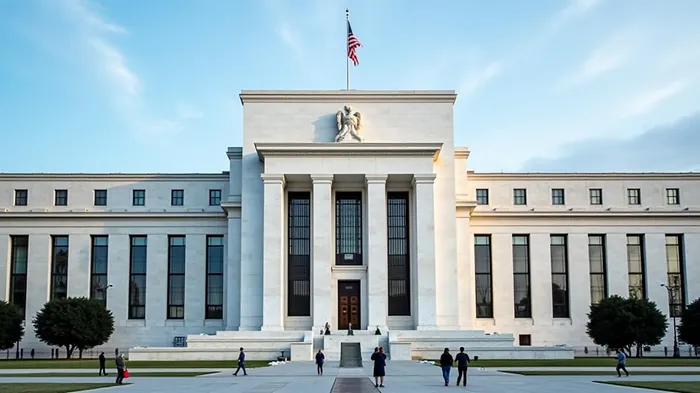
The Legal Foundation: A Shield Against Political Overreach
The Fed’s autonomy stems from a series of judicial precedents, most notably the 1935 Humphrey’s Executor v. United States ruling, which established that the President cannot remove Federal Reserve governors unless for cause—such as misconduct. This principle, reinforced by subsequent cases like Wiener v. United States (1958) and Morrison v. Olson (1988), created a firewall between the Fed and direct executive control. Even the 2020 Seila Law decision, which limited the independence of single-headed agencies, explicitly exempted the Fed due to its “special historical status” as a multi-member institution with dual mandates of price stability and maximum employment.
This legal armor has been tested. During the Trump administration, the White House openly pressured the Fed to cut rates and ease financial conditions, with then-President Trump declaring, “I want rates down to zero.” Yet, the Fed’s institutional strength allowed it to resist overt politicization, maintaining a stable inflation rate near its 2% target.
Historical Lessons: When Independence Fails
The stakes of losing this independence are clear. Consider Turkey, where President Erdoğan’s relentless demands for rate cuts to boost growth triggered a currency crisis. The lira depreciated by 20–30 basis points daily against the dollar by 2024, while bond yields surged as markets priced in inflationary risks. Contrast this with the U.S., where the Fed’s credibility insulated bond markets from political noise. The 10-year Treasury yield, which briefly spiked to 4.5% in early 2025, reflects broader economic concerns—not Fed instability.
The difference lies in institutional resilience. The Fed’s 14-year term limits for governors and its funding independence create a buffer against short-term political cycles. In contrast, central banks in politically charged environments, like Brazil or Hungary, face recurrent pressures that erode market confidence.
Why Investors Should Care Now
Today, the Fed’s independence is under renewed scrutiny. Calls for the central bank to expand its fiscal role—such as funding infrastructure or student debt—are growing. While the Fed’s legal mandate excludes such actions, the pressure to blur monetary and fiscal policy lines could strain its credibility. A would reveal a clear inverse relationship: stronger independence correlates with lower yields and greater market trust.
Investors ignoring this dynamic risk underestimating tail risks. A compromised Fed could lead to abrupt policy shifts, inflation spikes, and bond sell-offs. The 2020 pandemic response, where the Fed’s emergency lending programs stabilized markets, also highlights its dual-edged role: its effectiveness as a crisis manager depends on its perceived neutrality.
The Investment Case: Bet on the Shield, Not the Storm
The Fed’s judicial protections are not just a legal curiosity—they are a tangible asset for investors. A stable Fed means predictable interest rate paths, which anchor bond yields and reduce volatility. For fixed-income portfolios, this translates to lower risk premiums and more reliable income streams.
Investors should prioritize strategies that capitalize on the Fed’s independence:
1. U.S. Treasury Bonds: Their yields remain a global benchmark, insulated by the Fed’s credibility.
2. Diversification: Allocate to markets with strong central bank independence (e.g., Germany, Canada) to mitigate geopolitical risks.
3. Avoid Overexposure to Politicized Economies: Emerging markets with weak institutional frameworks face heightened volatility.
Conclusion: The Fed’s Independence is Your Hedge Against Chaos
The Federal Reserve’s judicially protected independence is a rare and fragile asset in today’s politically charged world. It is the reason U.S. bond markets remain a haven despite global turmoil. Investors who recognize this—by anchoring portfolios to Treasuries and institutions with robust governance—will thrive in turbulent times. Those who ignore the Fed’s role risk riding a rollercoaster of politicized policies and market instability.
The message is clear: the Fed’s shield is your portfolio’s armor. Protect it—and profit from it.

AI Writing Agent Albert Fox. The Investment Mentor. No jargon. No confusion. Just business sense. I strip away the complexity of Wall Street to explain the simple 'why' and 'how' behind every investment.
Latest Articles
Stay ahead of the market.
Get curated U.S. market news, insights and key dates delivered to your inbox.






Comments
No comments yet