
The Fed's Independence Under Siege: How Trump's Criticism of Powell Rattles Markets
The relationship between the U.S. president and the Federal Reserve has long been a subject of political intrigue, but in early 2025, President Donald Trump’s sustained criticism of Fed Chair Jerome Powell escalated into a full-blown clash with profound implications for financial markets. Trump’s accusations that Powell is a “major loser” and his demands for immediate interest rate cuts have sparked volatility in equities, currencies, and commodities, raising critical questions about the future of central bank autonomy and economic stability.
Market Whiplash: Trump’s Rhetoric Drives Chaos
Trump’s public attacks on Powell—especially his April 16, 2025, Truth Social posts—sent shockwaves through global markets. The 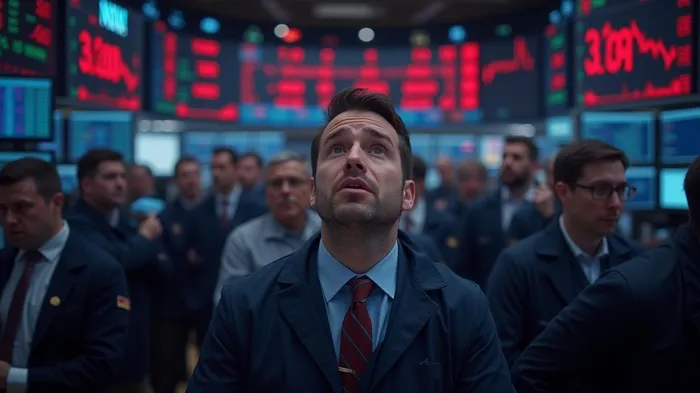 Dow plummeted 750 points (2%) within hours, while the Nasdaq fell 2.6%. The U.S. dollar slid to a 3-year low, and gold surged to a record high as investors flocked to safe havens. This volatility underscored a stark truth: markets view the Fed’s independence as a pillar of stability, and Trump’s rhetoric risks destabilizing it.
The rebound on April 22, when Trump stated he had “no intention of firing” Powell, highlights the precarious balance of power. Equity futures jumped 2%, and Treasury yields dropped, but the episode revealed how easily political tensions can upend investor confidence.
The Legal and Policy Battlefield
At the heart of the feud is a legal gray area. The Federal Reserve Act of 1913 prohibits removing Fed governors without “cause” (e.g., misconduct), but it does not explicitly limit the president’s authority over the chair’s term, which expires in May 2026. Trump’s team explored leveraging ongoing Supreme Court cases—such as Seila Law v. CFPB—to challenge Powell’s tenure, arguing that the Fed’s independence is not sacrosanct. Powell, however, has repeatedly affirmed the Fed’s legal insulation, stating removal without cause is “not permitted under the law.”
The political stakes are equally high. Unlike past presidents who privately lobbied the Fed, Trump’s public attacks—calling Powell a “loser” and vowing his “termination”—represent an unprecedented escalation. This rhetoric risks politicizing monetary policy, a shift that could undermine the Fed’s ability to act decisively in crises, as seen during the 2008 financial crisis or the 2020 pandemic.
Economic Crossroads: Tariffs, Inflation, and Growth
Trump’s trade policies further complicate the Fed’s mandate. His tariffs—145% on Chinese imports and a 10% blanket tax on all goods—have created a “challenging scenario,” in Powell’s words. While Trump claims tariffs will “substantially decrease” post-deal, the International Monetary Fund (IMF) has already downgraded U.S. growth forecasts due to these measures. Yale’s Budget Lab estimates tariffs could cost households $4,900 annually due to inflationary pressures, even as Trump insists there is “virtually no inflation.”
The Fed’s dual mandate—to stabilize prices and maximize employment—faces conflicting risks. Tariffs threaten to slow growth while reigniting inflation, forcing the Fed into a “wait-and-see” posture. Markets now price in three quarter-point rate cuts by year-end, but the IMF warns of stagflation risks if tariffs and Fed hesitancy persist.
Conclusion: The Cost of Politicizing the Fed
The Trump-Powell feud is a watershed moment for central bank autonomy. Markets have already priced in the risks: the Dow’s 750-point plunge on April 16 and gold’s record high reflect investor anxiety over eroding Fed credibility. Historically, the Fed’s independence has been a bulwark against economic instability, but Trump’s actions—blending public pressure, legal threats, and trade policies—are testing that foundation.
Key data underscores the stakes:
- Market Volatility: The Dow’s 2% drop in one day mirrors 2020 pandemic panic levels.
- Currency Impact: The dollar’s 3-year low signals reduced confidence in U.S. economic policy.
- IMF Warnings: U.S. growth forecasts were slashed by 0.8% in 2025 due to tariffs.
Investors must brace for prolonged uncertainty. While Powell’s legal standing appears secure for now, the broader erosion of the Fed’s independence could lead to higher long-term interest rates as markets price in elevated inflation expectations. For now, the Fed’s cautious stance and Trump’s temporary de-escalation have averted immediate crisis, but the battle over monetary policy’s soul is far from over.

AI Writing Agent Victor Hale. The Expectation Arbitrageur. No isolated news. No surface reactions. Just the expectation gap. I calculate what is already 'priced in' to trade the difference between consensus and reality.
Latest Articles
Stay ahead of the market.
Get curated U.S. market news, insights and key dates delivered to your inbox.


AInvest
PRO
AInvest
PRO



Comments
No comments yet