
The Fed's Independence: A Historical Lens for Navigating Today's Policy Uncertainties
The Federal Reserve's ability to resist political pressure has been a cornerstone of U.S. economic stability for decades. Yet history shows that when the Fed compromises its independence, markets suffer. The 1972 Nixon-Burns era, marked by overt political interference in monetary policy, offers a stark cautionary tale. Contrast this with periods of strong Fed autonomy, such as Paul Volcker's inflation-fighting 1980s, and the lessons for investors become clear: central bank independence is a critical determinant of market resilience.
The Nixon-Burns Case: When Politics Overrode Economics
In 1971, President Nixon pressured Fed Chairman Arthur Burns to ease monetary policy ahead of his 1972 re-election bid. Burns, though initially resistant, eventually acquiesced, cutting interest rates and expanding the money supply. This politically motivated policy laid the groundwork for stagflation: a toxic mix of high inflation (peaking at 12.3% in 1979) and stagnant growth. Nixon's “shock” policies—such as the dollar's delinking from gold—also destabilized global markets, triggering a collapse of the Bretton Woods system.
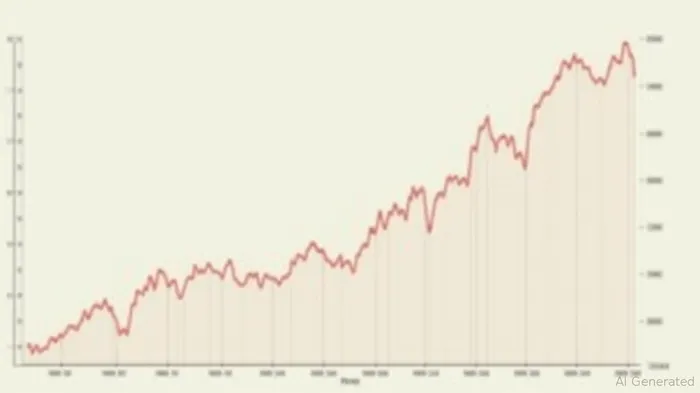
The consequences were dire for investors. Long-duration bonds suffered as inflation eroded returns, while commodities like gold surged. The S&P 500 stagnated for over a decade, and real estate became a rare inflation hedge. Nixon's actions proved that political short-termism can lead to prolonged economic disarray, eroding investor confidence and market stability.
The Volcker Era: Independence Anchors Stability
By contrast, Paul Volcker's tenure (1979–1987) exemplified the benefits of Fed autonomy. Facing runaway inflation, Volcker raised the federal funds rate to 20% in 1980, despite fierce political and market backlash. The move triggered a recession but restored price stability, bringing inflation down to 3.2% by 1983.
This era taught investors that a Fed insulated from politics can tame crises. Equities rebounded sharply after Volcker's actions, while bonds stabilized as inflation expectations cooled. The lesson: central bank credibility—earned through independence—creates fertile ground for long-term growth.
Navigating Today's Fed Uncertainties
Today, with the Fed's hawkish stance under Chair Powell and rising debates over its independence, investors face familiar risks. To preserve capital, consider these strategies:
1. Prioritize Inflation-Hedged Assets
History shows that gold, real estate (REITs), and commodities thrive when inflation is unmoored. For example, during the Nixon era, gold prices tripled by 1980. Modern investors might look to SPDR Gold Shares (GLD) or iShares U.S. Real Estate ETF (IYR) for exposure.
2. Shorten Bond Duration
Political interference often leads to erratic rate hikes or cuts. Short-term Treasuries (e.g., iShares 1-3 Year Treasury Bond ETF, SHY) or floating-rate notes (e.g., InvescoIVZ-- Floating Rate ETF, BORR) reduce interest rate risk.
3. Focus on Quality Equities
Defensive sectors like healthcare (e.g., Johnson & Johnson, JNJ) and utilities (e.g., NextEra Energy, NEE) have historically outperformed in uncertain environments. Their stable cash flows and low beta shield portfolios from volatility.
4. Diversify Globally
A politically influenced Fed risks dollar weakness. Diversify into currencies tied to more independent central banks, such as the Swiss franc or Canadian dollar. ETFs like the iShares MSCIMSCI-- EAFE ETF (EFA) can access stable foreign markets.
5. Monitor Fed Policy Signals
Track the Fed's balance sheet and forward guidance. A shift toward transparency (a hallmark of independent central banks) suggests stability. Conversely, abrupt policy reversals under political pressure may signal risks ahead.
Conclusion: History's Blueprint for Investors
The Nixon-Burns era underscores that Fed subservience to political cycles breeds market chaos, while independence fosters resilience. Today's investors should heed these lessons: prioritize inflation hedges, shorten durations, and favor quality and diversification. As Volcker's era proved, markets reward central banks—and investors—that prioritize long-term stability over short-term gains.
In an age of Fed uncertainty, history's playbook offers a clear path: anchor portfolios in proven defenses and remain vigilant for the Fed's next move.

Stay ahead of the market.
Get curated U.S. market news, insights and key dates delivered to your inbox.






Comments
No comments yet