
Fed Holds Rates Steady Amid Stagflation Fears, Spurring Bond Market Volatility
The Federal Reserve's decision to maintain the federal funds rate at 4.25%–4.5% in its June 2025 meeting underscores a fraught balancing act between taming inflation and avoiding economic slowdown. While the Committee emphasized its commitment to a “data-dependent” path, the projections reveal deepening uncertainty: GDP growth is now expected to slow to 1.4%, inflation remains stubbornly elevated at 3.0%, and unemployment is projected to rise to 4.5%. This cautious stance has sent ripples through bond markets, creating both volatility and opportunities for investors in inverse duration funds.
The Fed's internal divisions are stark. The “dot plot” shows policymakers now anticipate two rate cuts by year-end—down from earlier projections—but seven members see no need for reductions in 2025, up from four in March. This divergence highlights the challenge of navigating stagflationary risks, including geopolitical tensions and a softening labor market. With the Fed's independence under political fire—President Trump's public criticism of Chair Powell as “stupid” underscores the pressure—the central bank's message is clear: rates will stay high until inflation convincingly retreats.
The Bond Market's Delicate Tightrope
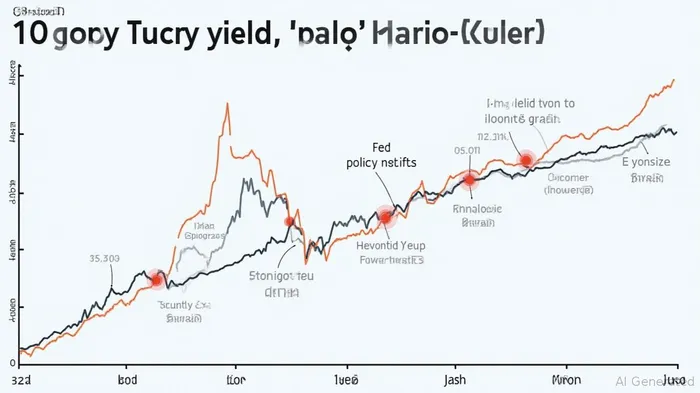
Bond markets are now pricing in a prolonged period of uncertainty. The Fed's hawkish tone has tempered expectations of imminent rate cuts, but the dot plot's two projected reductions by year-end suggests investors remain positioned for eventual easing. This tension has amplified volatility in fixed-income assets.
Duration—the sensitivity of bond prices to interest rate changes—has become a critical metric. Inverse duration funds, which profit when bond prices rise (as rates fall), have gained traction as a hedge against the Fed's eventual pivot. However, the Fed's delayed action has created a conundrum: will yields continue to gyrate as investors parse every inflation report and Fed comment?
Inverse Duration Funds: A Strategic Hedge Against Rate Cuts
Inverse duration funds, such as ETFs like ProShares UltraShort 20+ Year Treasury (TBT) or iShares 20+ Year Treasury Bond ETF (TLT) paired with derivatives, aim to capitalize on falling yields. Their appeal lies in their inverse relationship to interest rates: as rates decline, bond prices rise, boosting fund returns.
With the Fed's median projection for the federal funds rate at 3.4% by 2027—a significant cut from current levels—these funds could outperform if the Committee follows through on its implied path. However, the risks are non-negligible. Should inflation persist, or if the Fed delays cuts further, yields could spike, punishing duration-sensitive assets.
Navigating the Crosscurrents
Investors must weigh two scenarios:
1. The Fed's Gradual Pivot: If inflation cools and growth stabilizes, the two expected rate cuts could drive yields lower, benefiting inverse duration funds.
2. Stagflationary Drag: A deeper slowdown or geopolitical shocks could force the Fed to cut rates sooner, but with uncertainty over fiscal policy and global demand, the path is unclear.
The Fed's June statement also highlights risks to its outlook, including trade policy and Middle Eastern instability, which could amplify bond market swings. For now, the Fed's “wait-and-see” approach leaves markets in limbo, favoring strategies that hedge against both rate cuts and prolonged volatility.
Investment Takeaways
- Consider inverse duration funds as a tactical allocation, but keep positions small (e.g., 5–10% of a bond portfolio) to mitigate downside risks.
- Pair inverse duration exposure with inflation-protected bonds (e.g., TIPS) to guard against unexpected inflation spikes.
- Monitor Fed communications and economic data releases, particularly core PCE inflation and nonfarm payrolls, which could trigger rate-cut speculation.
The Fed's June decision is a reminder that patience and flexibility are paramount in this uncertain environment. While inverse duration funds offer a path to profit from eventual easing, investors must remain vigilant to the Fed's shifting calculus—and the risks that lie ahead.
This analysis is for informational purposes only and should not be construed as personalized investment advice. Always consult a financial advisor before making investment decisions.

Stay ahead of the market.
Get curated U.S. market news, insights and key dates delivered to your inbox.


AInvest
PRO
AInvest
PRO



Comments
No comments yet