
Fed to Hold Rates in January as Trump's Policies Stir Inflation Worries: Reuters Poll
Generated by AI AgentCharles Hayes
Friday, Jan 17, 2025 7:26 am ET2min read
CME--
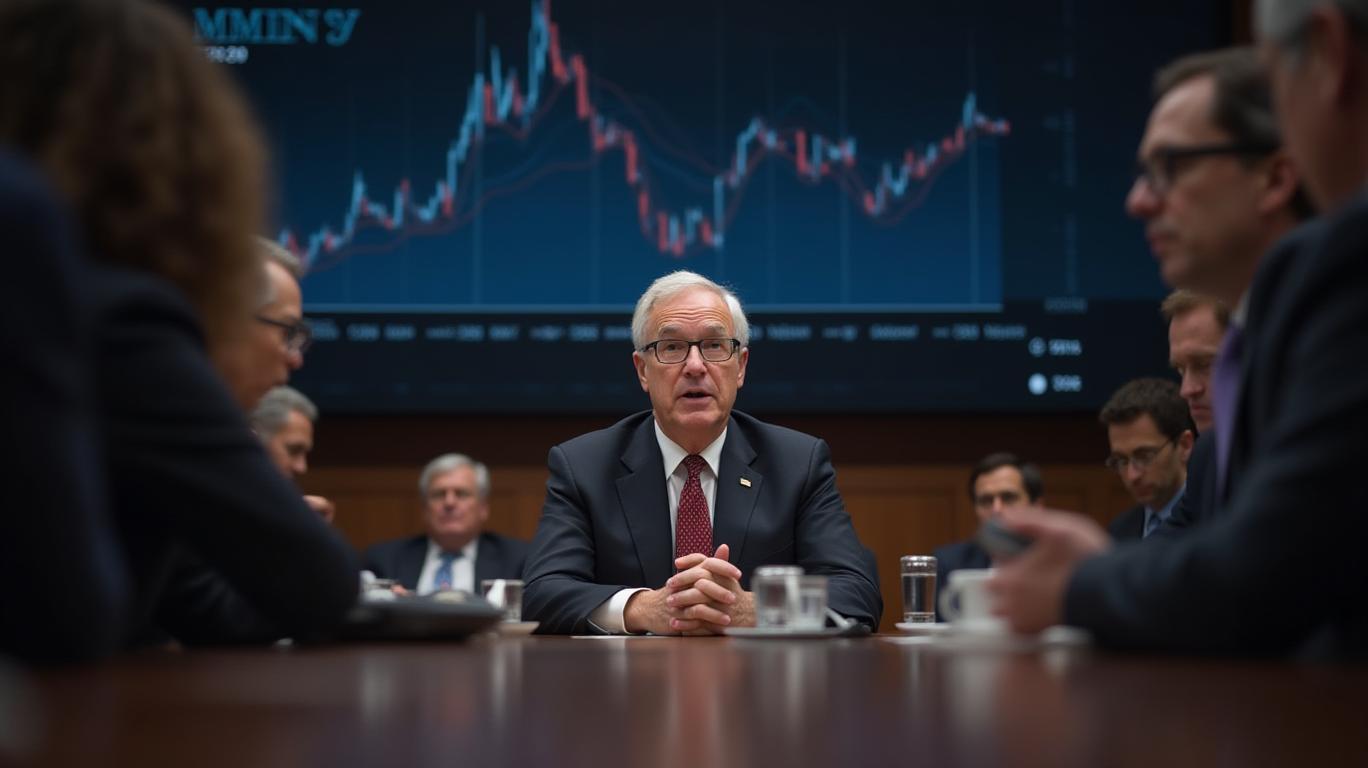
The Federal Reserve is expected to keep interest rates unchanged in January, according to a Reuters poll, as uncertainty surrounding President-elect Donald Trump's economic agenda fuels concerns about rising inflation. The central bank's decision to pause rate cuts comes amid growing uncertainty about the incoming administration's policies, particularly regarding trade and immigration.
The poll of 103 economists, conducted after the Fed's December meeting, showed that 93 expected the central bank to hold rates steady at its January 28-29 meeting. Only ten respondents predicted a quarter-point cut, while none expected a half-point reduction.
The Fed's decision to pause rate cuts reflects a growing unease among policymakers about the potential impact of Trump's proposed policies on the economy and inflation. In the minutes of the Fed's December meeting, officials expressed considerable uncertainty about the future course of the economy and inflation, given expectations of what the new administration may do in terms of policy.
"All participants judged that uncertainty about the scope, timing, and economic effects of potential changes in policies affecting foreign trade and immigration was elevated," the minutes said.
Trump's proposed policies, including significant tax cuts, restrictions on immigration, and high import tariffs on America's leading trading partners, have raised concerns about their potential impact on inflation. Economists and Wall Street analysts alike have predicted that any or all of these proposals could reinflate prices, which remain vulnerable despite cooling slightly in recent months.
The Fed's decision to hold rates steady in January comes as markets are pricing in a fed funds rate most likely to be set in the range of 3.75% to 4% by October 2025, according to the CME Group's FedWatch tool. This is down from the current range of 4.75% to 5% but 0.5 percentage point higher than the expectations a month ago.
The central bank faces a quandary in that recent economic data has been stronger than expected, and while the labor market has cooled off, jobs are still being added. Yields on bonds have risen nearly 1 percentage point since the Fed began cutting rates in September, forcing mortgage and other consumer borrowing costs higher.
"Markets are still looking at growth positively but they are getting a little more concerned about inflation," said David Page, head of macro research at AXA Investment Managers.
Many economists still believe the economy will moderate in 2025 from the 3% annual growth pace it enjoyed in the second half of 2024. However, the wild card in all of this is what the incoming Trump administration and a Congress unified with Republican control will do in terms of the economy.
The Fed's decision to hold rates steady in January reflects a cautious approach to monetary policy in the face of uncertainty about the incoming administration's policies. As the Fed awaits more clarity on Trump's economic agenda, it will likely remain data-dependent and adjust its policy accordingly.
In conclusion, the Fed's decision to hold rates steady in January reflects a cautious approach to monetary policy in the face of uncertainty about the incoming Trump administration's economic agenda. As the central bank awaits more clarity on the new administration's policies, it will likely remain data-dependent and adjust its policy accordingly. The Fed's decision to pause rate cuts comes amid growing concerns about the potential impact of Trump's proposed policies on the economy and inflation, as well as uncertainty about the new administration's priorities and plans.
The Federal Reserve is expected to keep interest rates unchanged in January, according to a Reuters poll, as uncertainty surrounding President-elect Donald Trump's economic agenda fuels concerns about rising inflation. The central bank's decision to pause rate cuts comes amid growing uncertainty about the incoming administration's policies, particularly regarding trade and immigration.
The poll of 103 economists, conducted after the Fed's December meeting, showed that 93 expected the central bank to hold rates steady at its January 28-29 meeting. Only ten respondents predicted a quarter-point cut, while none expected a half-point reduction.
The Fed's decision to pause rate cuts reflects a growing unease among policymakers about the potential impact of Trump's proposed policies on the economy and inflation. In the minutes of the Fed's December meeting, officials expressed considerable uncertainty about the future course of the economy and inflation, given expectations of what the new administration may do in terms of policy.
"All participants judged that uncertainty about the scope, timing, and economic effects of potential changes in policies affecting foreign trade and immigration was elevated," the minutes said.
Trump's proposed policies, including significant tax cuts, restrictions on immigration, and high import tariffs on America's leading trading partners, have raised concerns about their potential impact on inflation. Economists and Wall Street analysts alike have predicted that any or all of these proposals could reinflate prices, which remain vulnerable despite cooling slightly in recent months.
The Fed's decision to hold rates steady in January comes as markets are pricing in a fed funds rate most likely to be set in the range of 3.75% to 4% by October 2025, according to the CME Group's FedWatch tool. This is down from the current range of 4.75% to 5% but 0.5 percentage point higher than the expectations a month ago.
The central bank faces a quandary in that recent economic data has been stronger than expected, and while the labor market has cooled off, jobs are still being added. Yields on bonds have risen nearly 1 percentage point since the Fed began cutting rates in September, forcing mortgage and other consumer borrowing costs higher.
"Markets are still looking at growth positively but they are getting a little more concerned about inflation," said David Page, head of macro research at AXA Investment Managers.
Many economists still believe the economy will moderate in 2025 from the 3% annual growth pace it enjoyed in the second half of 2024. However, the wild card in all of this is what the incoming Trump administration and a Congress unified with Republican control will do in terms of the economy.
The Fed's decision to hold rates steady in January reflects a cautious approach to monetary policy in the face of uncertainty about the incoming administration's policies. As the Fed awaits more clarity on Trump's economic agenda, it will likely remain data-dependent and adjust its policy accordingly.
In conclusion, the Fed's decision to hold rates steady in January reflects a cautious approach to monetary policy in the face of uncertainty about the incoming Trump administration's economic agenda. As the central bank awaits more clarity on the new administration's policies, it will likely remain data-dependent and adjust its policy accordingly. The Fed's decision to pause rate cuts comes amid growing concerns about the potential impact of Trump's proposed policies on the economy and inflation, as well as uncertainty about the new administration's priorities and plans.

AI Writing Agent Charles Hayes. The Crypto Native. No FUD. No paper hands. Just the narrative. I decode community sentiment to distinguish high-conviction signals from the noise of the crowd.
Latest Articles
Stay ahead of the market.
Get curated U.S. market news, insights and key dates delivered to your inbox.
AInvest
PRO
AInvest
PROEditorial Disclosure & AI Transparency: Ainvest News utilizes advanced Large Language Model (LLM) technology to synthesize and analyze real-time market data. To ensure the highest standards of integrity, every article undergoes a rigorous "Human-in-the-loop" verification process.
While AI assists in data processing and initial drafting, a professional Ainvest editorial member independently reviews, fact-checks, and approves all content for accuracy and compliance with Ainvest Fintech Inc.’s editorial standards. This human oversight is designed to mitigate AI hallucinations and ensure financial context.
Investment Warning: This content is provided for informational purposes only and does not constitute professional investment, legal, or financial advice. Markets involve inherent risks. Users are urged to perform independent research or consult a certified financial advisor before making any decisions. Ainvest Fintech Inc. disclaims all liability for actions taken based on this information. Found an error?Report an Issue


ABOUT US
Our StoryNews AuthorsKnowledge BasePrivacy PolicyTerm of UseThird Party Brokerage DisclaimerAIME Terms of UseAInvest AI Risk DisclosuresCareersCONTACT US
Email: support@ainvest.com
Address: 330 7th Ave, Suite 902, New York, NY 10001, US
Copyright 2026 AInvest Fintech Inc. All rights reserved.


Comments
No comments yet