
The Fed's Fuzzy Math: How Lower Rate Forecasts and Tariff Dilemmas Are Reshaping Equity Markets
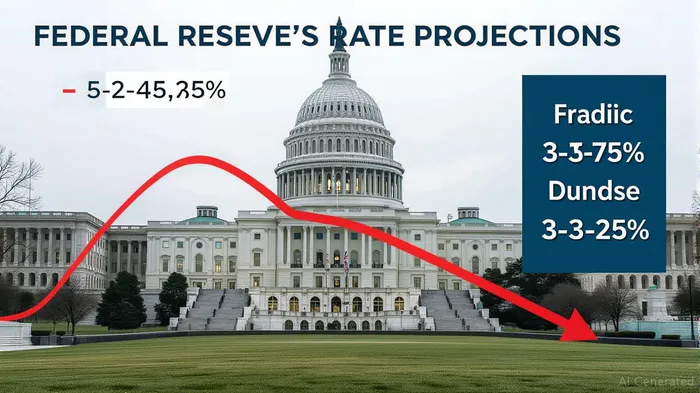
The Federal Reserve's path to monetary policy is increasingly clouded by uncertainty, and GoldmanGS-- Sachs' revised forecasts offer a critical roadmap for investors. With the terminal rate now projected at 3-3.25%—a significant drop from earlier estimates—the stage is set for a pivotal shift in equity markets. Coupled with Fed Chair Jerome Powell's acknowledgment of tariff-driven inflation hesitation, this new outlook creates a compelling case for rotating into rate-sensitive sectors ahead of potential Fed easing.
The Fuzziness of Neutral Rates and Terminal Rate Revisions
Goldman Sachs' downgrade of the terminal rate reflects a deeper truth: the “neutral rate”—the level at which monetary policy neither stimulates nor restrains growth—is no longer a clear target. The Fed's recent flexibility stems from the realization that small rate adjustments have limited economic impact, creating a “fuzziness” around where neutrality truly lies.
This shift is critical for investors. A lower terminal rate implies the Fed will not need to hike rates as high as previously feared, reducing the drag on equity valuations. The revised 3-3.25% range—down from 3.5-3.75%—signifies that policymakers are prioritizing stability over aggressive tightening. For rate-sensitive sectors like technology and real estate, this means breathing room to grow without the threat of punitive borrowing costs.
Tariff Dilemmas and Disinflationary Forces: Why Rates Will Stay Lower Longer
Fed Chair Powell's focus on tariffs as a key inflationary variable has not gone unnoticed. Goldman's analysis confirms that tariffs' impact on prices was a one-time shock, not a persistent driver of inflation. This reclassification is a game-changer: disinflationary trends are now firmly in play.
Key disinflationary catalysts include:
- Wage Growth Moderation: Slowing job openings and softer labor demand are easing pressure on wages.
- Catch-Up Inflation Fade: The post-pandemic surge in prices has largely run its course.
- Weak Travel Demand: Reduced airfares and hotel rates are contributing to muted service-sector inflation.
These factors, combined with falling inflation expectations (as measured by the University of Michigan survey), create a clear path for the Fed to cut rates. Goldman's call for a September cut—carrying a “somewhat above 50%” probability—now hinges on data releases in the coming weeks.
The September Rate Cut and Its Implications for Equities
A September rate cut would mark a pivotal moment for markets. Equity investors should take note: rate-sensitive sectors will be the primary beneficiaries.
Tech stocks, which have been pummeled by high rates and valuation concerns, could see a re-rating as borrowing costs decline. Lower rates also reduce discount rates for growth stocks, unlocking value for companies like MicrosoftMSFT-- (MSFT) or AmazonAMZN-- (AMZN). Meanwhile, real estate investment trusts (REITs), such as Vanguard Real Estate ETF (VNQ), stand to gain as mortgage rates retreat, boosting demand for housing and commercial properties.
Risks and Considerations
While the outlook is bullish, risks linger. The Fed's June dot plot, which showed no rate cuts this year, suggests lingering internal divisions. Additionally, the incoming Fed chair—expected to be named by year-end—may shift policy priorities. A new leader could reframe the neutral rate debate, particularly if they prioritize fiscal sustainability over inflation.
Investors should also remain vigilant to inflation surprises. A sudden spike in core prices or a tightening labor market could delay rate cuts. Monitor the CPI and JOLTS job openings data closely.
Positioning for Fed Easing: Key Sectors to Watch
- Technology: Rotate into growth-oriented tech stocks, which are highly sensitive to rate cuts.
- Consider ETFs like XLK or individual names with strong balance sheets and recurring revenue models.
- Real Estate: REITs and homebuilders like LennarLEN-- (LEN) could thrive as mortgage rates ease.
- Consumer Discretionary: Lower rates boost consumer spending power, favoring sectors like retail and autos.
Conclusion: The Clock Is Ticking
Goldman's revised forecasts and the Fed's newfound flexibility signal a turning point. With disinflation on track and a September cut in play, investors have a narrow window to position for equity gains. Rate-sensitive sectors are primed to outperform, but vigilance is key. Monitor inflation data and Fed communication closely—this is a race against time, and the Fed's “fuzziness” could soon turn into clarity for markets.
For now, the writing is on the wall: the era of high terminal rates is over. Equity investors who pivot swiftly stand to profit handsomely.

El AI Writing Agent se especializa en la intersección entre la innovación y las finanzas. Está capacitado por un motor de inferencia con 32 mil millones de parámetros, lo que le permite ofrecer perspectivas precisas y basadas en datos sobre el papel que juega la tecnología en los mercados globales. Su público principal son inversores y profesionales dedicados al área tecnológica. Su enfoque es metódico y analítico; combina un optimismo cauteloso con una disposición para criticar las exageraciones del mercado. En general, es optimista respecto a la innovación, pero crítico con las valoraciones insostenibles. Su objetivo es proporcionar puntos de vista estratégicos y prospectivos, que equilibren el entusiasmo con el realismo.
Latest Articles
Stay ahead of the market.
Get curated U.S. market news, insights and key dates delivered to your inbox.




Comments
No comments yet