
The Fed's Fragile Autonomy: How Trump's Play for Central Bank Control Could Rock Fixed-Income Markets
The Federal Reserve's independence—the cornerstone of its credibility—now faces its most direct challenge in decades. Donald Trump's relentless criticism of Chair Jerome Powell and his reported push to name a successor prematurely has reignited fears of politicized monetary policy. For fixed-income investors, this creates both peril and opportunity. Market volatility is surging as traders price in a 60% chance of three rate cuts by year-end, up from 35% in March. But history warns that political meddling with the Fed often ends in inflation spikes and bond market chaos. To navigate this crossroads, investors must look to the past—and position for uncertainty.
The Current Political Pressure: Trump's Playbook
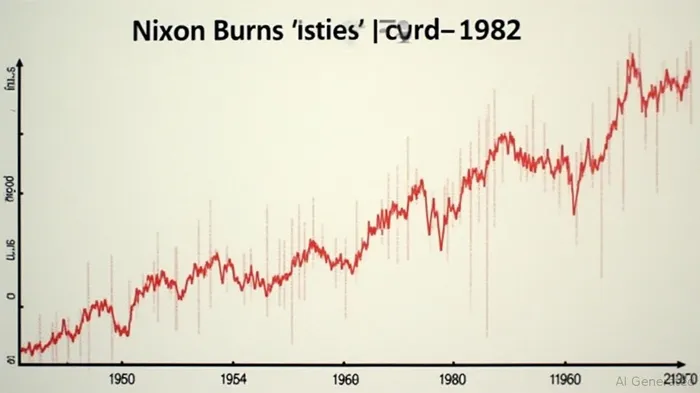
Trump's attacks on Powell—calling him “terrible” and a “political guy”—are unprecedented in tone and timing. His reported shortlist for a “shadow chair” (to be nominated before Powell's term expires in May 2026) includes figures like Fed Governor Christopher Waller and former World Bank head David Malpass. This tactic mirrors Richard Nixon's strategy of pressuring Arthur Burns to cut rates ahead of his 1972 re-election, which fueled the 1970s inflation crisis.
The market is already reacting. The 2-year Treasury yield has plummeted 80 basis points since April, while the dollar has fallen to a three-year low. But Chicago Fed President Austan Goolsbee's warning—that naming a premature successor would have “no effect” on policy—belies the risks. If investors conclude the Fed is bowing to political pressure, inflation expectations could surge, erasing bond gains.
Historical Parallels: When Politicsrupted the Fed
The Nixon administration's 160 direct interventions with the Fed in the 1970s created a toxic mix of inflation and stagnation. By 1980, the Fed was forced to raise rates to 20%, triggering a recession but finally breaking the back of double-digit inflation. Similarly, Lyndon B. Johnson's resistance to Fed tightening during the Vietnam War allowed inflation to balloon from 1.6% in 1965 to 6% by 1970—a harbinger of the 1970s crisis.
Alan Greenspan faced Reagan-era pressure in 1988, when Treasury officials urged rate cuts to boost the economy before elections. Greenspan rebuffed them, maintaining his anti-inflation focus. Today's parallels are stark: Trump's candidates include rate-cut advocates like Waller, who has publicly argued for “lower for longer” rates.
The Market's Dilemma: Betting on Rate Cuts or Rate Risks?
Current Treasury markets are pricing in aggressive easing, but this optimism may be misplaced. Even a Trump-friendly nominee could face inflation resistance. The Fed's 2024 core PCE inflation rate remains elevated at 3.6%, above its 2% target. If incoming data forces the Fed to delay cuts, short-term Treasury yields could rebound sharply.
Investors face a binary outcome:
1. Scenario A (Political Triumph): A Trump-aligned Fed eases rates, boosting risk assets but spiking inflation expectations. Long-term bond yields rise, hurting Treasuries.
2. Scenario B (Policy Discipline): The Fed resists pressure, keeping rates higher for longer. Short-term yields stabilize, but equity volatility drags on.
Portfolio Strategies for the Fed's Crossroads
To hedge against this uncertainty, fixed-income investors should:
- Hedge Rate Uncertainty with Short-Duration TIPS
Investors can buy Treasury Inflation-Protected Securities (TIPS) with maturities of 3-5 years. These bonds protect against inflation while limiting exposure to rising long-term rates. The iShares Short Treasury Bond ETF (SHV), which holds Treasuries under one year, offers further insulation against rate hikes.
Position for Rate Volatility with Inverse Rate ETFs
Inverse rate products like ProShares Short 20+ Year Treasury (TBF) profit if yields spike—a potential outcome if markets lose faith in the Fed's independence. Use these sparingly, as prolonged Fed discipline could erode their value.Diversify with Emerging Market Debt
A weakening dollar and commodity price rallies (if inflation rises) could boost local-currency emerging market bonds. The iShares J.P. Morgan Emerging Markets Bond ETF (EMB) offers exposure, though currency risk remains elevated.
Conclusion: Navigating Uncertainty with History as a Compass
The Fed's independence has been the bedrock of financial stability for over a century. Trump's efforts to weaponize the Fed's chairmanship threaten that legacy—and investors must prepare for the consequences. History shows that politicized monetary policy breeds inflation, volatility, and market disarray. By hedging with short-term inflation hedges and inverse rate tools, investors can capitalize on the Fed's crossroads without overexposure to either scenario. In this high-stakes game, flexibility—and a firm grasp of history—is the best strategy.

Stay ahead of the market.
Get curated U.S. market news, insights and key dates delivered to your inbox.


AInvest
PRO
AInvest
PRO



Comments
No comments yet