
Fed Faces Uncharted Tensions as Trump Pushes, Markets Watch for Cuts
 Aime Summary
The Federal Reserve’s July 2025 meeting minutes indicate growing consensus among policymakers that the current federal funds rate may be near its neutral level, where monetary policy neither stimulates nor constrains economic activity. The minutes show that "almost all participants viewed it as appropriate to maintain the target range for the federal funds rate at 4.25% to 4.50%," highlighting a cautious approach to rate adjustments amid ongoing economic uncertainty. This range has been in place since December 2024, with no adjustments made to the benchmark rate during the period [1].
The debate within the Federal Open Market Committee (FOMC) centered on the effects of recent tariff policies on inflation and employment. Policymakers noted that higher tariffs have started to influence goods prices, but the broader economic impact and inflationary effects remain unclear. The minutes emphasized the need for more time to assess the evolving situation, particularly as President Donald Trump’s aggressive tariff policies continue to generate uncertainty in financial markets. This uncertainty is compounded by ongoing trade tensions and the potential for inflation to persist beyond the Fed’s 2% target [1].
Notably, two Fed governors—Michelle Bowman and Christopher Waller—dissented at the July meeting, advocating for a 25-basis-point rate cut to preempt further weakening in the labor market. Their stance marked the first time since 1993 that more than one Fed official dissented against a rate decision. Their concerns were partly validated by subsequent data showing weaker-than-expected job creation in July, a rise in the unemployment rate, and a decline in labor force participation to levels not seen since late 2022. Additionally, a large downward revision to employment data for May and June exacerbated concerns about labor market weakness [1].
Market expectations for a rate cut have grown, with the CME Group’s FedWatch tool estimating an 85% probability of a 25-basis-point reduction at the September meeting. These expectations have been bolstered by recent economic data suggesting that while the U.S. economy remains resilient—as noted in the S&P 500’s valuation above its long-term average and strong consumer spending—there are signs of uneven growth between large and small-cap stocks. Additionally, the second-quarter GDP report showed a strong rebound with an annualized growth rate of 3.0%, driven largely by a sharp decline in imports and robust consumer demand. However, underlying economic indicators, including softness in the services sector and uncertainty around tariff impacts, suggest continued fragility [3].
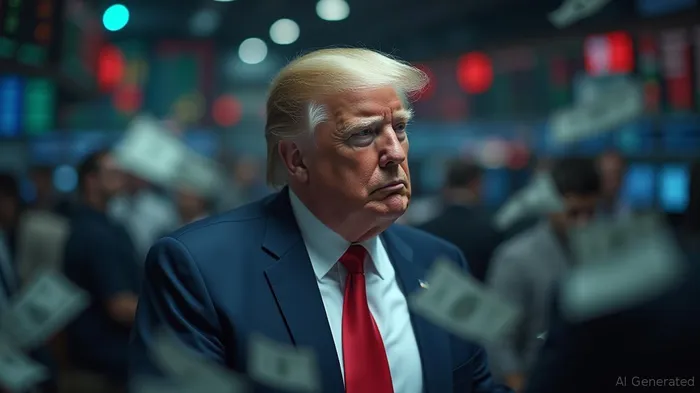
The Fed’s decision to maintain rates has drawn significant political pressure from the Trump administration, which has repeatedly criticized Powell for not lowering rates. Trump’s influence is expected to intensify as he screens candidates to replace Powell and has already nominated Stephen Miran to fill a vacant Fed seat. The White House’s push for rate cuts contrasts with the Fed’s cautious stance, which emphasizes data-driven decisions and the need to avoid premature actions that could undermine inflation control [3]. Fed Chair Powell has stated that no final decisions have been made regarding a rate cut, but the minutes reveal ongoing discussions about the trade-offs between inflationary risks and labor market weakening [1].
Looking ahead, the upcoming Jackson Hole symposium on August 22–23 will be a key event for the Fed’s messaging. Powell’s speech, which is expected to be his final keynote as Fed Chair, will be closely scrutinized for clues about future policy direction. Market participants will also watch for signals from the FOMC minutes on August 21, which could provide additional insights into whether the Fed is leaning toward a more dovish stance [4]. The evolving interplay between economic data, tariff policies, and political pressures will likely shape the Fed’s next steps as it seeks to balance inflation control with labor market support [1].
Source:
[1] Fed dissenters appeared alone in favoring rate cut at July ... (https://www.reuters.com/business/fed-dissenters-appeared-alone-favoring-rate-cut-july-meeting-minutes-show-2025-08-20/)
[2] Markets believe the overall U.S. economy remains resilient (https://www.odaily.news/en/newsflash/444232)
[3] July 2025 Markets: Growth Persists (https://manercpa.com/reviewing-the-july-2025-markets/)
[4] Market pricing vs. Fed pushback (https://www.dbs.com.sg/treasures/aics/investment-strategy/templatedata/article/generic/data/en/GR/macro_strategy/082025/250818_fx.xml)

Stay ahead of the market.
Get curated U.S. market news, insights and key dates delivered to your inbox.


AInvest
PRO
AInvest
PRO



Comments
No comments yet