
The Fed's Employment Data and Global Equity Rally: What Investors Should Do Next


 Aime Summary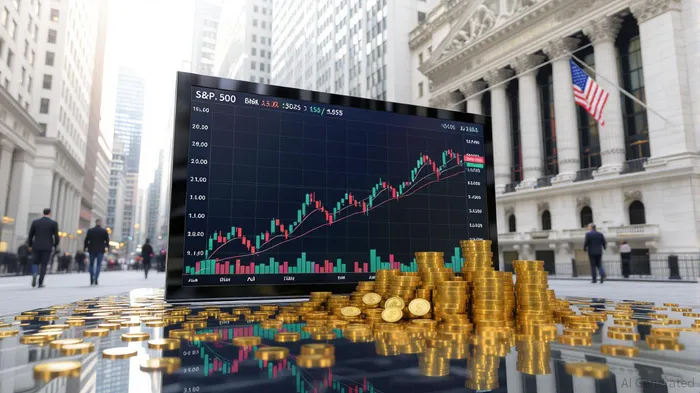
The U.S. labor market's abrupt slowdown in August 2025 has sent shockwaves through global financial markets, triggering a recalibration of investor sentiment and asset allocations. With nonfarm payrolls rising by just 22,000—far below the 75,000 forecast—and the unemployment rate climbing to 4.3%, the Federal Reserve's pivot toward rate cuts has become an open question. This shift has not only reignited debates about the sustainability of the current equity rally but also forced investors to grapple with the dual forces of dovish monetary policy and inflationary headwinds.
The Employment Data's Ripple Effect on Global Equities
The August jobs report underscored a labor market in distress, with manufacturing, government, and professional services sectors shedding a combined 44,000 jobs. These developments have accelerated expectations for a 25-basis-point rate cut in September, with traders now pricing in a 12% chance of a 50-basis-point cut—a stark reversal from the 0% probability just 24 hours prior. The immediate market reaction was a surge in U.S. equities, with the S&P 500 and Nasdaq opening higher, but the broader implications are more nuanced.
Global equities have responded to the Fed's dovish pivot with a mix of relief and caution. The U.S. dollar's 0.75% decline against a basket of currencies has boosted emerging markets and European equities, as cheaper dollar debt and reduced capital outflows create tailwinds. However, the rally is being tempered by concerns over inflationary pressures from Trump-era tariffs and the potential for a prolonged economic slowdown. The S&P Global Market Intelligence Investment Manager Index, which tracks sentiment among $3.5 trillion in assets, now shows a net risk appetite of -20%, the lowest since April 2025, reflecting a return to risk aversion.
Assessing the Sustainability of the Rally
Historical data suggests that equities tend to outperform in the year following a Fed rate cut cycle, with the S&P 500 averaging a 14.1% return since 1980. However, the current rally's durability hinges on three critical factors: the pace of Fed easing, the trajectory of inflation, and sector-specific dynamics.
Fed Policy Uncertainty: While the market is pricing in a 70.5% probability of a September rate cut, internal Fed divisions persist. Cleveland Fed President Beth Hammack has signaled resistance to aggressive cuts, arguing that the labor market's weakness may be temporary. This uncertainty has kept volatility elevated, with the VIX index hovering near 22.5—a level consistent with historical patterns before rate cuts.
Inflationary Pressures: Tariffs on semiconductors and other goods have reignited inflation concerns, pushing 10-year Treasury yields to 4.07% as investors hedge against higher input costs. The Fed's dual mandate—balancing price stability and employment—means any unexpected inflation surge could delay rate cuts, creating a tug-of-war between equity bulls and bond bears.
Sector Rotation Dynamics: The rally has been led by AI-driven tech stocks and renewable energy, which benefit from lower discount rates. However, traditionally defensive sectors like healthcare and utilities have underperformed, signaling a shift in risk appetite. The Russell Investments Factor Report highlights that Value and Small Cap stocks have outperformed in Q3 2024, but this trend may reverse if rate cuts fail to stimulate broader economic growth.
Tactical Strategies for Navigating the Rate-Cut Cycle
Investors must adopt a multi-layered approach to capitalize on the Fed's pivot while hedging against downside risks. Here are three actionable strategies:
- Sector Rotation and Duration Management:
- Growth Equities: Overweight AI, renewable energy, and small-cap innovators with strong pricing power. These sectors benefit from lower borrowing costs and capital efficiency.
- Intermediate-Duration Bonds: Allocate to 3–7-year corporate bonds with stable cash flows to balance yield capture and volatility. Treasury Inflation-Protected Securities (TIPS) remain a critical hedge against inflation.
Defensive Positions: Maintain exposure to healthcare and utilities, which historically outperform in dovish environments.
Currency and Derivative Hedging:
- Dollar Shorts: With the U.S. dollar index near a one-month low, consider shorting the dollar against the euro and yen, which are benefiting from accommodative policies in the EU and Japan.
Options Strategies: Use out-of-the-money put options on equities to protect against volatility spikes, particularly as the Fed's September decision looms.
Alternative Assets and Liquidity Buffers:
- Real Assets: Increase allocations to real estate and commodities, which act as both inflation hedges and sources of return. Gold's record high above $3,500 per ounce underscores its role in a diversified portfolio.
- Cash and Short-Duration Bonds: Maintain a liquidity buffer to capitalize on potential buying opportunities if the market corrects.
Conclusion: Balancing Optimism and Caution
The Fed's rate-cutting cycle has created a fertile ground for equity markets, but the path forward is fraught with uncertainties. While historical trends suggest equities will outperform in the year following a rate cut, the current environment is shaped by unique geopolitical and inflationary pressures. Investors must remain agile, leveraging sector rotations, duration strategies, and hedging tools to navigate the evolving landscape. As the September 5 nonfarm payroll report approaches, the key will be to balance optimism about Fed easing with caution about the broader macroeconomic risks that could derail the rally.
In this climate, a barbell strategy—combining aggressive growth bets with defensive hedges—offers the best chance to thrive in a world where the Fed's next move is as unpredictable as the markets it seeks to stabilize.

Stay ahead of the market.
Get curated U.S. market news, insights and key dates delivered to your inbox.


AInvest
PRO
AInvest
PRO



Comments
No comments yet