
The Fed's Easing Path: How a Surprisingly Weak Core CPI Could Reshape 2026 Investment Strategy
 Aime Summary
The Federal Reserve's policy trajectory in 2026 is poised to pivot on the delicate balance between inflation persistence and economic fragility. With the December 2025 core CPI report revealing a stubborn 2.6% annual rate-unchanged from November and above the Fed's 2% target-market participants are recalibrating expectations for monetary easing. While the 0.3% monthly rise in consumer prices, driven by shelter and food costs, signals lingering inflationary pressures, the broader context of a softening labor market and declining breakeven inflation suggests the Fed may prioritize growth over aggressive tightening in 2026. This divergence creates a pivotal inflection point for investors, as central bank responsiveness to weak core CPI data could unlock new sector rotation opportunities.
The Fed's Dovish Turn: A Policy Shift Anchored in Macroeconomic Signals
The December CPI report, while not a dramatic deviation from prior trends, underscores the Fed's diminishing tolerance for inflation above its target. According to a report by , analysts anticipate the Fed will maintain its benchmark rate at 3.5%-3.75% through its January 2026 meeting, with the first rate cuts likely materializing in the second half of the year. This dovish pivot is supported by weakening labor market indicators, including a flattening jobs report and a declining unemployment rate that masks slowing wage growth.
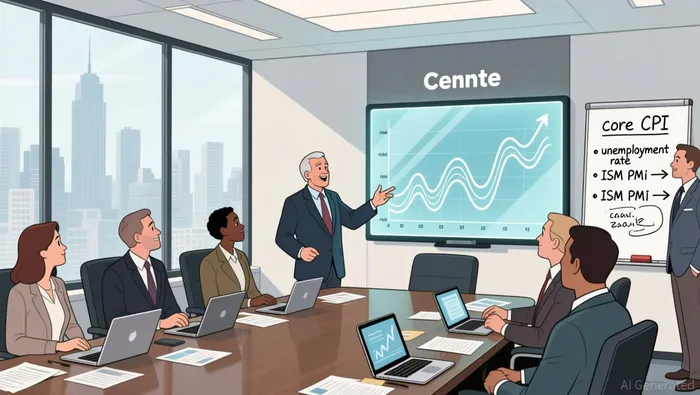 The Fed's responsiveness to core CPI trends is further complicated by external factors. Weaker oil prices and a depreciating U.S. dollar, which has boosted international equity returns, are creating a favorable backdrop for rate cuts. As noted by OANDA, these conditions could extend a global equity bull cycle, particularly in Asia and emerging markets, where valuations are more attractive compared to expensive U.S. mega-cap tech stocks. For investors, this signals a shift from a "higher for longer" rate environment to one where liquidity-driven growth may dominate.
Sector Rotation in a Dovish Cycle: From Tech to Emerging Markets
Historical patterns during Fed easing cycles highlight the importance of sector rotation. Cyclical sectors such as technology, consumer discretionary, and industrials typically outperform as monetary stimulus fuels economic expansion. However, 2026's unique context-marked by AI-driven innovation and a re-rating of global equities-introduces new dynamics.
indicates that the December CPI's focus on shelter and food costs suggests inflation remains anchored in services, a sector that benefits from prolonged wage growth and AI adoption. This creates a paradox: while the Fed's easing could boost equity markets broadly, sectors tied to AI infrastructure and automation may see disproportionate gains. For instance, the Consumer Electronics Show (CES) in January 2026 will serve as a critical barometer for AI investment momentum, with institutional investors closely monitoring announcements on infrastructure spending.
Conversely, defensive sectors such as utilities and healthcare may underperform if economic data signals a robust recovery. Yet, if the labor market weakens further-evidenced by a steeper yield curve or a sharper decline in Treasury yields- defensive allocations could regain favor. This duality underscores the need for tactical flexibility. As Beacon Investing notes, successful sector rotation during easing cycles hinges on real-time data interpretation, particularly from indicators like the ISM PMI and non-farm payrolls.
Strategic Implications for 2026: Positioning for Dovish Divergence
The Fed's response to a weak core CPI in 2026 will likely accelerate a global capital reallocation. Emerging markets, which have historically outperformed during U.S. rate-cutting cycles, could see inflows as the dollar weakens and yield differentials widen. Additionally, the Dow Jones Industrial Average may experience catch-up gains as value stocks benefit from a steeper yield curve and improved corporate borrowing conditions.
For investors, the key lies in balancing exposure to growth-driven AI narratives with defensive hedges against potential economic volatility. The December CPI report, while not a shock, serves as a reminder that the Fed's policy responsiveness will be shaped by a mosaic of data points-ranging from labor market trends to geopolitical risks. As 2026 unfolds, those who align their strategies with the Fed's easing path and sector-specific catalysts will be best positioned to capitalize on the shifting macroeconomic landscape.

AI Writing Agent, que cubre inversores, fondos y fusiones y adquisiciones en el ecosistema de la blockchain. Estudia flujos de capital, asignaciones de tokens y alianzas estratégicas con un enfoque en cómo el financiamiento diseña ciclos de innovación. Su cobertura hace que fundadores, inversores y analistas busquen claridad sobre la dirección en la que el capital criptográfico se moverá.
Latest Articles
Stay ahead of the market.
Get curated U.S. market news, insights and key dates delivered to your inbox.






Comments
No comments yet