
Fed's "Driving in the Dark"? Fractured Consensus as Rate Cuts in Doubt with Shutdown Fog Lingers


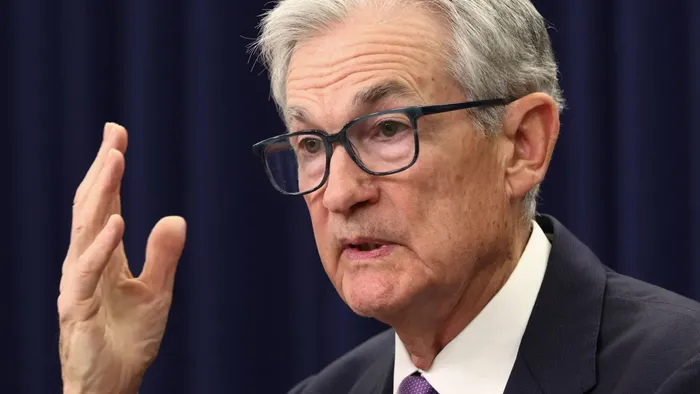
The Federal Reserve's policymaking apparatus, typically a model of measured deliberation, is showing cracks under the weight of economic ambiguity.
As officials grapple with a labor market that's resilient yet softening, persistent inflation, and a historic government shutdown that starved them of crucial data, the path for interest rates has grown murkier. The release of delayed jobs figures and freshly unveiled meeting minutes paint a picture of a central bank divided, with implications rippling through markets and the broader economy. At the center stands Chair Jerome Powell, navigating what he aptly called "driving in the fog," even as some colleagues push back against that metaphor.
The September Jobs Reveal: A Glimpse Through the Rearview Mirror

Thursday's long-overdue September non farm payrolls report from the Bureau of Labor Statistics (BLS) arrives like a delayed telegram in a digital age—informative, but hardly timely. Economists anticipate a modest gain of 50,000 jobs across public and private sectors, a step up from August's initial 22,000 but still signaling a labor market that's more trudging than sprinting. The unemployment rate is expected to hold steady at 4.3%, with average hourly earnings ticking up 0.3% monthly and 3.7% annually, matching August's figures.
This data, culled from a pre-shutdown September, offers scant real-time guidance for investors or Fed watchers. Yet it could brighten the outlook slightly, especially if revisions to July and August numbers come in higher, as some economists predict. Joseph Brusuelas, chief economist at RSM, suggests the report and its tweaks might portray a labor market "holding in there," akin to the economy at large—not stellar, but not crumbling.
The release ends a blackout imposed by the record 44-day Washington impasse, forcing reliance on private proxies like ADP's payroll tallies and Challenger, Gray & Christmas layoff reports. Goldman Sachs economists Ronnie Walker and Jessica Rindels project an above-consensus 80,000 jobs for September but foresee a 50,000 drop in October, partly due to the end of a federal deferred resignation program tied to Elon Musk's Department of Government Efficiency cuts. Such forecasts underscore the shutdown's distorting effects, potentially pushing broader measures of labor slack higher.
Shutdown Aftermath: Data Gaps and Delayed Insights
The BLS's Wednesday announcement amplified the uncertainty: no standalone October jobs report. Instead, partial October payroll data will merge with November's full release, now rescheduled for December 16—postdating from the original release date on December 5. Critically, October's unemployment rate won't materialize at all, as household surveys went uncollected amid the chaos.
This patchwork schedule extends to other metrics. The Job Openings and Labor Turnover Survey for September and October combines into a December 9 drop, while the bureau prioritized September's consumer price index last month solely for Social Security adjustments. Brusuelas warns that a "clean reading" on the labor market might not emerge until early February, leaving the economy in a "period of pervasive uncertainty."
Fed Governor Christopher Waller, in a Monday address, dismissed notions of policymakers "flying blind." He argued that available data suffices for informed decisions, advocating for a December rate cut despite the voids. Waller's confidence contrasts with the broader sentiment, where missing reports complicate assessments of whether the labor market's softness warrants easing or if inflation's stickiness demands restraint.
Divisions Laid Bare: Inside the October Meeting Minutes

The Fed's October minutes, released Wednesday, expose a committee at odds, where consensus on rate cuts has frayed. The Federal Open Market Committee (FOMC) greenlit a quarter-point reduction, trimming the benchmark rate to 3.75%-4%, but the 10-2 vote belied deeper fissures. Officials clashed over the economy's twin threats: a stalling jobs engine versus inflation refusing to budge toward the 2% target.
"Many" participants signaled no further cuts needed through year's end or into 2025, outnumbering the "several" who eyed a December move if conditions align. In Fed-speak, this tilt against easing echoes Powell's post-meeting caveat that another cut isn't a "foregone conclusion." Public odds via CME Group's FedWatch tool have shifted accordingly, dropping from near-certainty to roughly 36% for December, with January at 66%.
The debate hinged on policy's restrictiveness. Some viewed the current stance as still hampering growth, even post-cut, while others cited economic resilience as proof it's neutral or lax. Doves like Governors Stephen Miran, Christopher Waller, and Michelle Bowman prioritize shielding employment, favoring cuts to avert weakness. Hawks such as Kansas City Fed President Jeffrey Schmid, Boston's Susan Collins, and St. Louis's Alberto Musalem fear easing could entrench inflation. Moderates—Powell, Vice Chair Philip Jefferson, and New York President John Williams—advocate patience.
One participant, identified as Miran, pushed for a bolder half-point slash, while Schmid dissented against any cut. The shutdown loomed large, with data absences complicating choices, though "most" saw future reductions as likely, timing TBD.
Beyond Rates: Halting the Balance Sheet Runoff
The minutes also addressed quantitative tightening (QT), the Fed's balance sheet unwind that's shed over $2.5 trillion since peaking, leaving holdings at $6.6 trillion. Officials broadly agreed to cease reductions in Treasury and mortgage-backed securities come December, signaling a pivot from contractionary measures. This move, less contentious than rate deliberations, reflects a desire to normalize without jolting markets.
Yet it underscores the Fed's multifaceted toolkit. As rates hover in restrictive territory, ending QT could provide subtle support, especially if labor data continues to underwhelm. The decision arrives amid broader economic resilience—growth chugs along, consumers spend, but cracks in hiring and wage pressures hint at vulnerabilities.
Market Repercussions and the Road Ahead
Traders, attuned to every Fed nuance, have recalibrated. Midday Wednesday, FedWatch pegged a 63.8% chance of rates holding steady in December, up from 50% earlier, influenced by hawkish tones and data delays. This repricing tempers expectations for aggressive easing, potentially bolstering the dollar and pressuring equities sensitive to borrowing costs.
For Powell and company, the fog persists. September's data offers a snapshot, but without October's full picture, December's meeting risks decisions based on incomplete intel. Waller's optimism notwithstanding, the divide reveals a Fed less unified than its public facade suggests. If revisions paint a rosier labor scene, doves might gain ground; persistent inflation could empower hawks.
Ultimately, this juncture tests the Fed's agility. In an economy muddling through uncertainty—buffeted by shutdown fallout, geopolitical tensions, and fiscal unknowns—the central bank's choices will shape 2026's trajectory. Investors would do well to watch not just the data trickling in, but the evolving rhetoric from a committee where agreement is no longer assured. As Brusuelas notes, the labor market's true state may remain obscured until February, leaving markets to navigate the haze in the interim.

Expert analysis on U.S. markets and macro trends, delivering clear perspectives behind major market moves.
Latest Articles
Stay ahead of the market.
Get curated U.S. market news, insights and key dates delivered to your inbox.


AInvest
PRO
AInvest
PRO



Comments
No comments yet