
Fed Divided: Tackle Inflation or Boost Jobs?


 Aime Summary
The Federal Reserve's cautious approach to rate cuts has intensified amid deepening divisions among policymakers, with officials split over whether inflation or a fragile labor market poses the greater threat. Atlanta Fed President Raphael Bostic, a prominent hawk, reiterated his stance that rates should remain unchanged until there is "clear evidence" inflation is trending toward the central bank's 2% target, as reported by Reuters. His remarks, delivered shortly after announcing his retirement, underscored his alignment with a faction of regional bank presidents prioritizing price stability over labor-market concerns, according to a Yahoo Finance report. This position contrasts with dovish officials, who argue that slowing job growth necessitates further rate cuts to support economic momentum, as noted in a Business Report article.
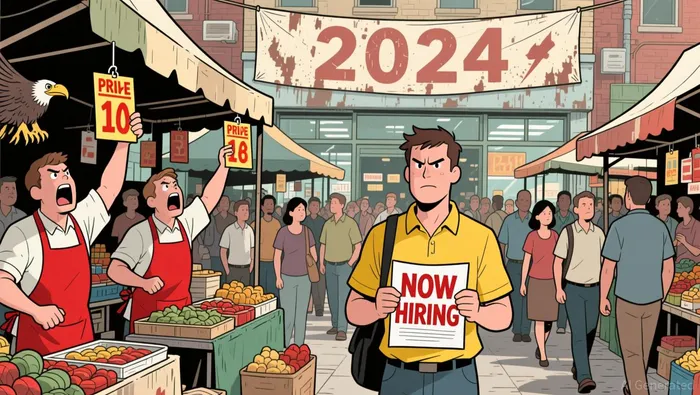 The debate has been complicated by a government shutdown that delayed key economic data, leaving policymakers reliant on anecdotal and private-sector insights, as reported by Investing.com. This uncertainty has amplified the risk of overreacting to incomplete signals. Bostic emphasized that labor-market data remains "ambiguous," cautioning against aggressive policy moves that could exacerbate inflationary pressures, as Reuters reported. Meanwhile, hawkish leaders point to tariff-driven price increases and sticky services inflation as reasons to maintain restraint, while doves highlight declining payroll growth—averaging 29,000 monthly in late 2024—as a sign of weakening demand, as Investing.com reported.
Recent tariff announcements have added another layer of complexity. Treasury Secretary Scott Bessent signaled "substantial" tariff relief on coffee, bananas, and other imported goods, aiming to curb rising consumer prices, as NBC News reported. The move follows Trump-era tariffs that contributed to a 3% annualized inflation rate in September, as Marketscreener reported. While Bessent predicted the changes would lower costs "very quickly," critics warn that reduced import duties could stimulate demand and reignite inflationary pressures, as Yahoo Finance noted. This tension reflects a broader challenge for the Fed: balancing the need to cool inflation with the risk of stifling growth.
Compounding the uncertainty is a looming "tax bomb" for student loan borrowers. Advocacy groups and Democratic senators have warned that debt forgiveness under income-driven repayment programs will become taxable in 2026, potentially saddling millions with $5,800 to $10,000 in liabilities, as CNBC reported. The issue, while distinct from interest rate policy, highlights the broader affordability concerns shaping economic discourse.
Markets remain split on the Fed's next move. While investors still expect a December rate cut, the probability has dimmed as hawks push for a pause, as Investing.com noted. A December reduction would likely flatten the yield curve and weaken the dollar, benefiting emerging markets and commodities like gold and copper, as Investing.com reported. However, a delayed cut could trigger a sharp rise in Treasury yields and a correction in equities.

Stay ahead of the market.
Get curated U.S. market news, insights and key dates delivered to your inbox.






Comments
No comments yet