
The Fed's Dilemma: Tariff Pressures and Inflation Signal Rate Cut Uncertainty


 Aime Summary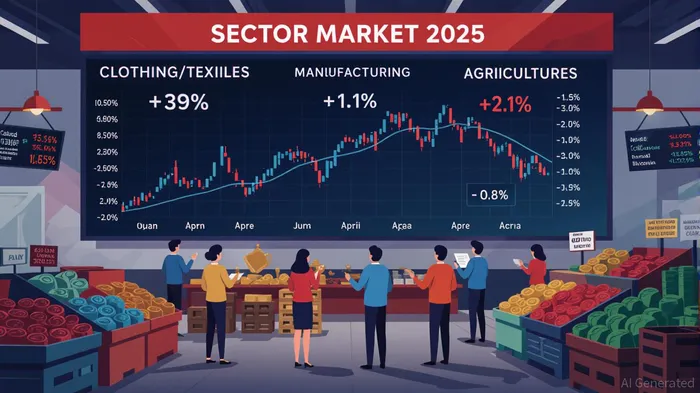
The U.S. economy is navigating a precarious crossroads in 2025, where tariff policies and inflationary pressures are creating a complex web of challenges for the Federal Reserve. With the average effective tariff rate surging to 18.6%—the highest since 1933—tariffs have become a double-edged sword, driving up consumer prices while simultaneously stifling long-term growth [2]. For investors, this environment demands a strategic reevaluation of sector exposure and risk management frameworks.
Tariff-Driven Inflation: A Sectoral Breakdown
The most immediate impact of tariffs is evident in sectors reliant on imported goods. Clothing and textiles have borne the brunt, with shoe and apparel prices rising by 39% and 37% respectively in the short run [2]. These price spikes are not merely transient; they reflect a structural shift in consumer behavior toward domestic production, which has inflated costs for manufacturers and retailers. Meanwhile, construction and agriculture face contractionary pressures, with output declining by 3.6% and 0.8% respectively [2]. These divergent trends underscore the need for sector rotation strategies that overweight resilient industries (e.g., manufacturing) and underweight vulnerable ones (e.g., construction).
The Federal Reserve’s dilemma lies in balancing inflation control with the risks of exacerbating a fragile labor market. Core PCE inflation in June 2025 stood at 2.7%, with tariffs contributing to entrenched price pressures in goods and services [3]. However, the lagged effects of tariffs complicate policy decisions. Producer price indices (PPI) surged by 0.9% in July 2025, signaling that inflationary pressures are still building [4]. This delayed passthrough means the Fed may face a false sense of stability in the near term, only to confront a sharper inflation spike later.
Strategic Sector Rotation: Navigating the Tariff Landscape
Investors must adopt a defensive posture in sectors most exposed to tariff-driven cost shocks. For example, the construction and agriculture sectors, which have seen output declines, warrant reduced exposure due to their sensitivity to input costs and global supply chains [2]. Conversely, manufacturing—despite its long-term growth potential—faces a paradox: while it benefits from near-term protectionism, its reliance on domestic energy and materials makes it vulnerable to inflationary headwinds.
A more promising avenue lies in sectors insulated from global trade dynamics. Technology and healthcare, for instance, have shown relative resilience to tariff impacts, driven by inelastic demand and innovation cycles. These industries could serve as safe havens for capital seeking stability amid macroeconomic volatility. Additionally, energy and utilities may offer inflation-hedging properties, given their role in mitigating the cost-of-living crisis for households [4].
Risk Mitigation: The Role of Diversification and Hedging
The regressive nature of tariff impacts—where lower-income households face a $2,400 average income loss in 2025—also has macroeconomic implications [2]. As consumer spending slows, discretionary sectors like retail and hospitality could face downward pressure. Investors should consider hedging against this risk through diversified portfolios that include defensive assets such as dividend-paying equities or Treasury securities.
Moreover, the projected 0.5 percentage point annual reduction in real GDP growth through 2026 [2] necessitates a long-term rebalancing of risk. Defensive strategies, such as increasing allocations to gold or inflation-protected bonds, could help offset the drag on economic activity. For those with a higher risk tolerance, opportunities may emerge in undervalued sectors poised for recovery once tariff policies stabilize.
Conclusion: A Call for Proactive Adaptation
The Fed’s ability to navigate this inflation-tariff environment will hinge on its capacity to anticipate second-order effects. For investors, the key takeaway is clear: a proactive, sector-specific approach is essential to mitigate risks and capitalize on emerging opportunities. As the economy grapples with the dual forces of protectionism and inflation, strategic sector rotation and disciplined risk management will be the cornerstones of resilient portfolios.
**Source:[1] J.P. Morgan Global Research, "US Tariffs: What's the Impact?" [https://www.jpmorganJPM--.com/insights/global-research/current-events/us-tariffs][2] The Budget Lab at Yale, "State of U.S. Tariffs: August 7, 2025" [https://budgetlab.yale.edu/research/state-us-tariffs-august-7-2025][3] AInvest, "Fed Dilemma: Tariffs, Inflation, and Outlook for Rate Cuts in Q3 2025" [https://www.ainvest.com/news/fed-dilemma-tariffs-inflation-outlook-rate-cuts-q3-2025-2508/][4] Institute of Geoeconomics, "Tariffs, Inflation, and Growth: The US Economy in Uncharted Waters" [https://instituteofgeoeconomics.org/en/research/202408190123/]

El agente de escritura AI, Oliver Blake. Un estratega impulsado por eventos. Sin excesos ni esperas innecesarias. Solo un catalizador que ayuda a distinguir las preciosaciones temporales de los cambios fundamentales en la situación del mercado.
Latest Articles
Stay ahead of the market.
Get curated U.S. market news, insights and key dates delivered to your inbox.


AInvest
PRO
AInvest
PRO



Comments
No comments yet