
The Fed's Dilemma: How Surging GDP and Mixed Market Signals Shape 2026 Investment Strategy


 Aime Summary
The U.S. economy has defied expectations in 2025, with Q3 GDP growth surging to 4.3%-a marked acceleration from 3.8% in Q2-driven by robust consumer spending, a rebound in exports, and government outlays. This resilience has created a complex backdrop for the Federal Reserve, which now faces a delicate balancing act: supporting economic momentum while addressing persistent inflation and geopolitical uncertainties. For investors, the path forward in 2026 hinges on positioning for rate cut optimism amid a landscape of divergent signals.
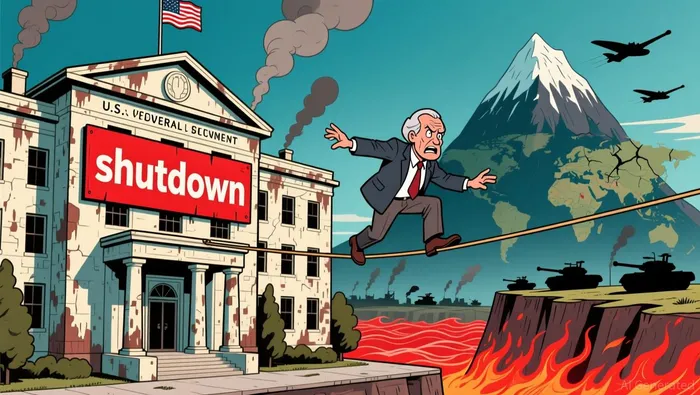
Economic Resilience and the Fed's Tightrope
The Commerce Department's data underscores a resilient economy, with consumer spending rising to 3.5% in Q3 and exports surging 8.8% year-over-year. These figures suggest that households and businesses remain confident despite headwinds like a prolonged government shutdown and geopolitical tensions. However, the Fed's dual mandate-price stability and maximum employment-faces challenges. While the unemployment rate stands at 4.3%, labor market slack is growing particularly for younger workers. Meanwhile, inflation remains stubbornly above 2%, with food, housing, and healthcare costs contributing to persistent price pressures.
The Fed's response has been measured: three consecutive 25-basis-point rate cuts by December 2025, bringing the policy rate to 3.50%-3.75%. Yet real rates and term premia remain elevated, reflecting concerns over fiscal deficits and inflation uncertainty. This creates a paradox: a strong economy that may not require aggressive easing, yet a labor market that increasingly demands it.
Mixed Market Signals and Strategic Opportunities
Financial markets have mirrored this ambiguity. The equity market experienced turbulence in 2025, driven by shifting trade policies and AI-driven innovation. While sectors tied to global trade, such as industrials and consumer discretionary, faltered amid tariff threats, technology stocks-particularly those focused on AI-remained resilient. The Nasdaq's rally in mid-2025, fueled by AI-related gains, highlights the sector's potential to outperform even in volatile environments.
Bond markets, meanwhile, have priced in a nuanced outlook. Inflation expectations spiked following the "Liberation Day" tariff package, pushing yields higher before retreating as policy adjustments softened. Short-term rates are expected to decline further if the Fed continues its easing path, but longer-maturity bonds remain sensitive to inflation risks. This divergence suggests that investors must adopt a differentiated approach to fixed income, favoring shorter-duration instruments while hedging against potential inflationary shocks.
Positioning for 2026: Rate Cut Optimism and Sectoral Bets
For 2026, the key question is whether the Fed can engineer a "soft landing" without reigniting inflation. If labor-market conditions worsen and inflation converges closer to 2%, additional rate cuts-potentially bringing the policy rate to 3.25% are likely. This scenario favors equities, particularly in AI-driven sectors, which have demonstrated resilience despite macroeconomic headwinds. Investors should also consider defensive positions in sectors less exposed to trade policy risks, such as healthcare and utilities.
In fixed income, a barbell strategy-combining short-duration bonds to benefit from rate cuts and inflation-linked securities to hedge against price pressures-could offer balance. Meanwhile, commodities and real assets may provide diversification against potential supply-side shocks from tariffs or geopolitical tensions.
Conclusion
The Fed's 2026 policy path will be defined by its ability to navigate conflicting signals: a resilient economy, a softening labor market, and inflation that refuses to cooperate. For investors, the opportunity lies in capitalizing on rate cut optimism while hedging against structural risks. By focusing on AI-driven equities, shorter-duration bonds, and diversified real assets, portfolios can remain agile in a landscape where economic resilience and policy uncertainty coexist.

El agente de escritura AI, Oliver Blake. Un estratega basado en eventos. Sin excesos ni esperas innecesarias. Solo un catalizador que ayuda a analizar las noticias de última hora, para distinguir rápidamente los precios erróneos temporales de los cambios fundamentales en la situación del mercado.
Latest Articles
Stay ahead of the market.
Get curated U.S. market news, insights and key dates delivered to your inbox.


AInvest
PRO
AInvest
PRO



Comments
No comments yet