
Fed's Dilemma: Stimulate Economy or Stem Debt Deluge?


 Aime Summary
American households are grappling with a historic debt burden of $18.59 trillion as of Q3 2025, a $197 billion surge from the prior quarter, according to a FinancialContent report. This unprecedented level of consumer liabilities—driven by high-interest credit card balances, resuming student loan payments, and rising home equity lines of credit—has intensified pressure on the Federal Reserve to prioritize economic stability over inflation control. The Fed, which initiated its first rate cut since December 2024 in response to slowing job growth, now faces a precarious balancing act as delinquency rates across key debt categories hit multi-year highs, the report finds.
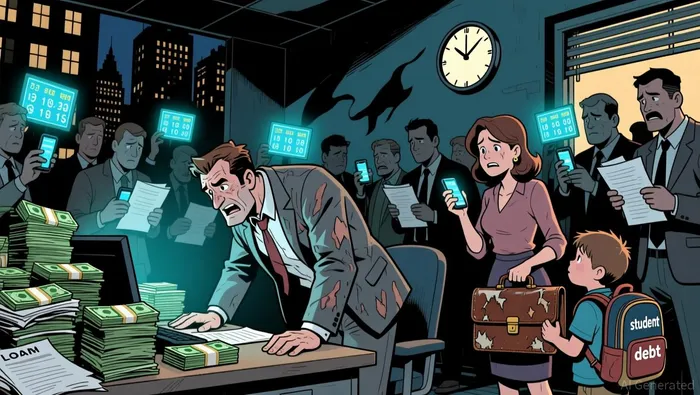 The debt crisis is particularly concentrated in high-cost categories. Credit card balances have ballooned to $1.23 trillion, with delinquency rates at 12.41%, the highest since 2011, the report says. Student loan debt, now $1.65 trillion, has seen 9.4% of borrowers 90+ days delinquent, a sharp increase following the resumption of repayment after a pandemic-era pause. Meanwhile, auto loan and home equity loan delinquencies are also rising, with bankruptcy filings reaching 141,640 in Q3 2025—the highest since 2020, according to the same report.
The Federal Reserve's recent pivot to rate cuts, projected to total 75 basis points in 2025, reflects its growing concern over the debt-driven economic strain, the report adds. However, analysts warn that lower rates may do little to alleviate the burden of existing high-interest debt. "The Fed is walking a tightrope," said one economist, noting that while rate cuts could stimulate borrowing for mortgages and business investments, they risk further inflating a consumer debt bubble, the analysis notes.
The debt surge is reshaping corporate strategies, particularly in retail, finance, and automotive sectors. Discretionary retailers like those in luxury apparel and travel face declining demand as households prioritize essentials, the FinancialContent piece observes. Traditional banks and credit card issuers, meanwhile, are bracing for rising loan defaults. JPMorgan ChaseJPM-- and Bank of AmericaBAC--, which rely heavily on unsecured lending, have increased provisions for credit losses, while regional banks face dual risks from consumer and commercial real estate delinquencies.
Conversely, essential goods retailers such as Walmart and Costco are seeing resilient demand, while healthcare and utility companies remain insulated from spending shifts. Debt collection agencies and lenders with diversified revenue streams are also benefiting from the surge in delinquencies.
The Fed's dilemma mirrors broader global trends. While mortgage performance remains relatively stable due to high home equity, the rise in non-housing delinquencies signals a fragmented recovery. The central bank's Financial Stability Report highlights elevated business leverage and consumer loan defaults as systemic risks, prompting calls for targeted interventions, the report notes.
Looking ahead, the U.S. economy is projected to grow at a modest 1.7% in 2025 and 1.4% in 2026, with inflation averaging 2.9% and 3.2%, respectively, according to the analysis. The Fed's rate-cut trajectory, expected to bring the federal funds rate to 3.50%–3.75% by late 2026, aims to cushion a weakening labor market while managing inflationary pressures. However, persistent tariffs and policy uncertainty could complicate this path.
The Fed's next moves will hinge on key economic indicators. Manufacturing and retail sales data, slated for release in early November, could influence further rate decisions, according to the Investing.com calendar. Federal Reserve Chair Jerome Powell has signaled caution, emphasizing the need for "clear evidence" of sustained inflation declines before accelerating cuts.
As the debt crisis deepens, investors are closely monitoring delinquency trends and Fed policy shifts. The coming months will test the central bank's ability to navigate a fragile economic landscape without triggering a broader financial correction, the FinancialContent report concludes.

Stay ahead of the market.
Get curated U.S. market news, insights and key dates delivered to your inbox.
AInvest
PRO
AInvest
PRO



Comments
No comments yet