
The Fed's Dilemma: Navigating Rate Cuts Amid Tariffs and Inflation
The Federal Reserve finds itself at a crossroads. With trade tensions simmering, inflation hovering above targets, and markets pricing in rate cuts by year-end, policymakers are grappling with a high-stakes balancing act. Their decisions will shape the trajectory of the U.S. economy—and present compelling opportunities in bonds and dividend-paying stocks.
Trade Tensions: The Catalyst for Uncertainty
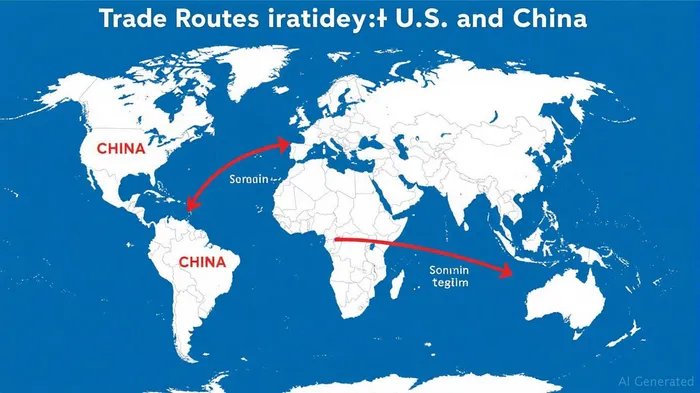
The U.S.-China tariff truce, which temporarily reduced duties in May 2025, has eased near-term inflation pressures but left longer-term risks unresolved. Federal Reserve minutes from June 2025 reveal a divided committee: while some members see tariffs as a one-time price shock, others warn of persistent inflation risks if supply chains remain disrupted or firms leverage higher costs to boost profit margins.
The Fed's internal debate hinges on data. shows inflation has moderated to 2.6% in May ontvang, down from 2023's peak, but remains above the 2% target. The question is whether tariff-driven costs will fade or anchor higher expectations.
Economic Indicators: A Fragile Equilibrium
While GDP growth has rebounded to 2.1% in Q2 2025 (up from 1.7% in Q1), the Fed's staff projects moderation ahead. Labor markets, too, are a mixed signal: unemployment remains at 4.0%, near historic lows, but layoffs in tech and manufacturing suggest softening demand.
The Fed's cautious stance reflects this fragility. highlights how bond yields have fallen to 3.2%, signaling investor anticipation of rate cuts. Meanwhile, dividend stocks, particularly in utilities and consumer staples, now offer yields competitive with bonds—a rare convergence.
Investment Opportunities: Bonds and Dividend Stocks in Focus
Bonds: The Rate Cut Play
If the Fed follows market expectations and cuts rates twice by year-end, Treasury bonds—especially short-term instruments—could rally. The iShares 7-10 Year Treasury Bond ETF (IEF) offers exposure to this segment. However, investors should avoid long-dated bonds, as geopolitical risks (e.g., Middle Eastern conflicts) could reignite inflation and pressure yields upward.Dividend Stocks: Steady Income Amid Volatility
Companies with stable cash flows and low debt are positioned to thrive in an uncertain environment. Utilities (e.g., NextEra EnergyNEE-- (NEE) yielding 2.8%) and consumer staples (e.g., Procter & Gamble (PG) at 2.6%) offer dividends that outpace bond yields while shielding against economic swings.underscores the sector's reliability, with payout ratios averaging 60%—a sustainable level.
Risks to Monitor
- Geopolitical Spikes: A flare-up in Middle East tensions or a breakdown in U.S.-China trade talks could send energy prices and inflation soaring, forcing the Fed to delay cuts.
- Labor Market Shifts: A sudden rise in unemployment or wage inflation could upend the Fed's cautious path.
Conclusion: Navigating the Fed's Tightrope
The Fed's dilemma is clear: cut rates to stave off growth risks or wait for inflation to subside fully. Investors should position portfolios to benefit from both scenarios.
- Aggressive Play: Overweight bonds (IEF) and defensive dividend stocks (NEE, PG) for income and stability.
- Hedging: Use inflation-protected securities (TIPS) or energy sector ETFs (XLE) to guard against supply chain shocks.
The Fed's next move remains uncertain, but markets are pricing in flexibility. Investors who balance these strategies will be well-positioned to capitalize on the Fed's eventual decision—whether it's a cut, a pause, or a surprise pivot.
The views expressed are based on the Federal Reserve's June 2025 FOMC minutes and market data as of July 2025. Always consult a financial advisor before making investment decisions.

Stay ahead of the market.
Get curated U.S. market news, insights and key dates delivered to your inbox.






Comments
No comments yet