
The Fed's Dilemma: How Falling Wholesale Prices May Influence Rate Cut Timing and Market Volatility


 Aime Summary
The U.S. (PPI) has long served as a canary in the coal mine for inflationary pressures. In August 2025, , marking the first decline since April and signaling a potential easing of wholesale price pressures. This deflationary surprise has reignited debates about the Federal Reserve's next move, as investors weigh short-term optimism against persistent core inflation risks.
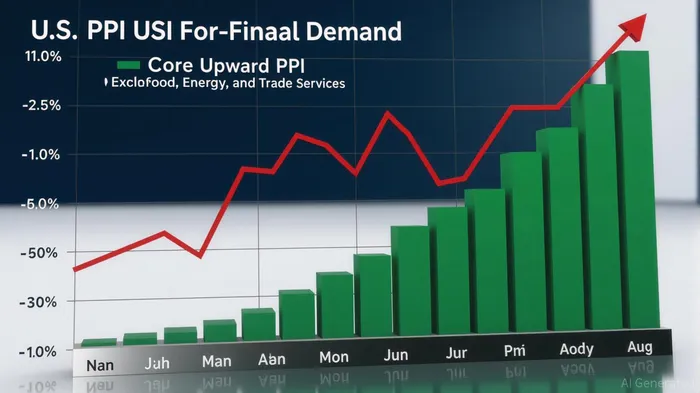
The Fed's Tightrope: Disinflation vs. Structural Inflation
The headline PPI decline, particularly in services and trade margins, reflects cooling cost-push pressures. Energy prices fell 0.4%, and trade services softened, suggesting businesses are no longer absorbing as much of the cost burden from tariffs. However, , . This duality creates a policy conundrum: while headline inflation appears to be moderating, core inflation remains stubbornly above the Fed's 2% target.
Political pressures further complicate the Fed's calculus. President has publicly criticized Fed Chair , demanding immediate rate cuts and labeling the central bank's independence as a “disaster.” Market expectations, as reflected in the CME Group's FedWatch tool, . Yet, the Fed's dual mandate—price stability and maximum employment—remains under tension. .
Market Implications: Equity Rotation and Bond Yield Dynamics
Equity markets have already priced in a soft-landing narrative, with investors rotating into rate-sensitive sectors. Technology, (REITs), and industrials have outperformed, while defensive sectors like utilities and consumer staples have lagged. illustrates the performance of a rate-sensitive growth stock, which has surged as investors anticipate lower borrowing costs.
Bond markets, meanwhile, are signaling a shift. The yield curve has begun to normalize, . Investors are extending duration in fixed-income portfolios, betting on a prolonged easing cycle. However, the Fed's hesitation could trigger volatility if core inflation persists. For example, a delay in rate cuts could reignite fears of a hard landing, pushing yields higher and pressuring equities.
Investment Strategy: Balancing Optimism and Caution
For equity investors, the key is to favor sectors that benefit from lower rates while hedging against inflation risks. Cyclical sectors like industrials and materials are well-positioned, as are high-growth tech stocks that thrive in low-rate environments. Defensive allocations to utilities and consumer staples can provide stability if the Fed delays cuts.
Bond investors should consider a : extending duration in long-duration Treasuries to capitalize on expected rate cuts while maintaining short-duration holdings to mitigate volatility. In commodities, gold and copper remain attractive as real interest rates decline and inflation expectations persist.
**** highlights the market's anticipation of Fed easing, .
The Road Ahead: Watching for Policy Clarity
The September CPI report and the Jackson Hole symposium will be critical in determining the Fed's path. If CPI confirms disinflation, a rate cut becomes more likely. However, if core services inflation remains elevated due to sticky labor costs or supply chain bottlenecks, the Fed may delay action. Investors should also monitor the impact of Trump-era tariffs on input costs, as these could reignite inflationary pressures in the coming months.
In conclusion, the Fed's dilemma reflects a broader macroeconomic transition. While falling wholesale prices offer short-term optimism, underlying inflation risks demand caution. Investors who position portfolios for a potential rate-cutting cycle—while maintaining defensive hedges—may find themselves well-placed to navigate the evolving landscape. The coming months will test the Fed's ability to balance its dual mandate, and the markets will follow suit.

Stay ahead of the market.
Get curated U.S. market news, insights and key dates delivered to your inbox.


AInvest
PRO
AInvest
PRO



Comments
No comments yet