
The Fed's Delicate Balance: Trade Tensions and Inflation Cloud the Economic Outlook
The Federal Reserve’s May 7 decision to hold the federal funds rate steady at 4.25%-4.5% marked a pivotal moment in an increasingly fraught economic landscape. Amid conflicting signals of resilience and fragility, Chair Jerome Powell’s insistence that policy is “in a good place” underscored the central bank’s reluctance to act preemptively—a stance that has drawn both praise and criticism. 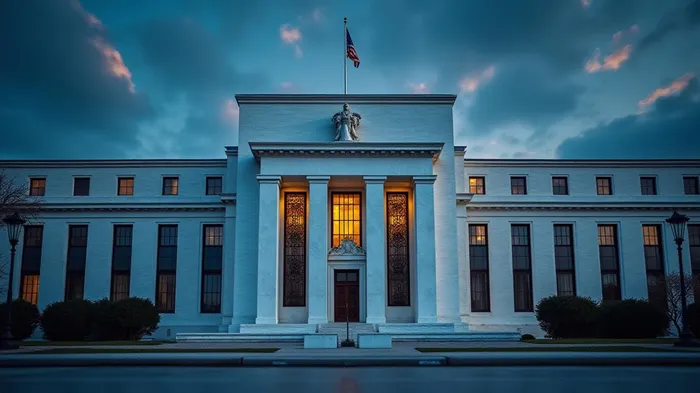 .
.
The Crosscurrents Driving the Fed’s Caution
The Fed’s decision was framed by two competing forces: a labor market that refuses to weaken and inflation that remains stubbornly above target. While Q1 GDP contracted by 0.3%, the jobs market defied expectations, adding 177,000 positions in April with unemployment holding at 4.2%. “The economy is in a holding pattern,” said J.P. Morgan economist Michael Feroli. “Consumers are spending, but businesses are hesitant.”
Yet beneath the surface, risks are mounting. Trade policy uncertainty—specifically the potential for tariffs on Chinese imports—has introduced a wild card. Powell noted that companies front-loading imports ahead of potential duties risked reigniting inflation, a concern echoed by Federal Reserve Bank of Chicago president Austan Goolsbee: “Tariffs could add 0.5-1% to core inflation over the next year.”
.
Inflation: The Unresolved Elephant in the Room
Despite headline inflation cooling to 3.2%, the Fed remains fixated on the services sector, where rents and healthcare costs are proving sticky. Dallas Fed research shows that 70% of current inflation comes from services, a category less responsive to rate hikes. “This is not your typical disinflation,” said former Fed economist Sarah House. “Housing and labor markets are creating a floor under prices.”
Powell’s focus on “disinflation” as a precondition for easing suggests the bar for cuts is high. The May 13 CPI report—expected to show a 0.2% monthly rise—will be critical. “If services inflation doesn’t slow, the Fed’s hands are tied,” warned Bank of AmericaBAC-- strategist Michael Hartnett.
The Political Gauntlet
The Fed’s independence is under strain. Former President Trump’s repeated calls for immediate rate cuts—a move he claims would “make stocks soar”—have drawn sharp rebuttals from Powell. “We don’t consider political pressures,” he insisted, though White House economists privately argue that inflation risks are overblown.
This tension highlights a deeper dilemma: the Fed’s dual mandate of price stability and full employment is being tested by external factors beyond its control. Trade policy, in particular, has become a fiscal wildcard. J.P. Morgan strategists estimate that avoiding tariffs could add 0.5% to GDP in 2026—a boost that would make the Fed’s job easier.
Conclusion: Navigating the Twilight Zone
Investors face a paradox: the economy is neither strong enough to justify higher rates nor weak enough to warrant cuts. With the Fed’s policy tools stretched thin, the next six months will hinge on trade negotiations and services inflation.
The market’s reaction to the Fed’s decision—stocks up 0.4% to 0.7%—suggests investors are betting on a soft landing. But history warns against complacency. The last Fed cycle that included a tariff shock (2018-2019) ended with a recession and a 20% stock market drop.
For now, diversification remains key. . Defensive stocks like utilities and healthcare—up 8% year-to-date—offer ballast, while tech and industrials, sensitive to rate expectations, should be monitored closely.
The Fed’s wait-and-see approach buys time, but the clock is ticking. As Powell himself admitted, “We can’t afford to be late on inflation.” For investors, that means staying alert to the next twist in the trade war—and the data that could force the Fed’s hand.

Stay ahead of the market.
Get curated U.S. market news, insights and key dates delivered to your inbox.
AInvest
PRO
AInvest
PRO



Comments
No comments yet