
Fed December Rate Cut Reveals Deep Policy Divisions Amid Inflation Concerns
 Aime Summary
- The Federal Reserve cut rates by 25 basis points in December 2025 to a 3.5%-3.75% range.
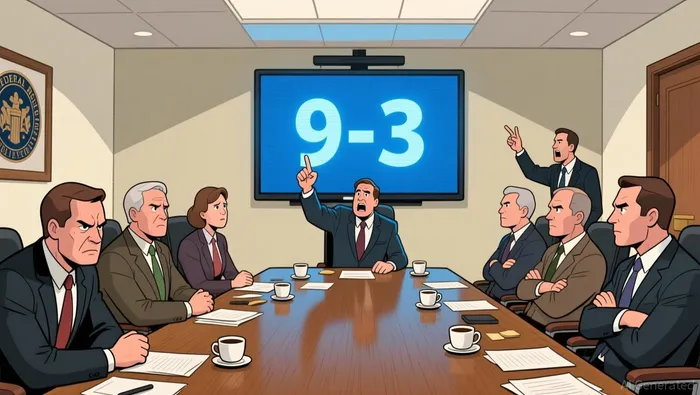
- The decision passed by a narrow 9-3 vote, the most dissents since 2019.
- Officials resumed bond purchases at $40 billion monthly to address funding market risks.
- Deep divisions emerged about 2026 policy with split forecasts for future cuts.
Federal Reserve officials delivered a contentious quarter-point rate cut in December 2025 while signaling concerns about financial stability and economic uncertainty. The 9-3 vote revealed stark internal divisions about balancing inflation risks against labor market support. Treasury markets reacted positively to the cut, capping their best year since 2020 as trade policy shifts weighed on economic activity.
Why did the Fed cut rates despite strong economic growth?
Officials cited weakening labor-market conditions as justification for the December rate reduction. The decision came despite third-quarter GDP growth of 4.3% and inflation persisting above the Fed's 2% target. Temporary price pressures from Trump administration tariffs complicated the outlook, though some expected these to fade in 2026.
Government shutdowns delayed crucial economic data releases, forcing policymakers to rely on outdated information. This uncertainty contributed to the split vote, with two officials preferring no cut and one advocating for double the reduction. The minutes showed participants balancing trade policy impacts against inflation concerns.
How did liquidity concerns influence the Fed's bond-buying decision?
The FOMC simultaneously announced $40 billion monthly Treasury bill purchases to stabilize funding markets. Officials highlighted deteriorating liquidity conditions comparable to the 2017-19 period. Banking reserves had fallen to levels considered barely "ample", causing volatility in overnight borrowing rates.
Seasonal pressures and impending tax-related payments threatened to drain reserves further in early 2026. The bond-buying program aims specifically to maintain sufficient reserves rather than alter monetary policy stance. Officials also discussed removing caps on standing repo facilities to prevent market disruptions.
What do the divisions mean for 2026 rate policy?
The December minutes exposed fundamental disagreements about future policy direction. Seven officials forecast no rate cuts for 2026 while eight anticipated two or more reductions. Some members favored holding rates steady to assess progress, while others supported gradual easing.
Long-term Treasury yields rose slightly amid concerns about fiscal sustainability despite the near-term cut. The Fed's updated projections indicated possible reductions to a near-3% neutral rate by 2027. Future decisions will depend heavily on incoming economic data, particularly regarding inflation trajectory and labor market conditions.

Blending traditional trading wisdom with cutting-edge cryptocurrency insights.
Latest Articles
Stay ahead of the market.
Get curated U.S. market news, insights and key dates delivered to your inbox.






Comments
No comments yet