
The Fed's December Rate Cut and Its Market Implications: Investor Preparedness for the New Monetary Policy Regime
 Aime Summary
The Fed's Rationale and Policy Outlook
The FOMC's decision was driven by a dual mandate of supporting maximum employment and stabilizing inflation. While inflation remains above the 2% target, the Fed acknowledged "significant downside risks" to employment, particularly as labor market conditions show signs of moderation according to Nuveen. The updated Summary of Economic Projections (SEP) reinforces a path of incremental easing, with one rate cut expected in 2026 and another in 2027 before reaching the long-run target of 3% as CNBC reports. This trajectory suggests a prolonged period of accommodative policy, though the Fed emphasized its commitment to data-dependent decision-making, underscoring the importance of incoming employment and inflation reports as Amundi notes.
Investor Strategies in a Low-Rate Environment
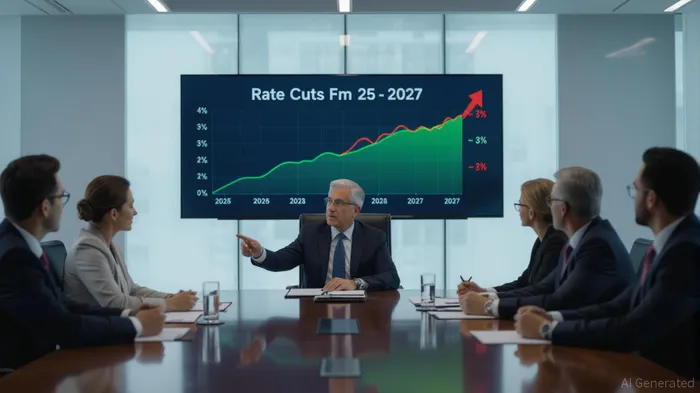 The Fed's pivot has prompted a reevaluation of portfolio allocations. With cash yields diminishing, investors are increasingly prioritizing asset classes that balance income generation with growth potential. UBS analysts highlight that a shift toward equity markets-particularly sectors tied to AI-driven innovation, power, and resources-could capitalize on structural growth trends according to UBS. Similarly, BofA Global Research forecasts two additional rate cuts in 2026, reinforcing the case for equities and quality bonds as core holdings as Bank of America reports.
Amundi's analysis further stresses the importance of diversification, advising investors to phase excess liquidity into diversified portfolios while maintaining exposure to high-quality fixed-income instruments according to Amundi. This approach mitigates risks from potential inflation reacceleration or geopolitical shocks, which remain embedded in the global economic outlook as Mercer notes.
Preparing for a New Monetary Policy Regime
Investor preparedness hinges on three key pillars:
1. Dynamic Asset Allocation: Rebalancing portfolios to emphasize sectors with long-term growth potential, such as AI and renewable energy, while hedging against macroeconomic volatility according to UBS.
2. Income Diversification: Leveraging equity income strategies and quality bonds to offset declining cash returns, as highlighted by UBS and Bank of America.
3. Scenario Planning: Monitoring the Fed's data-dependent framework and adjusting positions in response to evolving inflation and employment trends as Amundi notes. The resumption of Treasury purchases by the Fed-beginning with $40 billion in Treasury bills-also signals a broader effort to stabilize financial markets according to CNBC. Investors should factor this into their liquidity management strategies, recognizing that central bank interventions may influence asset valuations and volatility.
Conclusion
The Fed's December 2025 rate cut represents a strategic pivot toward a more neutral policy stance, but it also introduces new complexities for investors. By aligning portfolios with the anticipated path of rate cuts, prioritizing sectors poised for structural growth, and maintaining flexibility in response to macroeconomic signals, investors can navigate this evolving landscape with resilience. As the FOMC's emphasis on data-dependent decisions persists, proactive preparedness will remain critical to capitalizing on opportunities while mitigating risks.

Blending traditional trading wisdom with cutting-edge cryptocurrency insights.
Latest Articles
Stay ahead of the market.
Get curated U.S. market news, insights and key dates delivered to your inbox.
AInvest
PRO
AInvest
PRO



Comments
No comments yet