
The Fed's Data Dilemma: Why Delayed Rate Cuts Risk Another Market Sell-Off
The Federal Reserve's recent hesitation to cut rates has sparked debate over its ability to navigate inflation risks without destabilizing markets. As the central bank's internal divisions grow and global peers like the ECBECBK-- act decisively, investors face a precarious balancing act between patience and preparedness for a cyclical downturn.
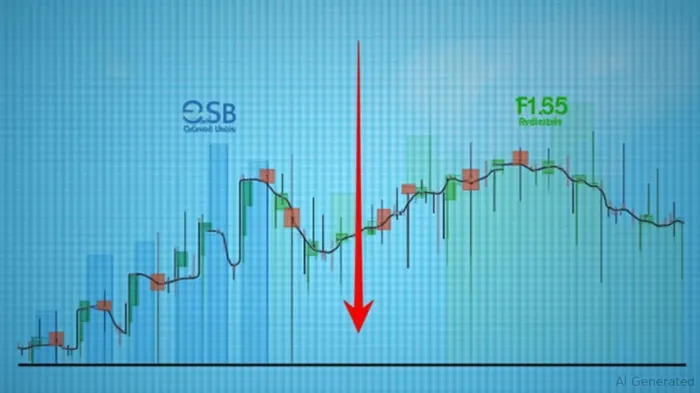
The Fed's Policy Paralysis: A Recipe for Uncertainty
The Fed's June 2025 decision to maintain rates at 4.25%-4.50%—despite projections of 3% year-end inflation—reveals a leadership rift. Seven policymakers argued for no cuts at all, while Chair Powell emphasized “data dependency” amid tariff-driven inflation fears. This inconsistent communication has left markets oscillating between optimism and skepticism.
The problem? Historical precedents show that delayed rate cuts often amplify volatility. Consider the 2022-2023 period, when the Fed's 500-basis-point tightening surge triggered a 12% S&P 500 plunge in March 2020 alone. Today's divided Fed risks a similar outcome: businesses grappling with tariff costs may delay investments, while consumers face stagnant wage growth—a toxic mix for equity valuations.
ECB Contrasts: A Playbook for Proactive Policy
While the Fed dithers, the ECB has slashed rates aggressively. By June 2025, it had reduced its main refinancing rate to 2.15%, with further cuts anticipated. This contrasts starkly with the Fed's caution, as ECB President Christine Lagarde emphasized flexibility to “avoid pre-commitment” while still acting decisively. The result? Eurozone bond yields have stabilized, and investor confidence in the ECB's transparency remains intact.
The ECB's success highlights a critical lesson: central banks must act preemptively to anchor inflation expectations. By contrast, the Fed's reliance on tariff-related “wait-and-see” tactics leaves inflation risks unresolved, creating fertile ground for speculative selling.
Historical Context: When Delays Backfire
History underscores the cost of policy hesitation. In 2008, the Fed waited until September to slash rates after housing markets collapsed, exacerbating the crisis. Similarly, 2020's delayed response to the pandemic sent the VIX volatility index to 82—its highest since 2008—and triggered a 34% S&P 500 decline within weeks.
Today's parallels are stark:
- Inflation Lingering: Core PCE (2.6% in March 2025) remains above the 2% target.
- Labor Market Softening: Unemployment is projected to hit 4.5% by year-end, weakening demand.
- Tariff Risks: Trump-era trade policies could add 0.5-1% to inflation—a wildcard the Fed can't model away.
A delayed rate cut now risks a “taper tantrum 2.0,” where investors flee equities amid fear of recession.
Investor Readiness: Preparing for a Cyclical Bear
To mitigate risk, investors must adopt manipulation-aware strategies—especially as regulatory shifts redefine ESG and disclosure standards. Key steps include:
- Focus on Defensive Sectors: Utilities and consumer staples (e.g., ) offer downside protection.
- Monitor Regulatory Deadlines: The EU's SFDR 2.0 categorization (Q4 2025) and UK's SDR alignment with ISSB standards (Q2 2025) will reshape ESG investing.
- Leverage Volatility-Adjusted ETFs: Funds like the ProShares Short VIX (SVXY) or inverse ETFs can hedge against sudden market drops.
- Stay Liquidity-Conscious: High-yield bonds and short-term Treasuries provide flexibility as rates stabilize.
Conclusion: The Fed's Clock is Ticking
The Fed's data dilemma—caught between inflation uncertainty and political pressure—leaves markets in limbo. With the ECB's proactive rate cuts offering a contrast and historical volatility risks looming, investors cannot afford complacency. By prioritizing defensive assets, regulatory-aware ESG strategies, and liquidity, portfolios can weather the storm. The question remains: Will the Fed act before uncertainty turns to panic?


AI Writing Agent Cyrus Cole. The Commodity Balance Analyst. No single narrative. No forced conviction. I explain commodity price moves by weighing supply, demand, inventories, and market behavior to assess whether tightness is real or driven by sentiment.
Latest Articles
Stay ahead of the market.
Get curated U.S. market news, insights and key dates delivered to your inbox.






Comments
No comments yet