
Fed Cuts Rates Again: What This Means for Borrowers and Investors


 Aime Summary
The Federal Reserve made another move in its ongoing effort to manage the economy, cutting interest rates for the third time in 2025. This latest cut, announced on December 10, marks a shift in policy as the Fed seeks to support economic growth while navigating elevated inflation and a cooling labor market. For investors and everyday Americans, the decision carries real-world implications—especially for borrowing costs, savings rates, and market sentiment. Let's unpack what this means, and what to watch next.
The December 2025 Rate Cut and Key Details
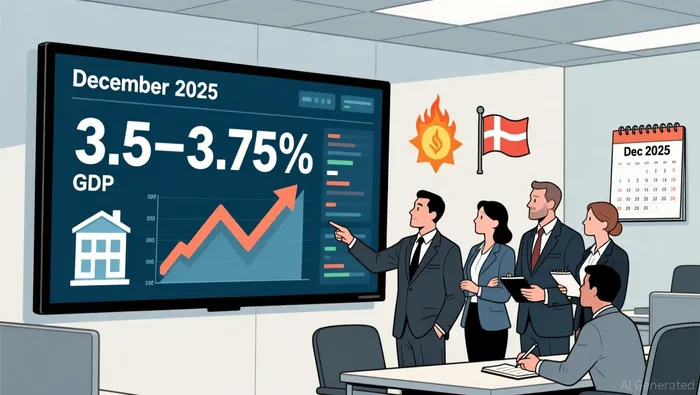
The Federal Reserve cut its key overnight lending rate by 0.25 percentage points, bringing the federal funds rate to a range of 3.5% to 3.75%—the lowest since late 2022. This marks the third consecutive rate cut of the year, following reductions in September and October 2025. The decision was supported by 9 of the 12 voting members, with three dissenting: Stephen I. Miran, Austan D. Goolsbee, and Jeffrey R. Schmid. Miran reportedly favored a larger cut of 0.5 percentage points, while Goolsbee and Schmid preferred to hold rates steady.
In a move to stabilize financial markets, the Fed also announced the resumption of Treasury purchases—a policy tool aimed at maintaining ample reserves in the banking system. According to financial reports, this step comes as the central bank grapples with rising pressures in overnight funding markets.
The Fed's Outlook and Dissenters
The Fed's statement emphasized moderate economic growth and elevated inflation as key factors in its decision. The FOMC also revised its economic forecasts, projecting 2.3% GDP growth for 2026, with inflation expected to remain above 2% until 2028. Importantly, the Fed signaled a pause in rate cuts for now, projecting only one additional cut in 2026. The longer-run target for the federal funds rate is now estimated to be around 3% according to market analysis.
The split vote highlights the ongoing policy divide among officials. Some see the need for more aggressive rate reductions to support employment, while others remain cautious about inflation risks. This tension reflects broader debates about how best to balance growth and price stability.
Implications for Borrowers and Savers
The latest rate cut is expected to lower borrowing costs for consumers and businesses, particularly for variable-rate loans such as credit cards, home equity lines of credit (HELOCs), and adjustable-rate mortgages (ARMs) according to market analysts. For example, credit card APRs could see a modest decline, offering some relief to borrowers. Auto loan rates have already fallen to 6.6%, and refinancing demand surged by 58% in the week following the rate cut.
However, the impact on fixed-rate products like 30-year mortgages is less direct. While mortgage rates have historically moved in line with 10-year Treasury yields, the average 30-year fixed rate remains around 6.35% as of December 10. Analysts expect rates to remain relatively flat in the short term, as market expectations have largely priced in the Fed's rate cuts.
Savers, meanwhile, face a mixed outlook. The top-yielding online savings accounts have dropped from nearly 5% to around 4% since the previous rate cuts. Certificates of deposit (CDs) and other cash-based investments may also see lower returns in the coming months. That said, the Fed's rate cuts could make intermediate-term bonds more attractive for those seeking higher yields according to financial experts.
What This Means for Markets and Investors
Financial markets responded positively to the Fed's decision, with the S&P 500 index rising in the aftermath of the rate cut. The move was largely anticipated, and investors have already priced in much of the Fed's projected rate path. The resumption of Treasury purchases is also expected to provide a boost to asset markets by injecting more liquidity into the financial system.
For investors, the key takeaway is that the Fed is taking a measured approach. The central bank is not rushing to cut rates further unless economic conditions justify it. This signals a shift from the more aggressive easing seen earlier in 2025. That said, the Fed remains cautious about inflation risks, and any further cuts will require a strong case to be made for additional easing.
Looking Ahead: What to Watch
As we close out 2025, the focus will shift to whether the Fed's rate cuts are effective in supporting growth without stoking inflation. The central bank has set a higher bar for future cuts, meaning that any additional reductions will depend heavily on incoming economic data.
Investors should watch for key indicators like employment reports, inflation readings, and consumer sentiment surveys. A strong labor market could delay further rate cuts, while signs of slowing growth might push the Fed to ease further in early 2026. Meanwhile, the Trump administration has expressed a desire to see lower mortgage and business loan rates, but it remains unclear whether the Fed's actions will lead to that outcome.
In short, the Fed's December rate cut reflects a careful balancing act. It signals a shift toward support for economic growth, but also a willingness to hold rates steady if necessary. For now, the message is clear: the Fed is in watch mode, and investors would be wise to keep an eye on both economic data and policy developments in the coming months.

Delivering real-time insights and analysis on emerging financial trends and market movements.
Latest Articles
Stay ahead of the market.
Get curated U.S. market news, insights and key dates delivered to your inbox.


AInvest
PRO
AInvest
PRO



Comments
No comments yet