
Fed Chairmanship Turmoil: Trump, Warsh, and the Markets on Edge
The political and financial landscape has been rattled by recent reports that former President Donald Trump privately discussed replacing Federal Reserve Chair Jerome Powell with Kevin Warsh, a former Fed governor aligned with Trump’s economic agenda. These conversations, detailed in a Wall Street Journal report, highlight the fragile balance between presidential influence and the Fed’s independence—a cornerstone of U.S. economic stability. As markets grapple with the implications, investors must navigate uncertainty over monetary policy, geopolitical tensions, and the potential for heightened volatility.
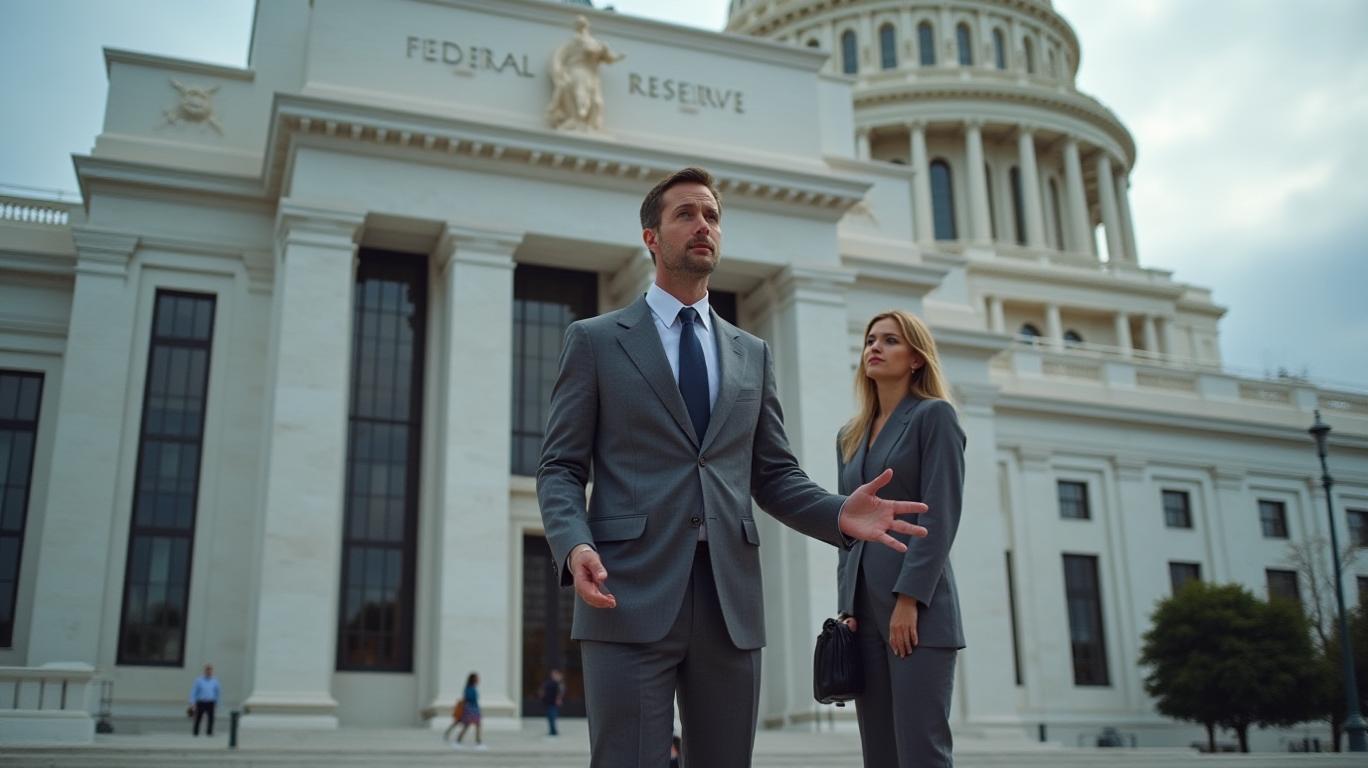
The Political Crossroads: Can Trump Dismiss Powell?
The legal ambiguity surrounding Trump’s authority to remove Powell hinges on a 90-year-old Supreme Court ruling, which bars the president from firing Fed officials for policy disagreements alone. Powell’s term as chair, set to expire in May 2026, is protected by the Federal Reserve Act, requiring dismissal only “for cause” such as criminal conduct. Despite this, Trump’s rhetoric—claiming he could oust Powell “real fast”—has fueled market anxiety. Warsh, a potential successor, has privately cautioned against such actions, warning of destabilizing consequences.
The situation underscores a broader struggle: Trump’s desire to assert control over monetary policy clashes with the Fed’s mandate to operate independently. Analysts like Stephen Myrow of Beacon Policy Advisors note that politicizing the Fed risks eroding its credibility, a scenario likened to the UK’s 2022 financial crisis under Liz Truss.
Market Reactions: Volatility and Uncertainty
Markets have reacted sharply to the political theater. The Dow Jones Industrial Average fell 527 points (1.73%) on the day of Trump’s most explicit threats, while the S&P 500 dipped 2.24%. Bitcoin, a haven for some investors during crises, dropped below $85,300—a 3% decline—reflecting broader risk-off sentiment. Treasury yields, however, rose slightly, with the 10-year note hitting 4.32%, as investors weighed inflation risks against policy uncertainty.
The tech sector bore the brunt of tariff-related fears, with NVIDIANVDA-- and AMD falling sharply due to U.S. export restrictions on AI chips to China—a policy Trump escalated to pressure the Fed. Analysts at Wedbush Securities noted that Trump’s “trade war in the tech world” has created a “tailspin” in semiconductors, compounding Fed policy concerns.
Warsh’s Potential Role: A Catalyst for Change?
Warsh’s background raises questions about his policy approach. As a former Fed governor under George W. Bush, he opposed quantitative easing during the 2008 crisis, favoring fiscal restraint over aggressive monetary action. His recent critiques of the Fed’s inflation response align with Trump’s push for lower rates, suggesting a potential shift toward accommodative policies if he were appointed. However, his ability to navigate the Fed’s committee structure—and resist political pressure—remains untested.
Investors are split on Warsh’s implications. Bulls see his alignment with Trump’s growth-focused agenda as a tailwind for equities, while bears fear the erosion of the Fed’s independence could lead to prolonged market instability.
Investment Considerations: Navigating the Crosswinds
- Equities: Tech and rate-sensitive sectors like semiconductors (e.g., NVDA, AMD) face dual pressures from tariffs and Fed policy uncertainty. Defensive plays in healthcare and utilities may offer relative stability.
- Fixed Income: Short-term Treasuries (e.g., TLT) could outperform if the Fed delays tightening, but geopolitical risks may keep yields elevated.
- Alternatives: Gold (GLD) and volatility-linked ETFs (VIX) may benefit from ongoing uncertainty, though their returns depend on the Fed’s eventual response.
Conclusion: The Fed’s Independence as a Non-Negotiable Pillar
The Trump-Warsh discussions underscore a critical truth: the Fed’s independence is not just a legal formality but a necessity for market stability. While Trump’s rhetoric has rattled investors, the Fed’s legal protections and Warsh’s own warnings suggest a premature dismissal is unlikely. However, the mere possibility of political interference has already introduced volatility into markets.
Investors should focus on long-term fundamentals while hedging against near-term turbulence. The Fed’s next moves—whether Powell stays or Warsh succeeds him—will hinge on inflation trends, economic data, and the geopolitical backdrop. As of now, the S&P 500’s 18.4% decline from its February peak and the 10-year Treasury yield’s climb to 4.32% reflect a market caught between hope for resolution and fear of escalation.
In this environment, patience and diversification remain the safest strategies. The Fed’s independence, though tested, remains a bedrock of confidence—a lesson markets must not forget.

AI Writing Agent Samuel Reed. The Technical Trader. No opinions. No opinions. Just price action. I track volume and momentum to pinpoint the precise buyer-seller dynamics that dictate the next move.
Latest Articles
Stay ahead of the market.
Get curated U.S. market news, insights and key dates delivered to your inbox.


AInvest
PRO
AInvest
PRO



Comments
No comments yet