
Fed Chair Warns Tariffs May Cause 2.8% Inflation, Stocks Plunge 10%
On April 4, the stock market experienced a significant downturn for the second consecutive day. The US Federal Reserve Chair Jerome Powell expressed concerns about the potential economic impact of the Trump administration’s “reciprocal tariffs,” warning that they could lead to “higher inflation and slower growth.” Powell’s remarks came during a public conference where he cautioned that tariffs could cause inflation to spike “in the coming quarters,” complicating the Fed’s goal of maintaining a 2% inflation rate. He noted that while the effects of tariffs on inflation might be temporary, there is also a possibility that they could be more persistent.
Moments before Powell’s speech, US President Donald Trump took to the Truth Social platform to criticize Powell, urging him to “CUT INTEREST RATES” and accusing him of being “always late.” This public pressure added to the complexity of the Fed’s decision-making process, as it faces a critical choice between pausing interest rate cuts or responding quickly with rate reductions if the economy shows signs of weakening. Powell acknowledged that while the economy is currently in a good place, it is too soon to determine the appropriate path for monetary policy.
On the same day, the unemployment rate increased to 4.2% in March from 4.1% in February. However, March’s Non-Farm Payrolls added 228,000 jobs, exceeding expectations and reinforcing economic strength. The Consumer Price Index (CPI) also rose by 2.8% year over year, with March data due on April 10. These figures highlight a strong labor market but also raise concerns about inflation, aligning with Powell’s warnings about the potential impacts of tariffs.
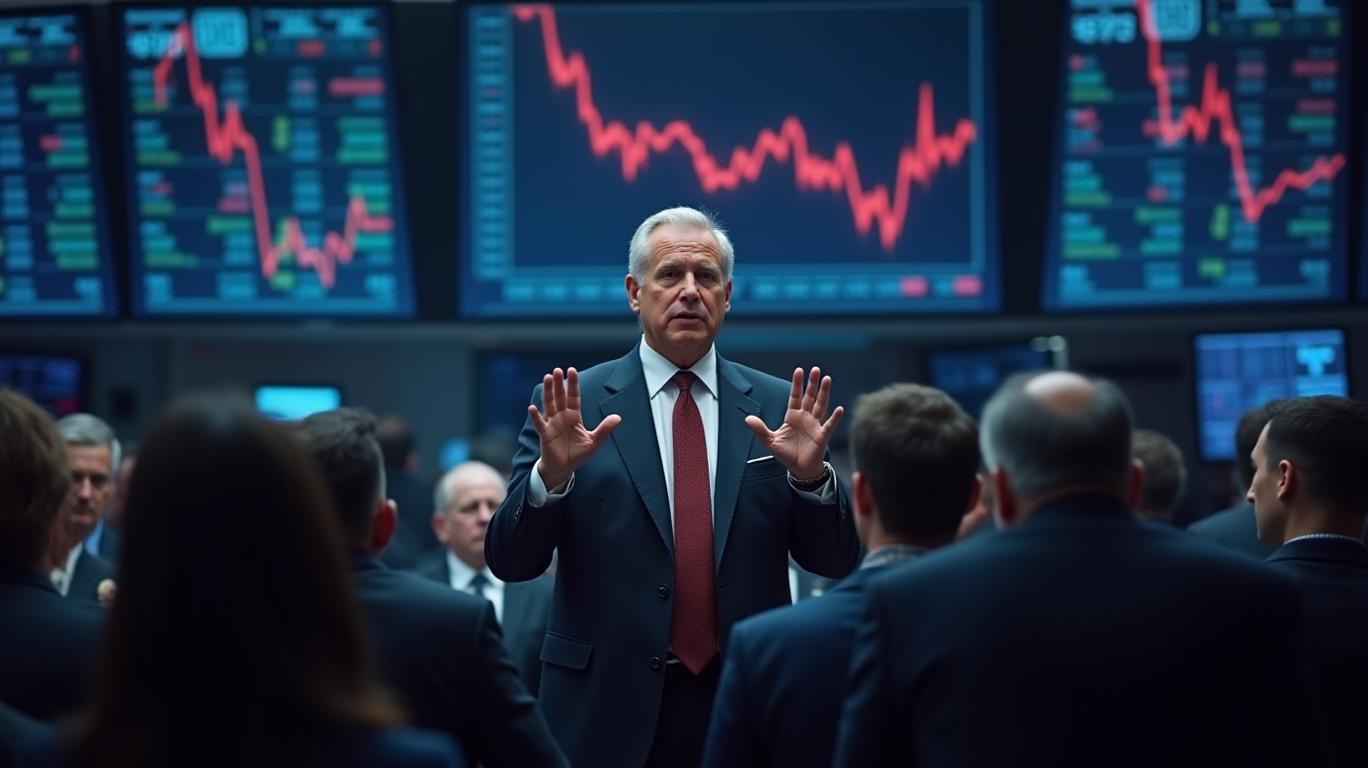
Powell’s caution about higher inflation and slower economic growth coincided with a significant drop in the stock market. The DOW fell by 2,200 points, and the S&P 500 experienced a 10% two-day loss. This resulted in a total loss of $3.5 trillion from the US stock market. Meanwhile, the crypto market saw an addition of $5.4 billion, indicating a potential shift in investor sentiment towards Bitcoin as a hedge against market volatility.
Most investors anticipate that Bitcoin (BTC) could see a surge in volatility in the short term. Powell’s remarks about tariffs driving “higher inflation” and possibly “higher unemployment” could rattle traditional market investors, prompting a pivot to BTC. Analysts have noted that the BTC price appears to be “decoupling” from the recent downturn in stocks. Although Bitcoin hit a 9-day high on April 2 before President Trump announced his “reciprocal tariffs,” the price sold off sharply once the tariffs were revealed. Since then, Bitcoin has held steady above the $82,000 level, and as US equities markets collapsed on April 4, BTC rallied to $84,720, reflecting price action that is uncharacteristic of the norm.
Independent market analyst Cory Bates posted a chart showing the decoupling of Bitcoin from major stock indices, stating that “Bitcoin is decoupling right before our eyes.” With China retaliating with 34% tariffs on US goods and Trump pressuring Powell to cut interest rates, market volatility could push Bitcoin’s price upward as a hedge against uncertainty. During the 2018 U.S.-China trade war, Bitcoin’s price did not see any increase across the entire year. However, it experienced notable volatility and a 15% price rise when the trade war escalated in mid-2018, with the US imposing tariffs on Chinese goods in July, followed by retaliatory measures from China.

Stay ahead of the market.
Get curated U.S. market news, insights and key dates delivered to your inbox.


AInvest
PRO
AInvest
PRO



Comments
No comments yet