
Fed Chair Transitions: The Hidden Engine Behind S&P 500 Performance
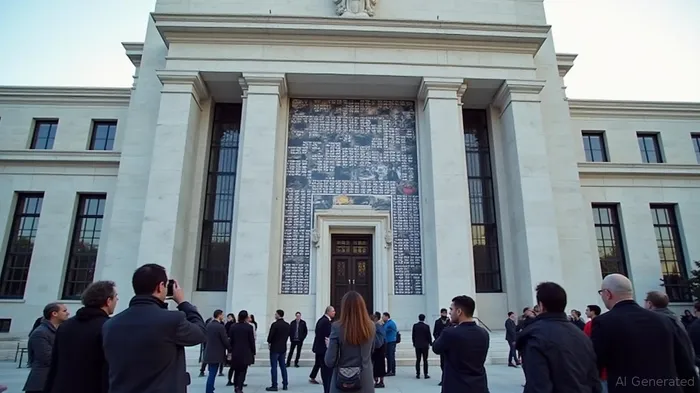
The Federal Reserve's chairperson is more than just a central banker—they are an economic architect whose decisions ripple through markets for years. Over the past seven decades, transitions at the Fed have marked turning points in the S&P 500's trajectory, from post-war booms to tech bubbles and pandemic pivots. This analysis reveals how leadership shifts have shaped equity markets and what investors should watch for next.
The Golden Age: William McChesney Martin (1951–1970)
Martin's tenure coincided with America's postwar industrial expansion. The S&P 500 rose steadily at an average annualized rate of 9.96%, fueled by strong corporate earnings and low inflation. His hands-off approach—avoiding aggressive intervention—allowed markets to grow organically.
Investment lesson: Bull markets thrive when the Fed avoids overreach and economic fundamentals are strong.
The Stagflation Era: Arthur Burns (1970–1978)
Burns' era was defined by the oil crisis and inflation spiraling to 13%. The S&P 500 saw mixed returns, with a -25% drop in 1973 and -28% in 1974. His accommodation of political demands over economic logic deepened stagflation.
Investment lesson: Fed capitulation to inflationary pressures can erode equity valuations for years.
The Volcker Shock: Paul Volcker (1979–1987)
Volcker's “whatever it takes” battle against inflation—pushing rates to 20%—caused short-term pain but restored market credibility. By 1982, the S&P 500 began a 12.1% annualized climb, laying groundwork for the 1990s boom.
Investment lesson: Courageous Fed leadership, even if unpopular, can catalyze long-term gains.
The Great Moderation: Alan Greenspan (1987–2006)
Greenspan's era was marked by 14% annualized S&P 500 growth, driven by tech innovation and accommodative monetary policy. However, his “irrational exuberance” warning failed to curb the dot-com bubble, which collapsed with a 49% peak-to-trough decline in 2000–2002.
Investment lesson: Even visionary Fed chairs can miss speculative excesses—diversification is critical during prolonged booms.
The Crisis and Recovery: Ben Bernanke (2006–2014)
The global financial crisis saw the S&P 500 plunge 57% from 2007 to 2009. Bernanke's quantitative easing (QE) and near-zero rates fueled a rebound, with 26% gains in 2009 and 32% in 2013.
Investment lesson: Aggressive Fed support can turn bear markets into buying opportunities—but timing is everything.
The Yellen Era: Janet Yellen (2014–2018)
Yellen's tenure marked the S&P 500's ascent to record highs, with 14–19% annual gains. Her cautious rate hikes avoided disrupting the recovery, though concentration in tech stocks (the “Magnificent 7”) began to skew returns.
Investment lesson: Overreliance on a handful of stocks creates vulnerability—spread bets across sectors.
Powell's Pandemic Pivot: 2018–Present
Jerome Powell's leadership has navigated two crises: the 2020 pandemic crash (-34% in March) and the 2022–2025 tariff-driven volatility. The S&P 500's resilience (+23% in 2024) reflects Fed agility, though concentration risks persist.
Investment lesson: Modern markets demand Fed flexibility. Monitor Powell's inflation stance and geopolitical policy shifts.
Key Takeaways for Investors
- Fed Chairs Matter: Leadership style (e.g., Volcker's toughness vs. Greenspan's flexibility) directly impacts market cycles.
- Avoid Overconcentration: The “Magnificent 7” tech stocks now account for 34% of the S&P 500's value—a single misstep could trigger outsized losses.
- Inflation is the Fed's North Star: Track policy shifts via the Fed funds rate and CPI data. Recessions often follow rate hikes exceeding 5%, as seen in 2000 and 2008.
- Stay Long-Term: Since 1957, the S&P 500 has averaged 6.7% real returns. Corrections (even 10% drops) have historically been buying opportunities.
What's Next?
As Powell's second term continues, investors should:
- Watch the “Liberation Day” tariffs: Their removal or escalation will define 2025's market direction.
- Diversify beyond tech: Allocate to value stocks (e.g., industrials, energy) and international equities to mitigate concentration risk.
- Prepare for rate cuts: If inflation cools below 3%, the Fed may lower rates by 2026—boosting equity multiples.
The Fed chair's legacy isn't just economic—it's a roadmap for investors. History shows that aligning with the central bank's priorities, while hedging against its risks, is the surest path to long-term success.
Stay vigilant, stay diversified, and let the Fed's playbook guide your strategy.

Stay ahead of the market.
Get curated U.S. market news, insights and key dates delivered to your inbox.






Comments
No comments yet