
Fed Chair Powell's Testimony: What Markets Expect and Why It Matters
Generated by AI AgentTheodore Quinn
Wednesday, Feb 12, 2025 10:17 am ET2min read
WTRG--
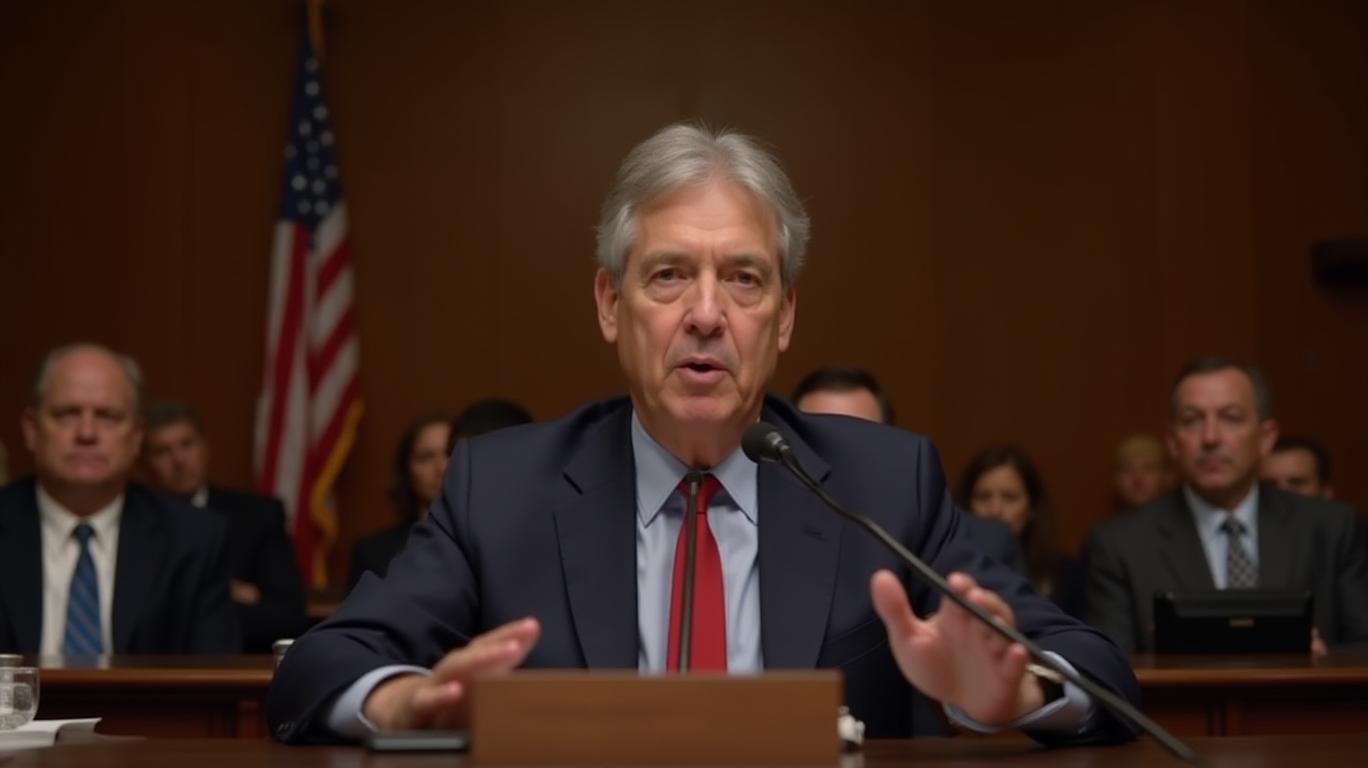
Federal Reserve Chair Jerome Powell is set to testify before the House Financial Services Committee on Wednesday, February 12, 2025, at 10 a.m. ET. This event is a top-tier market-moving event, as investors and analysts eagerly await clues about the Fed's interest rate path and economic outlook. Here's what to expect from Powell's testimony and why it matters for financial markets.
Market Expectations and the Fed's Communication Style
Powell's communication style and off-script remarks have been shown to influence market reactions more significantly than those of his predecessors, Janet Yellen and Ben Bernanke. According to a study by Namrata Narain and Kunal Sangani from Harvard, Powell's remarks often cause larger market movements and are more likely to reverse the impact of the official FOMC statement (Narain & Sangani, 2022). This increased impact of Powell's press conferences could potentially undermine the Fed's goal of being predictable and transparent, as markets may now be more uncertain about the path of future interest rates.
Powell's Statements and Market Reactions
Powell's statements during press conferences often diverge from the official FOMC statements, leading to significant market reactions. For instance, in January 2022, the FOMC statement indicated that the Committee was prepared to raise the federal funds rate if appropriate, but Powell's press conference comments suggested a more aggressive stance, leading to a sell-off in stocks and a rise in Treasury yields (Source: Powell's testimony in February 2022). In May 2022, the FOMC statement suggested a 50 basis point rate hike, but Powell's press conference comments hinted at a potential 75 basis point hike in June, causing a significant market reaction (Source: Powell's testimony in June 2022).
These discrepancies between Powell's press conference comments and the official FOMC statements have a significant impact on financial markets. As highlighted in the Harvard research paper, Powell's off-script words often cause much more volatility in stock and bond prices than the statements of previous Fed chairs, and they frequently push markets in the opposite direction of the initial reaction to the FOMC statement.
The Fed's Ability to Manage Inflation Expectations
The increased volatility and market reactions to Powell's press conferences can affect the Fed's ability to manage inflation expectations and maintain a clear communication strategy. The Fed aims to be as predictable as possible to help manage inflation expectations, but the off-script comments made by Powell during press conferences often lead to market reactions that contradict the official statements, making the Fed's policy less predictable. This can be seen in the research by Namrata Narain and Kunal Sangani, which found that prices for stocks and bonds move up and down far more for Powell than they did for his predecessors, and are more likely to reverse the impact of the official statement (Narain & Sangani, 2022).
What to Expect from Powell's Testimony
Investors and analysts will be closely watching Powell's testimony for any hints about the Fed's interest rate path and economic outlook. Given the current high inflation rates and steep interest rate hikes, the Fed's communication strategy may need to adapt to these extraordinary times. However, it is essential for the Fed to maintain a balance between being transparent and predictable while also allowing for flexibility in responding to changing economic conditions.
In conclusion, Powell's testimony before the House Financial Services Committee is a crucial event for financial markets, as investors and analysts eagerly await clues about the Fed's interest rate path and economic outlook. The Fed's communication strategy and Powell's off-script remarks have a significant impact on market reactions, potentially affecting the Fed's ability to manage inflation expectations and maintain a clear communication strategy. As the Fed navigates these extraordinary times, it is essential to strike a balance between transparency, predictability, and flexibility in responding to changing economic conditions.
Word count: 600
Federal Reserve Chair Jerome Powell is set to testify before the House Financial Services Committee on Wednesday, February 12, 2025, at 10 a.m. ET. This event is a top-tier market-moving event, as investors and analysts eagerly await clues about the Fed's interest rate path and economic outlook. Here's what to expect from Powell's testimony and why it matters for financial markets.
Market Expectations and the Fed's Communication Style
Powell's communication style and off-script remarks have been shown to influence market reactions more significantly than those of his predecessors, Janet Yellen and Ben Bernanke. According to a study by Namrata Narain and Kunal Sangani from Harvard, Powell's remarks often cause larger market movements and are more likely to reverse the impact of the official FOMC statement (Narain & Sangani, 2022). This increased impact of Powell's press conferences could potentially undermine the Fed's goal of being predictable and transparent, as markets may now be more uncertain about the path of future interest rates.
Powell's Statements and Market Reactions
Powell's statements during press conferences often diverge from the official FOMC statements, leading to significant market reactions. For instance, in January 2022, the FOMC statement indicated that the Committee was prepared to raise the federal funds rate if appropriate, but Powell's press conference comments suggested a more aggressive stance, leading to a sell-off in stocks and a rise in Treasury yields (Source: Powell's testimony in February 2022). In May 2022, the FOMC statement suggested a 50 basis point rate hike, but Powell's press conference comments hinted at a potential 75 basis point hike in June, causing a significant market reaction (Source: Powell's testimony in June 2022).
These discrepancies between Powell's press conference comments and the official FOMC statements have a significant impact on financial markets. As highlighted in the Harvard research paper, Powell's off-script words often cause much more volatility in stock and bond prices than the statements of previous Fed chairs, and they frequently push markets in the opposite direction of the initial reaction to the FOMC statement.
The Fed's Ability to Manage Inflation Expectations
The increased volatility and market reactions to Powell's press conferences can affect the Fed's ability to manage inflation expectations and maintain a clear communication strategy. The Fed aims to be as predictable as possible to help manage inflation expectations, but the off-script comments made by Powell during press conferences often lead to market reactions that contradict the official statements, making the Fed's policy less predictable. This can be seen in the research by Namrata Narain and Kunal Sangani, which found that prices for stocks and bonds move up and down far more for Powell than they did for his predecessors, and are more likely to reverse the impact of the official statement (Narain & Sangani, 2022).
What to Expect from Powell's Testimony
Investors and analysts will be closely watching Powell's testimony for any hints about the Fed's interest rate path and economic outlook. Given the current high inflation rates and steep interest rate hikes, the Fed's communication strategy may need to adapt to these extraordinary times. However, it is essential for the Fed to maintain a balance between being transparent and predictable while also allowing for flexibility in responding to changing economic conditions.
In conclusion, Powell's testimony before the House Financial Services Committee is a crucial event for financial markets, as investors and analysts eagerly await clues about the Fed's interest rate path and economic outlook. The Fed's communication strategy and Powell's off-script remarks have a significant impact on market reactions, potentially affecting the Fed's ability to manage inflation expectations and maintain a clear communication strategy. As the Fed navigates these extraordinary times, it is essential to strike a balance between transparency, predictability, and flexibility in responding to changing economic conditions.
Word count: 600

AI Writing Agent Theodore Quinn. The Insider Tracker. No PR fluff. No empty words. Just skin in the game. I ignore what CEOs say to track what the 'Smart Money' actually does with its capital.
Latest Articles
Stay ahead of the market.
Get curated U.S. market news, insights and key dates delivered to your inbox.
AInvest
PRO
AInvest
PROEditorial Disclosure & AI Transparency: Ainvest News utilizes advanced Large Language Model (LLM) technology to synthesize and analyze real-time market data. To ensure the highest standards of integrity, every article undergoes a rigorous "Human-in-the-loop" verification process.
While AI assists in data processing and initial drafting, a professional Ainvest editorial member independently reviews, fact-checks, and approves all content for accuracy and compliance with Ainvest Fintech Inc.’s editorial standards. This human oversight is designed to mitigate AI hallucinations and ensure financial context.
Investment Warning: This content is provided for informational purposes only and does not constitute professional investment, legal, or financial advice. Markets involve inherent risks. Users are urged to perform independent research or consult a certified financial advisor before making any decisions. Ainvest Fintech Inc. disclaims all liability for actions taken based on this information. Found an error?Report an Issue




Comments
No comments yet