
Fed Caution Fuels Contrarian Yield Plays in Short-Term Corporate Bonds
The Federal Reserve's recent June meeting underscored a pivotal crossroads in monetary policy: a cautious stance on rate cuts, elevated inflation risks, and a fragile economic backdrop. For fixed-income investors, this environment has created a compelling opportunity to exploit short-duration corporate bonds—a strategy that balances yield, credit quality, and protection against macro uncertainty. Here's why the Fed's measured approach is reshaping the fixed-income landscape and where to position for upside.
The Fed's Caution: A Catalyst for Yield Hunters
The June 2025 Fed minutes revealed a divided committee, with seven members opposing any near-term rate cuts. This hesitation reflects heightened uncertainty about inflation's persistence and the economy's ability to withstand stagflationary pressures. The Fed's dot plot now projects only two rate cuts by year-end, down from earlier expectations, while inflation forecasts for 2025 were revised upward to 3.0% (core PCE at 3.1%).
This cautious posture has two critical implications:
1. Rates Will Stay Elevated Longer: The Fed's reluctance to cut quickly means short-term yields will remain robust, favoring bonds with maturities under three years.
2. Tailwinds for Credit: Corporate fundamentals—bolstered by record profits and manageable leverage—keep default risks low, even as the Fed delays easing.
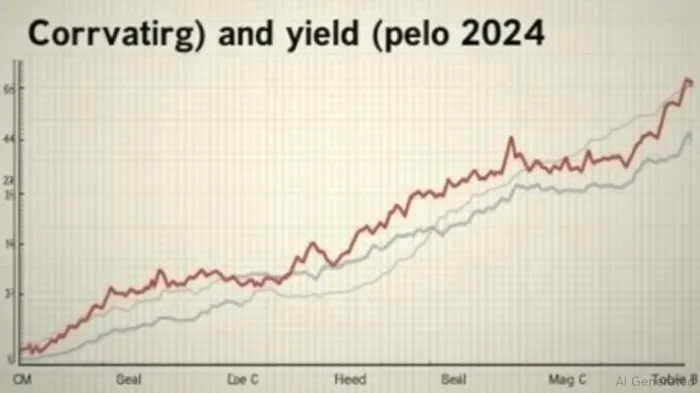
The Case for Short-Term Corporate Bonds: Yield Advantage, Lower Duration Risk
Data from the June meeting and recent credit markets highlight a stark opportunity. Investment-grade corporates with maturities under three years now offer a yield premium over Treasuries, even as spreads tighten. For example:
- Credit Spreads Tighten Despite Rising Rates: In the week ending June 9, short-duration IG corporates outperformed similar-duration Treasuries by 28 basis points, even as Treasury yields rose 11 bps on strong employment data. Spreads tightened by 3 bps to ~78 bps, near historic lows.
- Attractive Yield-to-Worst: The Bloomberg US Corporate Bond Index for short maturities yields 5.1%, versus the 10-year Treasury's 3.9%. This gap widens further when considering inflation risks and the Fed's delayed cuts.
Why Avoid Long-Term Treasuries?
While short-term corporates thrive, long-dated Treasuries face headwinds:
- Inflation and Geopolitical Risks: Persistent inflation (driven by tariff pass-through and energy price volatility) and Middle East tensions could reignite inflationary pressures, punishing long-dated bonds.
- Fed's Debt Burden: With U.S. debt interest payments hitting $1.2 trillion in 2025, the Fed may delay cuts to avoid exacerbating fiscal strain. Long Treasuries, sensitive to rate expectations, will suffer if the Fed remains hawkish.
- Curve Bull Flattening Risks: As short rates stay elevated and long rates drift higher, the yield curve will compress—hurting long Treasuries.
Portfolio Shifts: Positioning for This Fed Regime
Investors should pivot to short-duration corporate bonds while avoiding long Treasuries. Here's how to act:
- Target Short-Term IG Corporates: Focus on 1-3 year maturities with strong balance sheets. Utilities, industrials, and consumer staples sectors offer stable cash flows and minimal credit risk.
- Leverage Floating-Rate Notes: Floating-rate corporate bonds (e.g., bank loans or FRNs) protect against rate volatility and currently yield 5.5%–6.0%, with spreads near cyclical lows.
- Avoid Long-Term Rate Exposure: Sell Treasuries with maturities beyond five years. Their sensitivity to inflation and Fed policy makes them vulnerable to capital losses.
Risks and Mitigants
- Credit Event Risk: Monitor sectors exposed to tariffs or geopolitical shocks (e.g., industrials, energy). Diversification and a BBB+ average rating limit defaults.
- Fed Policy Surprise: If the Fed cuts aggressively, long Treasuries could rebound. Maintain a small tactical allocation to intermediate corporates for flexibility.
Conclusion: Embrace the Contrarian Play
The Fed's caution has created a rare confluence of high yields, tight credit spreads, and manageable risks in short-term corporates. Investors who pivot now can capture a 200–300 bps yield advantage over Treasuries while sidestepping the duration risks of long bonds. This isn't just a tactical move—it's a structural shift for the Fed's “lower-for-longer” era.
In a world of policy uncertainty, short-duration corporates are the contrarian's shield and sword.

Stay ahead of the market.
Get curated U.S. market news, insights and key dates delivered to your inbox.


AInvest
PRO
AInvest
PRO



Comments
No comments yet