
Fed's Balancing Act: Shrinking Balance Sheet or Safeguarding Stability?


 Aime Summary
The Federal Reserve may revisit the possibility of shrinking its balance sheet in the future, according to Fed Governor Christopher Waller, who suggested the central bank could "possibly" reduce its holdings again if economic conditions align. This statement comes amid ongoing debates about the Fed's post-pandemic balance sheet normalization strategy, which has been a focal point for policymakers and markets. Waller emphasized that while the Fed has paused its quantitative tightening (QT) program for now, future decisions will depend on regulatory adjustments and evolving financial conditions [according to analysis].
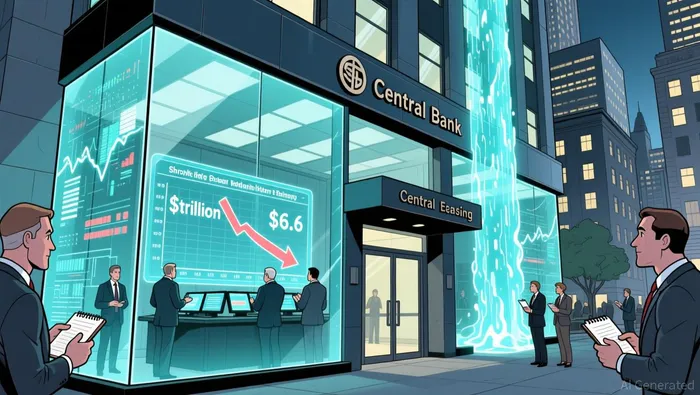
The Fed's balance sheet, which peaked at nearly $9 trillion during the pandemic, has been reduced to approximately $6.6 trillion through its QT program. However, the central bank halted the unwinding of its securities holdings in October 2025, citing market liquidity concerns. In a statement, the Federal Open Market Committee (FOMC) announced it would conclude the reduction of its securities holdings by December 1, prioritizing financial system stability over further contraction. This pause reflects the Fed's cautious approach as it navigates a complex economic landscape marked by weak labor market signals and lingering inflation pressures according to Barron's analysis.
Fed Governor Stephen Miran, who is on leave from the White House Council of Economic Advisers, underscored that regulatory reforms could play a pivotal role in enabling future balance sheet reductions. "We first have to get the regulations right and ensure that bank balance sheets are flexible enough for an environment with a smaller Federal Reserve footprint," Miran stated in remarks prepared for delivery. He argued that easing financial regulations could allow the Fed to shrink its holdings without destabilizing the banking system, a move that might also reduce interest payments. This aligns with broader deregulatory efforts by the U.S. government, which aims to enhance private sector flexibility.
Market participants remain divided on the timeline for the Fed's next rate cuts, with Waller advocating for a data-driven approach. Recent weak labor market indicators, including ADP's estimate of 11,250 private-sector job losses per week, have fueled speculation about potential rate reductions in December. However, Waller cautioned against overreacting to isolated data points, noting that inflation expectations remain well-anchored despite a lingering 3% headline rate. The Fed's December 10 meeting will provide critical insights, as officials weigh the impact of President Donald Trump's proposed economic policies and the broader implications for monetary stability .
The Fed's balance sheet strategy also intersects with broader energy and infrastructure developments. For instance, the Czech Republic's $19 billion nuclear expansion highlights the growing demand for stable energy supplies, which could influence long-term inflation dynamics and monetary policy. Meanwhile, companies like ChargePoint are leveraging debt restructuring to strengthen balance sheets, a trend that underscores the private sector's adaptation to evolving financial conditions .
As the Fed navigates these challenges, its ability to balance regulatory flexibility with market stability will be crucial. Waller's comments suggest that while a smaller balance sheet is not imminent, the door remains open for future action contingent on economic and regulatory progress.

Stay ahead of the market.
Get curated U.S. market news, insights and key dates delivered to your inbox.






Comments
No comments yet