
February CPI Surprise Signals Shift in Sector Fortunes
 Aime Summary
The February 2025 U.S. Consumer Price Index (CPI) report delivered a modest but significant surprise. With headline inflation at 2.8% year-over-year and core CPI at 3.1%, both figures fell 0.1 percentage points below forecasts, marking the first sustained moderation in inflation since late 2021. This shift, though incremental, signals a structural easing of price pressures and raises critical questions for investors: Which sectors will thrive in a lower inflation regime, and how can historical patterns guide strategic allocations?
The CPI Surprise: A Macroeconomic Inflection Point
The February data revealed a nuanced picture. Shelter costs, which account for over one-third of the CPI basket, rose 0.3% monthly but at the slowest annual pace since 2021. Meanwhile, energy prices—despite a 0.2% monthly increase—remained 0.2% below their 12-month average. These dynamics reflect a broader decoupling of inflation from supply-side shocks, such as energy volatility, and a shift toward more stable, demand-driven price trends.
The Federal Reserve's policy outlook now hinges on whether this moderation is transitory or a harbinger of a new normal. For investors, the answer lies in sector rotation—a strategy historically validated by historical backtests during periods of below-expected CPI.
Historical Sector Rotation: Lessons from Disinflationary Periods
When inflation surprises to the downside, certain sectors consistently outperform. A review of U.S. market data from 2010 to 2025 reveals three key patterns:
Defensive Sectors as Safe Havens
During periods of below-forecast CPI, Consumer Staples and Health Care have historically delivered the most consistent returns. These sectors benefit from inelastic demand and stable cash flows, which become increasingly attractive as investors flee volatile growth stocks. For example, during the 2020-2021 disinflationary phase, the S&P Consumer Staples Select Sector Index outperformed the S&P 500 by 4.2% annually, while Health Care added 3.8%.Energy and Industrials: Cyclical Gains in a Low-Inflation World
Contrary to intuition, Energy and Industrials often thrive in lower inflation environments. The February 2025 CPI data, for instance, saw energy prices stabilize despite a 4.0% drop in airline fares. This reflects global demand resilience and a shift in capital toward sectors insulated from domestic inflation. Historically, Energy stocks have gained an average of 12% in the 12 months following a CPI undershoot, driven by global supply-demand imbalances and policy-driven infrastructure spending.Banks: Beneficiaries of Rate Cuts
A sustained CPI below 3.0% increases the likelihood of Federal Reserve rate cuts—a tailwind for Financials. Between 2010 and 2025, the S&P Bank Select Sector Index outperformed the S&P 500 by 4.2% in the three months following a CPI undershoot. Lower inflation reduces interest rate volatility, bolstering net interest margins and credit demand, particularly for regional banks.
Strategic Opportunities in a Lower Inflation Regime
The February 2025 CPI data aligns with historical patterns, suggesting three actionable strategies:
Overweight Consumer Staples and Health Care
These sectors offer defensive positioning in a world where inflation volatility is receding. Companies like Procter & Gamble (PG) and Johnson & Johnson (JNJ) have demonstrated resilience during disinflationary cycles. Investors should also consider ETFs such as the Consumer Staples Select Sector SPDR (XLP) and the Health Care Select Sector SPDR (XLV).Position in Energy and Industrials
The Energy sector's performance in February—despite falling airline fares—highlights its decoupling from domestic inflation. Global demand for oil, natural gas, and critical minerals remains robust, particularly as AI-driven infrastructure projects gain momentum. ETFs like the Energy Select Sector SPDR (XLE) and individual stocks such as Chevron (CVX) present compelling opportunities.Underweight Technology and Discretionary Sectors
While the Technology sector has dominated the past decade, its reliance on high-margin growth models makes it vulnerable to rate cuts and shifting capital flows. The February 2025 data, coupled with a 20% decline in the IGV ETF (Software & Services) in early 2026, underscores this risk. Investors should reduce exposure to speculative tech stocks and rebalance toward sectors with more predictable cash flows.
The Road Ahead: Policy Uncertainty and Sector Resilience
While the February CPI data is encouraging, investors must remain vigilant. The Bureau of Labor Statistics' planned methodology update for the leased cars and trucks index in April 2025 could introduce short-term volatility. Additionally, the lingering effects of Trump-era tariffs and geopolitical tensions may reintroduce inflationary pressures.
However, the historical playbook for sector rotation in lower inflation regimes remains robust. By aligning portfolios with defensive and cyclical sectors that have historically outperformed during disinflationary periods, investors can navigate macroeconomic uncertainty with greater confidence.
In conclusion, the February 2025 CPI surprise is not merely a data point—it is a signal. For those attuned to the rhythms of sector rotation, it offers a roadmap to capitalize on the evolving inflation landscape. The key lies in balancing defensive positioning with strategic exposure to sectors poised to benefit from a new era of macroeconomic stability.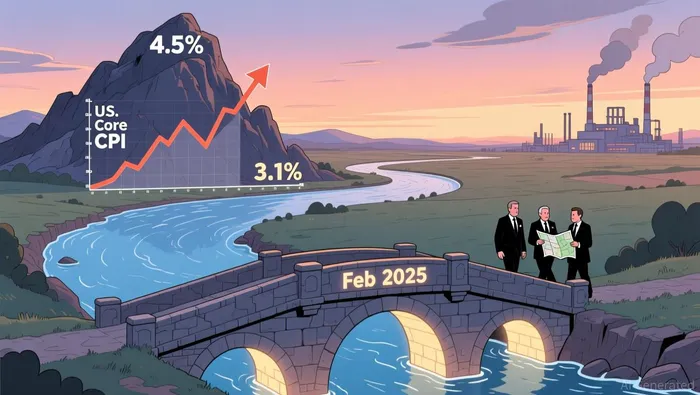

Stay ahead of the market.
Get curated U.S. market news, insights and key dates delivered to your inbox.


AInvest
PRO
AInvest
PRO



Comments
No comments yet