
Feb. NFP Slumps Nearly 100K as Oil Surge Complicates Fed Rate Cuts
 Aime Summary
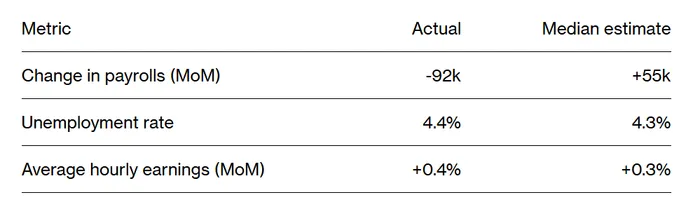
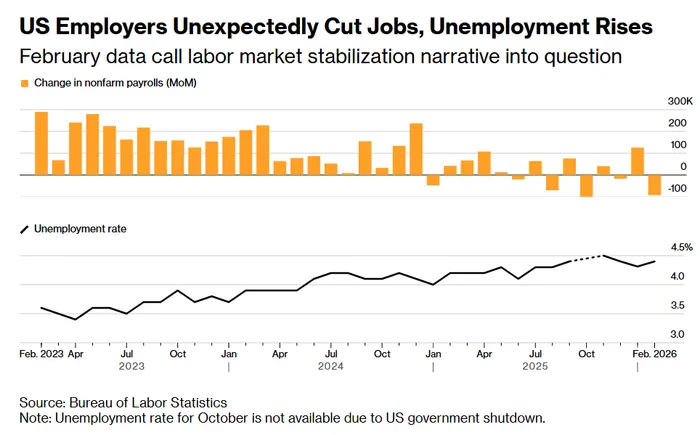
U.S. nonfarm payrolls fell by 92,000 in February, far worse than expectations for a 59,000 increase. Payroll figures for December and January were revised down by a combined 69,000.
Meanwhile, the unemployment rate unexpectedly rose to 4.4%, slightly above the market expectation of 4.3%.
After such weak employment data, the Federal Reserve would normally be expected to increase the pace of rate cuts. However, rising geopolitical tensions in the Middle East have driven oil prices sharply higher, raising concerns about a renewed surge in inflation and potentially preventing the Fed from easing policy.
Interest-rate futures currently indicate that the Fed may cut rates only once this year, in September, little changed from expectations before the payroll report.
Sector Breakdown
Looking at the details, the healthcare sector lost 28,000 jobs in February, mainly due to a strike by more than 30,000 workers at Kaiser Permanente. The strike has since ended, but its impact was reflected in the latest employment data.
The manufacturing sector lost 12,000 jobs, which runs counter to the Trump administration’s goal of reshoring manufacturing.
The transportation and warehousing sector shed 11,000 jobs, though both categories are highly sensitive to weather conditions. Severe snowstorms and extreme cold in February may have contributed to the decline.
The information services sector also lost 11,000 jobs. Over the past year, the sector has shed roughly 5,000 jobs per month on average, a trend widely attributed to AI-related layoffs.
The impact of DOGE-related government restructuring also continues to be felt, with federal government employment declining by 10,000 jobs.
Mainstream Analysis: Could Higher Energy Prices Block Fed Cuts?
Ellen Zentner, Chief Economic Strategist at Morgan Stanley Wealth Management, said: “Today’s numbers may have put the Fed between a rock and a hard place. Significant weakening in the labor market would support a rate cut, but given the risk that higher-for-longer oil prices could trigger another inflation surge, the Fed may feel compelled remain on the sidelines.”
Lindsay Rosner, Head of Multi-Sector Fixed Income Investing at Goldman Sachs Asset Management, added: “Indications of labor market weakness are a reminder to the Fed that there could be a price to pay for delaying cuts, although near-term policy remains dictated by the ongoing Middle East conflict. Developments in Iran and their potential consequences on inflation have overshadowed the US employment picture to a degree, making the path forward to potential policy normalization less clear.
We expect that the Fed will eventually complete the remaining two ‘normalization cuts’ to return rates to neutral, however the timing is up in the air given current uncertainty.”Lindsay Rosner said.
Ira Jersey, Chief U.S. Rates Strategist at Bloomberg Intelligence, offered his first reaction: “The Treasury market is broadly looking through the payrolls report, as geopolitical news and inflation fears continue to be the market’s focus. Though the employment data wasn’t particularly promising, fear over energy-related supply shocks may continue to drive rate markets globally.”
Win Thin, Chief Economist at Bank of Nassau 1982, commented: “If you’re a firm, I suspect that hiring decisions will be put off during this period of heightened uncertainty. As such, it’s hard to see how the labor market recovers in March or April. January is looking like a total outlier.”
Daniela Hathorn, Senior Market Analyst at Capital.com, emphasized the broader macro context: “In a vacuum, weaker payrolls would pressure Treasury yields lower and weigh on the dollar. But if energy-driven inflation fears remain elevated, bond markets may hesitate to price aggressive easing.”
Christopher Hodge of Natixis noted that the report could have a particular impact on Fed Governor Christopher Waller. Waller previously stated that if February data looked weak and January payrolls were revised lower, it would raise questions about why the Fed held rates steady in January.
February’s payroll report could therefore strengthen the voices of more dovish Fed officials, particularly Waller.
AI’s Impact on Hiring Appears Limited
Although markets have been closely watching the potential impact of AI replacing jobs, the February employment report did not show clear evidence of such a trend.
Instead, the biggest impacts appear to come from traditional risks such as severe weather and labor strikes.
Ian Siegel, CEO of ZipRecruiter Inc., said during the company’s February 25 earnings call that artificial intelligence currently has little to no impact on hiring plans among its clients.

Senior Research Analyst at Ainvest, formerly with Tiger Brokers for two years. Over 10 years of U.S. stock trading experience and 8 years in Futures and Forex. Graduate of University of South Wales.
Latest Articles
Stay ahead of the market.
Get curated U.S. market news, insights and key dates delivered to your inbox.


AInvest
PRO
AInvest
PRO



Comments
No comments yet